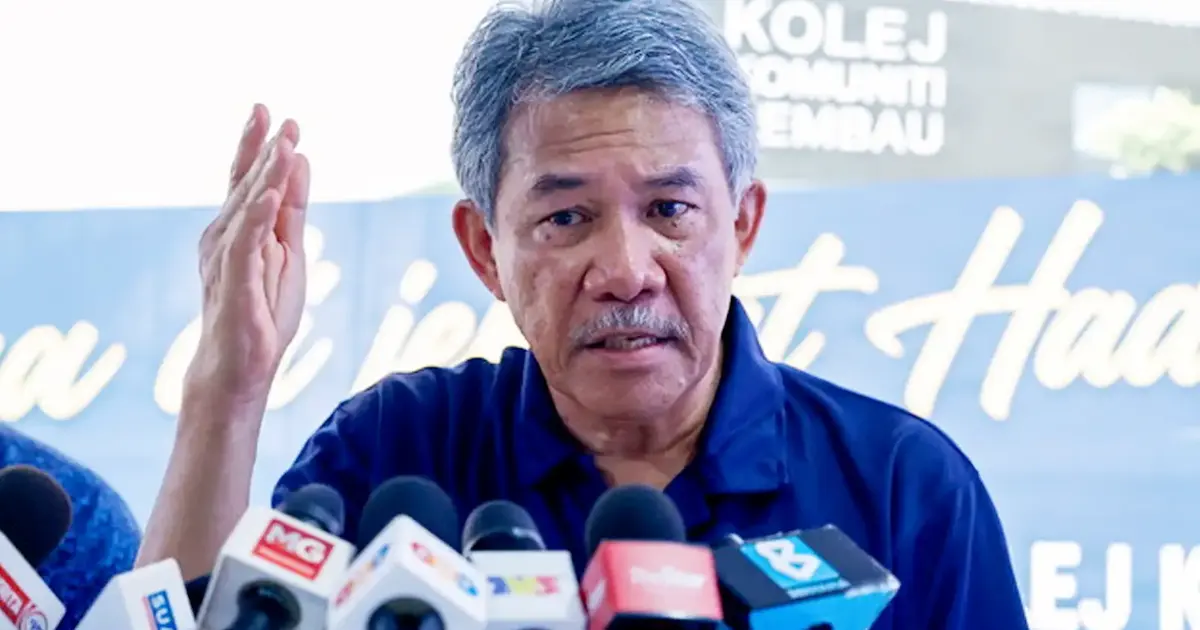
Tok Mat, the Negeri Sembilan chairman of Barisan Nasional, has urged the public to disregard inflammatory rumours circulating on social media platforms, particularly those targeting non-Malay populations with claims about potential political realignments. The senior politician's remarks come amid persistent online speculation about a possible merger between Umno and PAS, a narrative that has periodically resurfaced over the past several years and continues to generate anxiety among Malaysia's diverse electorate.
In making his statement, Tok Mat underscored a fundamental operational constraint facing the ruling coalition: the practical impossibility of monitoring and responding to every allegation disseminated across social media networks. This acknowledgement reflects a broader challenge confronting established political parties in an era of rapid digital communication, where rumours can gain traction within hours and reach millions of users before official denials can be effectively broadcast. The sheer volume of online content, much of which remains unverified or deliberately provocative, has effectively outpaced the capacity of traditional political machinery to police discourse comprehensively.
The context for Tok Mat's intervention is significant for understanding the current state of Malaysian politics. Speculation about closer ties between Umno, the largest component of Barisan Nasional, and PAS, the principal opposition Islamic party, has long animated political conversation in Malaysia. Previous iterations of this rumour have periodically surfaced, particularly during moments of political instability or when coalition partners have experienced friction. The recurrent nature of such claims suggests they tap into underlying anxieties about both interparty cooperation and the trajectory of Malaysia's political identity.
For non-Malay communities, which constitute a substantial portion of Malaysia's population and remain primary Barisan Nasional voters in urban areas, such rumours carry particular resonance. Coalition politics in Malaysia has traditionally depended on a delicate equilibrium among communal groups, with Malay-Muslim dominated Umno working alongside the Malaysian Chinese Association and the Malaysian Indian Congress to maintain multiethnic governance. Any significant shift in this arrangement—whether through formal merger or informal realignment—would fundamentally alter the political bargaining power available to non-Malay communities within the ruling structure.
Tok Mat's characterization of these rumours as fear-mongering narratives directed specifically at non-Malay voters suggests an assessment that such claims are being weaponized for political effect. Whether propagated by opposition parties seeking to destabilize Barisan support among Chinese and Indian voters, or by other actors pursuing alternative agendas, the rumours serve a clear function: they create anxiety about the future political role and influence of non-Muslim minorities. This mechanism operates independently of the substantive accuracy of the underlying claims.
The difficulty facing Barisan Nasional in countering such narratives illustrates a broader vulnerability facing established coalitions in the digital age. Traditional political communication channels—press conferences, controlled media environments, official statements—have diminished in reach and credibility, particularly among younger voters who source their information primarily through social platforms. An officially sanctioned denial from a senior politician may struggle to gain purchase against the organic, viral nature of social media rumours, which often benefit from precisely the kind of mysterious, unverifiable quality that encourages sharing.
Moreover, the decision by coalition leadership not to engage exhaustively with every allegation reflects a strategic calculation. Responding to every rumour carries the risk of amplifying unverified claims to audiences who might otherwise never encounter them. It also implicitly concedes that such speculation warrants serious address, potentially lending it a credibility it might not otherwise possess. From this perspective, Tok Mat's appeal for the public to ignore such rumours represents a deliberate choice to avoid elevating speculation into the realm of serious political controversy.
Yet this approach carries its own risks. In an environment where misinformation flourishes and political trust has eroded, the absence of sustained, detailed rebuttal may allow false narratives to calcify into accepted belief. Voters skeptical of official assurances may interpret silence as tacit confirmation. For non-Malay voters particularly concerned about their political future, reliance on faith in the coalition's stability without tangible evidence or explanation may prove an insufficient reassurance.
The broader implications of Tok Mat's statement extend beyond immediate coalition management. It signals that Malaysian political parties have begun acknowledging the limits of their capacity to control information environments and shape political narratives through conventional means. As digital communication becomes increasingly central to political mobilization, parties must either develop new tools for countering false claims or accept that some constituency anxiety will persist regardless of official messaging.
For Malaysia's non-Malay voters, who maintain significant electoral influence in key urban constituencies and remain strategically important to Barisan Nasional's electoral mathematics, the question of coalition stability and their continued meaningful participation in governance remains pressing. While Tok Mat has asked such communities to dismiss unfounded rumours, the persistence of such claims suggests that deeper questions about Malaysia's political future and the place of minorities within that future remain unresolved and require more than dismissal to adequately address.

