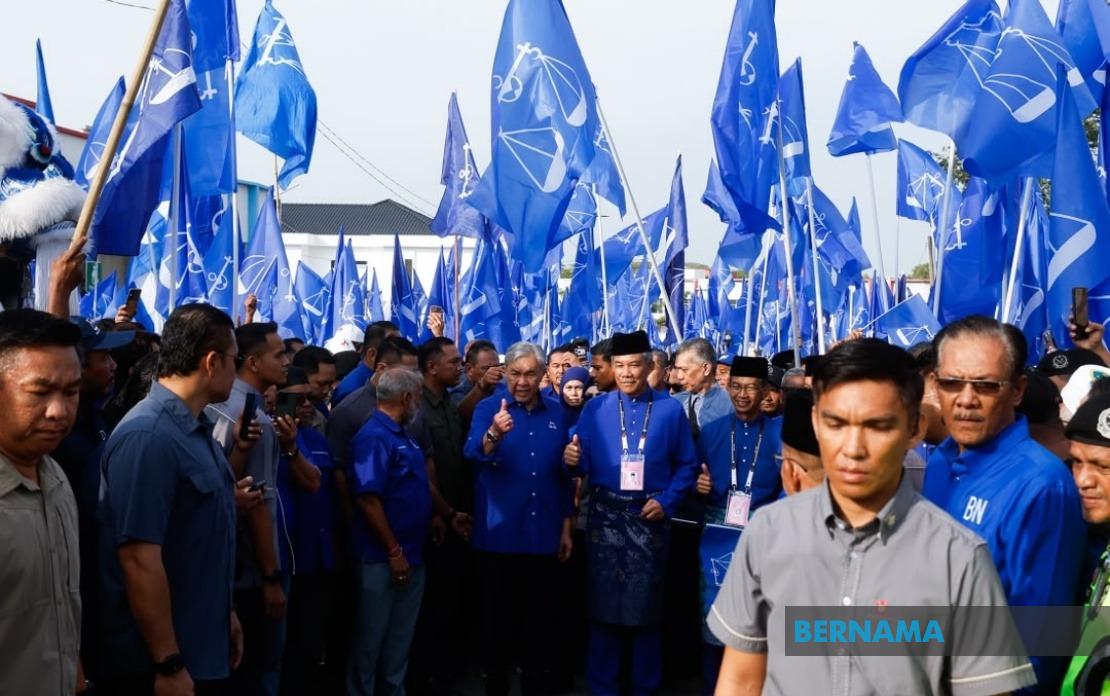
The Negeri Sembilan state election campaign formally kicked off on July 18 as nomination centres across the state received a steady stream of candidates, many accompanied by senior political figures seeking to project party cohesion and momentum. The visible presence of top-tier leadership at these proceedings underscored the significance both Barisan Nasional and allied parties place on wresting control of the Negeri Sembilan State Legislative Assembly in the coming weeks.
Datak Seri Dr Ahmad Zahid Hamidi, serving as both UMNO president and chairman of Barisan Nasional, arrived at the Dewan Seri Rembau nomination centre before 9 am alongside his deputy, Datuk Seri Mohamad Hasan. The timing reflected calculated political choreography—Ahmad Zahid's personal attendance at the nomination process signalled that BN viewed this particular contest with strategic importance. Mohamad Hasan, submitting nomination papers for the Rantau state seat he has represented since 2004, benefited from this show of solidarity from the coalition's most senior ranks, sending a clear message to party members and voters about where leadership priorities lay during this critical juncture.
All eight nomination centres across Negeri Sembilan operated simultaneously from 9 am to 10 am, creating a compressed timeline that forced candidates and their supporters to coordinate movements carefully. This concentrated schedule meant that every appearance by a senior figure carried heightened visibility within the political press and among party machinery observers. The brevity of the nomination window transformed these centres into symbolic battlegrounds where parties could demonstrate organisational capacity and leadership engagement with grassroots candidates.
In Port Dickson, Barisan Nasional secretary-general Datuk Seri Dr Zambry Abd Kadir personally escorted Datuk Mohd Faizal Ramli through the nomination process for the Linggi state seat. Simultaneously in the same constituency, UMNO vice-president Datuk Seri Johari Ghani accompanied Suhaimizan Bizar, who is standing in Gemencheh within the Tampin parliamentary constituency. This distribution of high-ranking companions across multiple constituencies reflected strategic deployment of BN's political hierarchy to maximise morale-boosting effects among candidates and their volunteer networks.
The Jempol parliamentary area witnessed particularly concentrated leadership attention. UMNO secretary-general Datuk Dr Asyraf Wajdi Dusuki coordinated accompaniment for three separate BN nominees—Datuk Mustapha Nagoor contesting Palong, Datuk Mohd Zaidy Abdul Kadir in Jeram Padang, and Chong Fui Ming in Bahau. This concentration of support suggested that BN considered Jempol a key battleground where consolidating the party vote held particular importance for achieving the coalition's overall electoral objectives in the state.
PAS, operating as part of the broader Barisan Nasional framework in this contest, fielded its own nominee in Serting. Party president Tan Sri Abdul Hadi Awang personally accompanied Mohd Fairuz Mohd Isa through the nomination centre, demonstrating that even component parties of BN were mobilising their own senior figures to validate candidates and maintain internal party enthusiasm. This coordination among coalition members reinforced the message that despite occasional tensions, the broader BN machinery remained functional and disciplined ahead of the August 1 polling day.
Other coalition partners also demonstrated organisational engagement. Parti Orang Asli Malaysia (ASLI) president Rashid Ka accompanied Dayana Dal, the party's candidate for the Jeram Padang state seat, indicating that even smaller coalition components were activating their leadership to support the broader BN electoral effort. These varied shows of support across multiple parties and constituencies painted a picture of a coalition functioning coherently, with individual parties maintaining internal discipline while cooperating within the larger BN framework.
The state election emerges from a formal dissolution that occurred on June 5, following receipt of consent from Tuanku Muhriz Tuanku Munawir, the Yang Dipertuan Besar of Negeri Sembilan. This constitutional process preceded the nomination period and provided the legal framework within which all candidates now operate. The spacing between dissolution, nominations on July 18, early voting on July 28, and general polling on August 1 creates a compressed campaign season that demands efficient resource deployment from all contesting parties.
For Malaysian political observers and Southeast Asian analysts monitoring coalition politics in the region, the Negeri Sembilan contest carries implications extending beyond state-level governance. Barisan Nasional's ability to consolidate its various components and project unified leadership imagery directly influences perceptions about its capacity to govern effectively at federal level. The deliberate choreography of leadership presence at nomination centres—with senior figures positioned strategically across multiple constituencies—demonstrated that BN remains capable of executing coordinated political campaigns despite chronic internal tensions that periodically surface in public commentary.
The concentration of leadership engagement across these ceremonies also reflected calculation about which constituencies required maximum morale-boosting from party hierarchies. Strategic deployment of party president Ahmad Zahid, secretary-general Asyraf Wajdi Dusuki, and other senior figures to specific nominees indicated that BN possessed detailed intelligence about competitive races and resource constraints affecting individual candidates. This granular approach to campaign management suggested a coalition taking the Negeri Sembilan contest seriously as a meaningful test of its current political standing.
The electoral calendar now accelerates toward the early voting phase scheduled for July 28, providing party members and eligible early voters their opportunity to cast ballots before general polling on August 1. The leadership activation witnessed during nomination proceedings suggests both BN and coalition partners intend to maintain similar operational tempo throughout the remaining campaign period, keeping senior figures visible and engaged with constituency operations. The question for Malaysian voters—and for analysts monitoring regional political trends—centres on whether this coordinated display of coalition functionality translates into electoral performance that validates BN's current trajectory under Ahmad Zahid's leadership.

