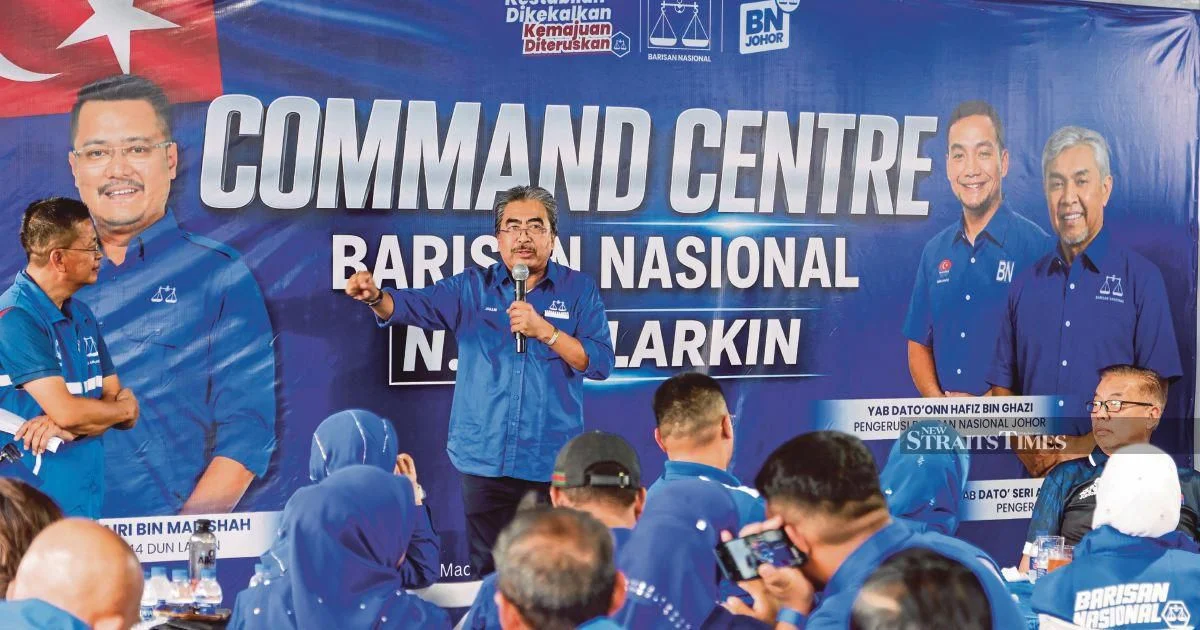
Datuk Seri Johari Abdul Ghani has called on Barisan Nasional's party machinery and electoral candidates to shift their focus away from public disputes with political opponents and instead concentrate on engaging voters during the forthcoming Johor state election campaign. Speaking in Johor Baru, the senior coalition leader flagged the risk that becoming entangled in confrontations could distract from the core mission of winning voter support and articulating the coalition's policy platform.
This intervention reflects broader concerns within established political formations about campaign discipline and message coherence. In modern electoral contests, especially in a state like Johor where demographic shifts and changing voter preferences have realigned political dynamics in recent years, the ability to maintain focus on substantive issues—rather than being drawn into inflammatory exchanges—often determines electoral success. When campaign resources are diverted toward responding to provocations or engaging in tit-for-tat rhetoric, the opportunity to communicate positive reasons for supporting a candidacy diminishes correspondingly.
The warning carries particular significance for Barisan Nasional, which has faced structural challenges to its traditional dominance in several Malaysian states following electoral shifts in recent election cycles. Johor represents a crucial battleground, given its size, population, and historical importance as a stronghold for the coalition. Maintaining internal cohesion and presenting a unified, forward-looking campaign narrative becomes strategically essential when contesting in an environment where voter loyalty cannot be assumed as automatically as it might have been in earlier decades.
Johari's emphasis on voter-centric messaging aligns with electoral best practice across competitive democracies. Successful political campaigns generally follow a disciplined approach that positions candidates as solution-providers addressing concrete issues that resonate with constituents—employment opportunities, infrastructure development, service delivery, cost of living concerns—rather than allowing the narrative to become dominated by personality clashes or ideological disputes. When voters witness political figures trading insults or engaging in visible conflict, public confidence in political institutions themselves often declines, benefiting neither major political formation.
The timing of this directive suggests awareness that campaign dynamics in Johor could easily become derailed by provocative exchanges if left unchecked. Opposition parties may employ inflammatory rhetoric specifically designed to provoke emotional responses that distract BN representatives from their prepared messaging. By pre-emptively instructing candidates and party operatives to maintain discipline, Johari seeks to prevent this manipulation and keep the focus on substantive campaign content.
Within Malaysian political culture, such guidance from senior leadership typically carries weight because it establishes expectations for party members and can serve as a check on individual candidates who might otherwise be tempted to engage in personal attacks or public confrontations. Candidates must balance authentic constituent engagement with adherence to broader coalition strategy, and reminders about maintaining discipline reinforce that party coherence takes precedence over individual impulses toward confrontation.
For Johor voters specifically, this approach potentially offers a clearer opportunity to evaluate political alternatives based on policy platforms, development records, and vision for the state's future rather than being distracted by personality-driven controversies. This serves democratic discourse by allowing substantive comparison between competing visions for governance. Whether voters ultimately favour Barisan Nasional's direction should rest on rational assessment of its track record and proposals, not on entertainment value derived from political theatre.
The state election context in Johor also matters considerably. As one of Malaysia's most developed states with a diverse economy spanning agriculture, manufacturing, and emerging sectors, voters have legitimate expectations that their leaders will discuss economic competitiveness, infrastructure investment, education quality, and social development. Campaigns absorbed in internal disputes send an implicit message that petty point-scoring matters more than addressing substantive state-level concerns.
Johari's intervention also carries implications for intra-coalition relations within Barisan Nasional itself. When multiple parties and factions compete within a broader alliance, maintaining discipline becomes more challenging but also more crucial. His statement essentially reinforces that coalition partners must present a unified front externally, even as they negotiate interests internally. This separation between external messaging and internal deliberation represents a hallmark of effective political coalitions.
The broader backdrop involves Malaysian politics' ongoing adjustment to a more competitive electoral environment than existed previously. The days when Barisan Nasional could assume electoral victories with minimal effort have conclusively passed. Modern campaigns require sophisticated voter engagement, disciplined messaging, and sustained effort to build winning coalitions. Johari's directive reflects this new reality, positioning the coalition for a serious, organised campaign focused on substantive appeal rather than reactive exchanges.
For the larger Southeast Asian region, Johor's election offers observers a window into how established political forces respond to changing competitive dynamics. Malaysia's experience has considerable relevance for neighbouring democracies navigating similar transitions where traditional dominant parties face genuine electoral competition for the first time in decades. The quality of campaigns—whether focused on issues or theatre—influences voter confidence in democratic institutions across the region.

