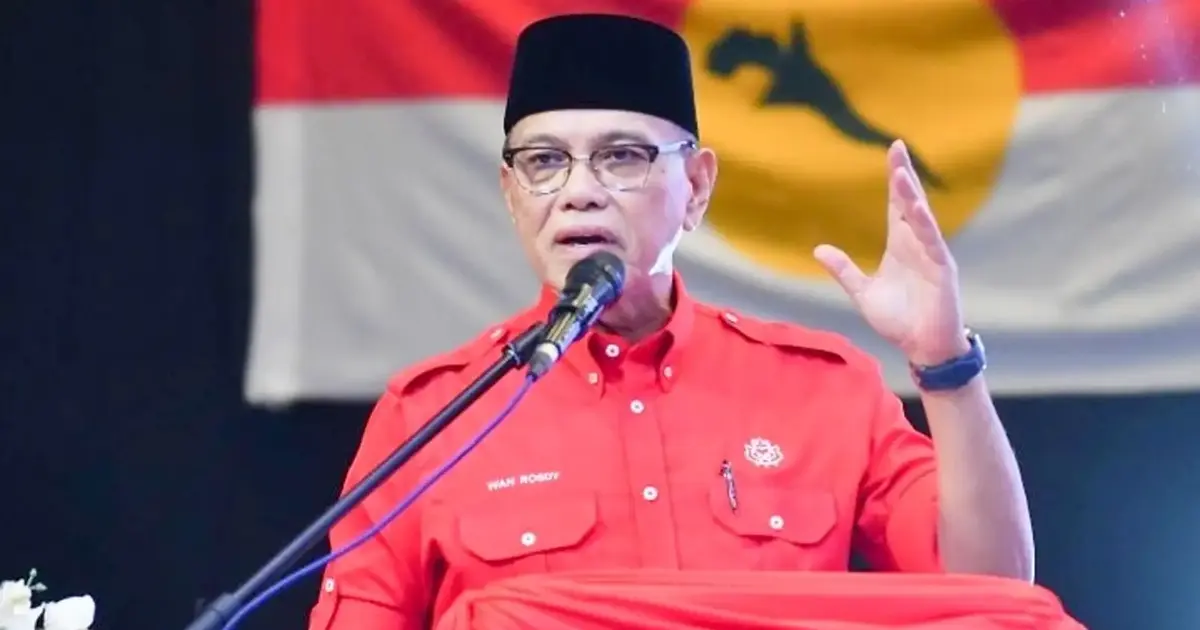
The Umno vice-president has moved to temper expectations of imminent talks between Barisan Nasional and Perikatan Nasional over potential collaboration in the run-up to the next general election, indicating that substantive negotiations on this front remain some distance away. Wan Rosdy's remarks come at a time when Malaysia's political landscape continues to shift following recent state-level developments, particularly the formation of the new Negeri Sembilan government that has commanded much of the coalition's immediate attention.
The priority for the BN-PN alliance at this juncture, according to the senior Umno figure, is to stabilize and strengthen the governance structures recently established in Negeri Sembilan rather than to begin plotting electoral strategies for a general election that remains several years distant. This measured approach reflects a broader recognition within the coalition that premature negotiations over national-level cooperation could prove counterproductive, particularly given the need to demonstrate competent administration at the state level first. The Negeri Sembilan government, being newly constituted, faces the immediate challenge of establishing itself as a credible alternative administration capable of delivering public services and managing state finances effectively.
This stance represents a departure from the more expansive political talk that often accompanies periods of coalition flux in Malaysian politics. Rather than rushing to announce grand strategic alliances, Umno's leadership appears to be adopting a consolidation strategy that emphasizes building institutional credibility. For Malaysian voters and regional observers, this methodical approach suggests that BN and PN leaders recognize that electoral mathematics at the national level will be most compelling when demonstrated through successful governance records at the state level.
The timing of Wan Rosdy's comments is significant given the ongoing realignment within Malaysia's political ecosystem. Both Barisan Nasional and Perikatan Nasional have undergone substantial organizational and strategic reassessments since the 2022 general election, and neither coalition can afford to appear desperate for alliances. By signaling that concrete discussions remain off the table, Umno preserves negotiating flexibility and avoids locking itself into commitments before the full implications of current state governments become clear.
For Negeri Sembilan specifically, the new administration inherits a state facing diverse governance challenges ranging from economic development to infrastructure maintenance. The coalition's decision to prioritize this consolidation phase underscores how Malaysia's federal system means that state-level performance directly influences national political momentum. A well-managed Negeri Sembilan government could serve as a compelling template for what BN-PN cooperation might deliver at the federal level, whereas administrative missteps would immediately undermine negotiating positions in future national talks.
The absence of formal discussions also reflects the complexities inherent in bringing together two coalitions with distinct organizational cultures and electoral bases. Perikatan Nasional, which has grown significantly following the 2022 elections and subsequent developments, brings different ideological emphases and support constituencies compared to Barisan Nasional's traditional voter demographics. Any serious merger of electoral strategies would require extensive groundwork to reconcile these differences, work that evidently has not yet begun in any formal capacity.
For Southeast Asian observers and international stakeholders monitoring Malaysian political developments, Wan Rosdy's comments suggest a period of consolidation rather than dramatic realignment. This has implications for understanding how Malaysia's political system will configure itself heading toward the next general election cycle. Unlike some international jurisdictions where coalitions announce alliances years in advance, Malaysia's fluid political environment often sees strategic partnerships crystallized much closer to electoral contests, allowing for maximum flexibility as circumstances evolve.
The statement also carries implications for individual political figures within both coalitions who might harbour ambitions regarding potential power-sharing arrangements. By maintaining that formal discussions have not commenced, Umno leadership keeps the field open for various organizational developments and leadership transitions that could still occur within both BN and PN before serious negotiations begin. This approach has become characteristic of Malaysian coalition politics, where explicit commitments are often deferred until optimal political conditions align.
Looking forward, the real test of whether BN-PN cooperation remains realistic for the general election will come through how effectively these coalitions govern Negeri Sembilan and assess their respective standings in public opinion. Voters' perceptions of state-level administration will inevitably shape the credibility and attractiveness of any subsequently announced national alliance. Until these governance foundations are more firmly established, detailed discussions about electoral cooperation remain premature from a strategic perspective that prioritizes demonstrable competence over premature commitments.
Ultimately, Wan Rosdy's position reflects a pragmatic recognition that Malaysian coalition politics operate according to rhythms that prioritize immediate institutional challenges before embarking on longer-term strategic planning. The absence of formal BN-PN talks for the general election should therefore be interpreted not as a rejection of potential cooperation, but rather as a deliberate sequencing of political priorities that first establishes credible governance at the state level before national-level electoral mathematics are finalized.

