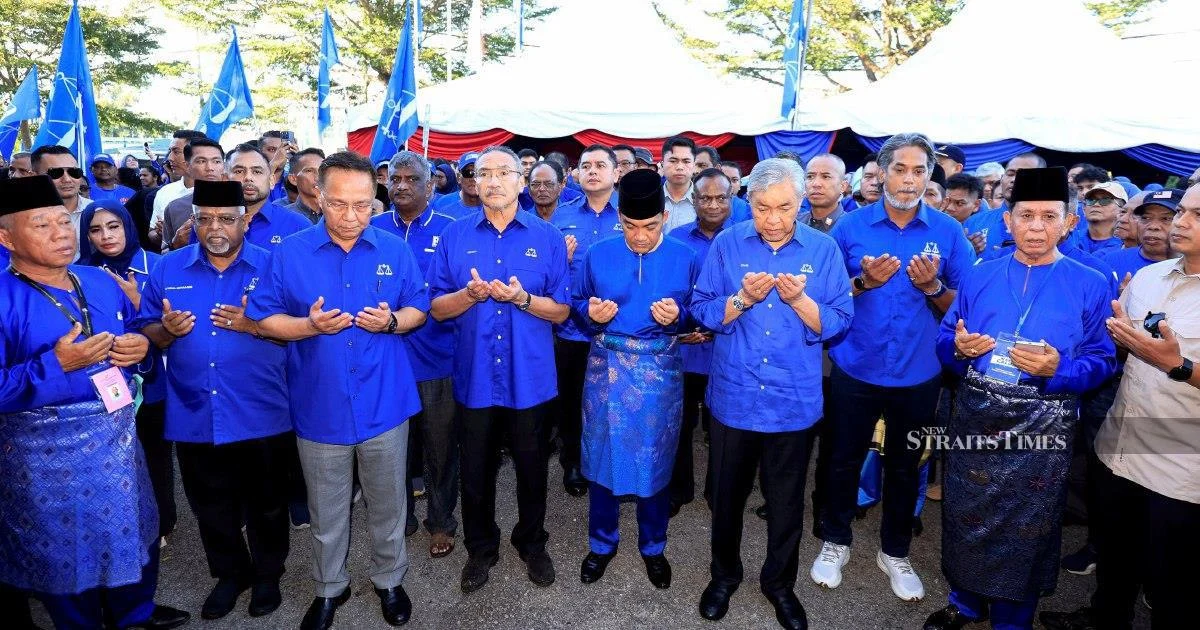
Senior figures from Barisan Nasional assembled in Simpang Renggam on Thursday morning in a coordinated display of backing for Johor Menteri Besar Datuk Onn Hafiz Ghazi, underlining the coalition's united front as the state heads toward electoral contests that will determine the political direction of Malaysia's southern corridor.
The convergence of multiple high-ranking party leaders at the Simpang Renggam District Council represented more than ceremonial politics—it reflected the coalition's recognition that Johor remains strategically vital to its national standing and electoral mathematics. The state has traditionally been a powerhouse for BN, contributing substantially to parliamentary and legislative numbers, making any weakening of BN's position there a matter of concern for the broader movement.
Onn Hafiz, who helms the Johor state government, has emerged as a prominent figure within BN's younger generation of leaders. His administration's tenure has been marked by efforts to consolidate support across urban and rural constituencies, presenting economic development initiatives and welfare programmes designed to appeal to diverse voter interests. The gathering in Simpang Renggam, a district that encompasses both urban settlements and agricultural areas, was strategically situated to reach multiple demographic segments.
The show of solidarity carries particular weight in Malaysian politics, where internal coherence within coalitions often signals strength to both supporters and opponents. BN's experience with internal fractures in previous election cycles has made visible unity a priority for party strategists. When senior leaders make public appearances together to endorse a regional leader, it communicates to party members and voters that the national leadership stands firmly behind that figure and is invested in electoral success in that state.
Johor's political importance extends beyond state-level considerations. The state's economic contributions through its ports, manufacturing sectors, and trade corridors with Singapore make it strategically significant for national prosperity narratives. Any shift in political control could affect the state government's capacity to execute development projects and maintain business confidence. For BN, demonstrating continuity of leadership and coalition commitment becomes essential messaging.
The mobilisation of multiple heavyweight figures also serves an internal party function. It reassures grassroots members and divisional leaders that their efforts will be supported by the highest echelons of the coalition. In Malaysian politics, where ground-level enthusiasm often determines voter turnout, such visible commitment from the top helps energise party machinery and volunteer networks across constituencies.
Onn Hafiz has been navigating the challenge of governing with coalition support while managing expectations from multiple stakeholder groups—from traditional urban BN voters to rural constituencies with distinct concerns about agricultural support and infrastructure. The backing of senior party figures suggests that the national leadership believes his approach is aligned with broader coalition strategy and worthy of reinforcement.
The political environment surrounding Johor elections remains fluid, with various opposition coalitions attempting to challenge BN's dominance in the state. The gathering in Simpang Renggam can be read as a signal to opposition forces that BN intends to defend its position vigorously and with the full mobilisation of its organisational strength and senior leadership capital. Such demonstrations of unity tend to influence media coverage and public perception of which coalition possesses momentum and confidence.
For Malaysian voters and observers assessing the state of national politics, the visible support network around Onn Hafiz indicates that BN regards Johor not as a stronghold to be taken for granted, but as a critical battleground requiring serious investment of leadership attention and resources. This approach differs markedly from complacency, suggesting strategic recognition that electoral outcomes remain genuinely competitive and that winning requires active mobilisation.
The event also underscores how state-level politics in Malaysia remain deeply interconnected with national party dynamics. Success or failure in Johor would ripple through BN's broader position, influencing internal party hierarchies, resource allocation, and strategic planning for federal-level contests. Therefore, the gathering represented not merely local Johor politics but a statement about BN's national priorities and where the coalition believes its future depends.
As campaigning intensifies and the election date approaches, such displays of leadership solidarity will likely become more frequent across constituencies. They serve multiple audiences simultaneously—reassuring supporters, signalling confidence to wavering voters, and demonstrating to opponents that BN possesses the organisational coherence and leadership depth to compete effectively. For Johor's political future and Malaysia's broader electoral trajectory, the stakes embedded in such seemingly routine political gatherings are substantial.

