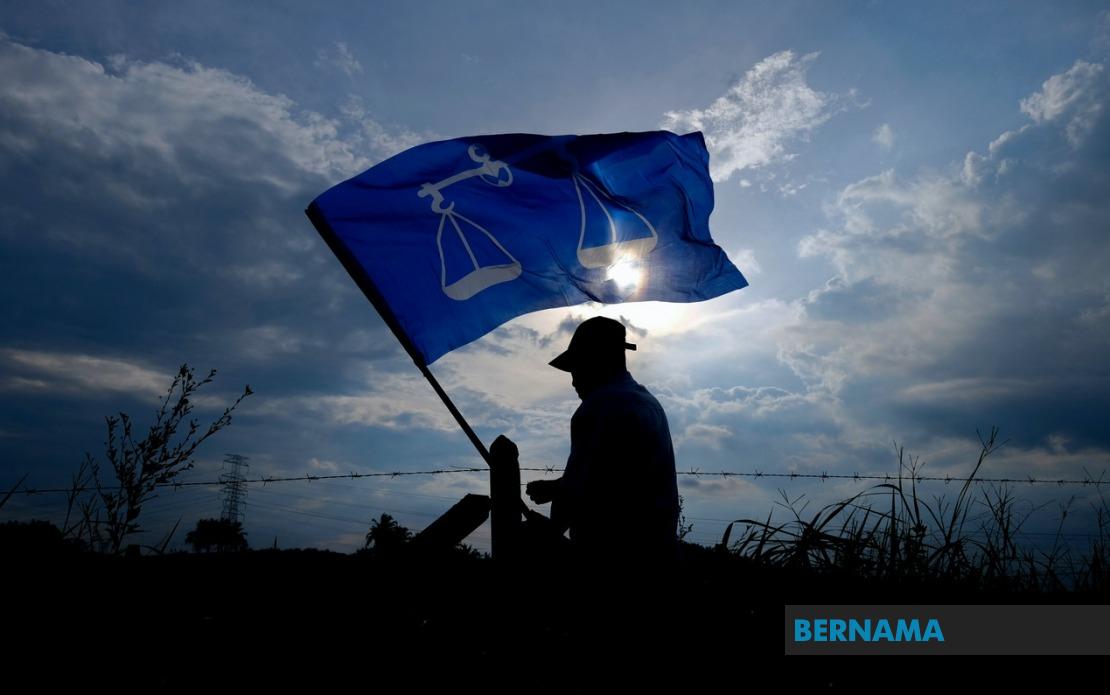
Barisan Nasional will recalibrate its political approach and candidate selection process for the forthcoming Negeri Sembilan state election, with party leadership acknowledging that the state's unique characteristics demand a departure from strategies employed elsewhere. Deputy Prime Minister Datuk Seri Dr Ahmad Zahid Hamidi, speaking in his capacity as BN chairman, emphasised that the coalition recognises fundamental differences in how Negeri Sembilan's electorate is structured and behaves compared to other states across Malaysia.
The electoral arithmetic in Negeri Sembilan presents a distinct challenge for coalition strategists. With a smaller number of state assembly seats and a population distribution that differs markedly from larger states, BN's traditional playbook requires substantial modification. Ahmad Zahid's acknowledgement of these variables signals a more granular approach to electoral planning, moving away from one-size-fits-all methodologies that have sometimes faltered in state-level contests. The recognition that demographic patterns and voting behaviour vary considerably underscores the complexity of contemporary Malaysian electoral politics, where bloc voting has fragmented and swing constituencies have become increasingly influential.
The announcement regarding candidate selection carries particular significance given the compressed timeline. By committing to unveil nominees during the same week, BN demonstrated its intention to move swiftly through the decision-making process, suggesting that internal deliberations had already progressed substantially. This cadence reflects the urgency surrounding Negeri Sembilan, where political momentum and candidate visibility can substantially influence voter perception, especially in constituencies where BN's traditional support base may have loosened following recent electoral shifts across the country.
Ahmad Zahid's recent attendance at the WorldSkills Shanghai 2026 briefing provided the occasion for these remarks, reflecting how senior Malaysian political figures utilise multiple public forums to communicate strategic intentions. The setting, focused on technical and vocational education training, underscored the coalition's broader governance messaging even as electoral machinery engaged intensively behind the scenes. Such multitasking at the highest echelons of government illustrates the parallel tracks on which BN operates during election periods.
The deputy premier also referenced BN's performance in the Johor state election held the previous Saturday, characterising the victory as a product of psychological fortitude and creative problem-solving throughout the campaign. This retrospective analysis of Johor's outcome carried implicit lessons for the Negeri Sembilan campaign, suggesting that similar reserves of organisational resilience and tactical flexibility would be mobilised. The Johor result had reinvigorated BN confidence and provided tactical insights that could be adapted to Negeri Sembilan's particular terrain.
Regarding partnership negotiations with PAS, Ahmad Zahid maintained a cautious posture, explicitly denying the existence of formal agreements between the two parties. He characterised ongoing discussions as preliminary understandings that remained incomplete and unconfirmed. This measured language was particularly significant given speculation surrounding potential candidates for the Menteri Besar position, where PAS influence and BN leadership intersect. The refusal to confirm arrangements reflected both the genuine fluidity of coalition negotiations and the political sensitivity of publicly acknowledging power-sharing deals that opposition parties could weaponise.
The distinction Ahmad Zahid drew between preliminary understanding and formal agreement carries weight in Malaysian coalition politics, where nuance in terminology often masks substantive negotiations. By asserting that nothing had been finalised, BN maintained flexibility while signalling to stakeholders that discussions remained active. This approach allowed space for last-minute adjustments without losing face publicly, a critical consideration in intra-coalition dynamics where perceived concessions to allies can trigger backlash among party members.
Ahmad Zahid's observations regarding the Unity Government's internal dynamics further illuminated the delicate balance required to maintain the federal coalition. His comments about Housing and Local Government Minister Nga Kor Ming, the DAP deputy chairman, exemplified the management challenges inherent in governing partnerships that span ideologically disparate parties. By suggesting that critical statements should be avoided within the coalition context, Ahmad Zahid articulated a governance philosophy that prioritises solidarity over internal accountability, a position that remains contested among reformist constituencies.
The assertion that Unity Government relations remain professional and intact at federal level represents careful messaging aimed at reassuring partners and the public that despite occasional friction, the coalition functions coherently. This narrative proved essential given periodic tensions that surfaced between BN and DAP ministers over policy and resource allocation. Ahmad Zahid's personal note about Nga Kor Ming being his friend added a soft-power dimension to formal statements, suggesting that working relationships transcended party affiliation.
For Malaysian observers, the Negeri Sembilan election assumes importance as a barometer of BN's recovery trajectory following mixed recent results. The state's relatively moderate size and mixed socioeconomic composition make it representative of battleground constituencies elsewhere in the peninsula. BN's success or failure here could influence coalition confidence heading toward potentially significant electoral contests in coming years, making the candidate selection and strategy refinement Ahmad Zahid described more consequential than routine state election management.
The timing of these announcements, concurrent with the broader WorldSkills initiative, reflected BN's effort to maintain a governance narrative alongside electoral mobilisation. By situating political strategy discussions within broader policy contexts, party leadership sought to present itself as simultaneously focused on development and democratic renewal. This multidimensional approach characterises how established governing coalitions balance electoral competition with administrative responsibilities in contemporary Malaysia.

