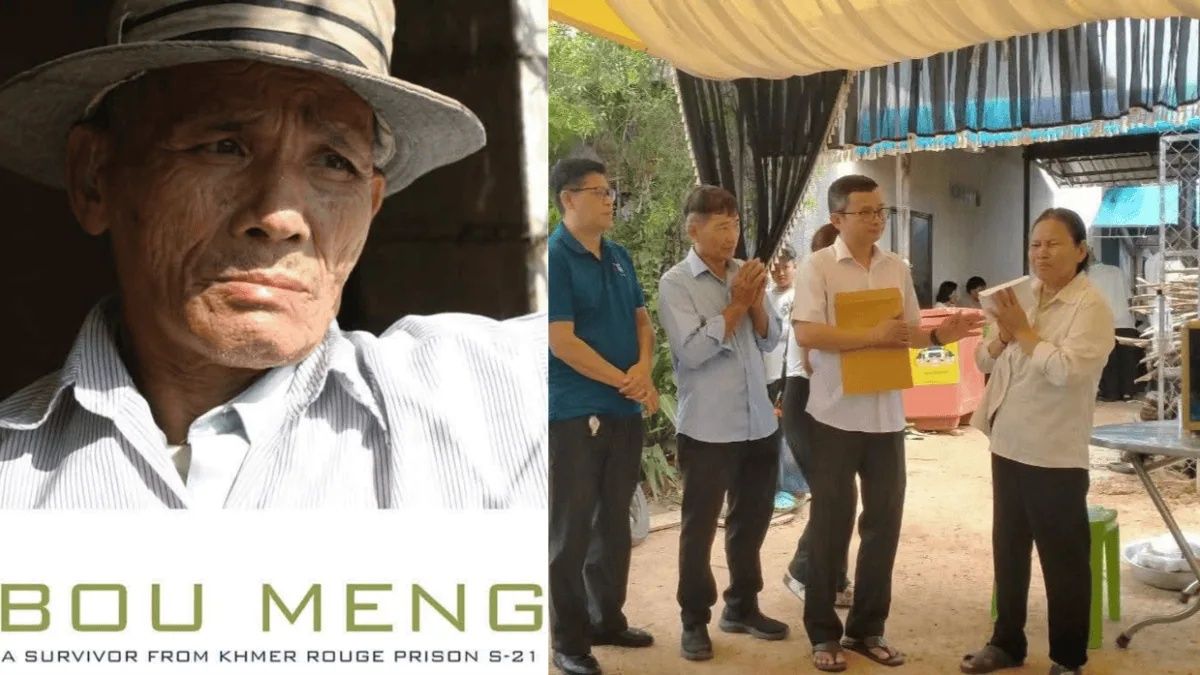
Bou Meng, one of the last living witnesses to the systematic atrocities committed at Cambodia's Tuol Sleng prison during the Khmer Rouge era, has died at age 85, leaving behind an invaluable personal archive of survival and resilience from one of the twentieth century's most devastating genocides. The museum that now operates at the former S-21 detention facility announced his passing on Friday, August 14, 2026, marking the loss of someone whose testimony proved crucial to documenting the horrors inflicted on an estimated 12,000 to 15,000 detainees who passed through the prison's gates between 1975 and 1979.
Meng's survival itself was remarkable given the systematic nature of the Khmer Rouge's extermination program. When he and his wife were imprisoned at S-21 in 1977, their children were forcibly separated and sent to a labour camp for young people, a fate he never overcame. The family reunion he might have dared to imagine never materialized—he would never see his wife or children again after that initial separation, a personal tragedy emblematic of the millions of broken families destroyed during the genocide. Yet despite the psychological weight of this loss and the physical torments inflicted upon him, Meng endured where the vast majority perished.
The reason for his survival differed markedly from many documented cases of S-21 detainees. Rather than being kept alive because of connections to the regime or intelligence value, Meng's technical skill as a painter proved his lifeline. The Khmer Rouge commanders, who carefully selected prisoners with useful abilities, recognized Meng's artistic talents and employed him to create propaganda materials and other works. This utilitarian value, while morally inconsequential to the regime, became the narrow corridor through which he passed when nearly all others around him descended into execution chambers and mass graves. His survival was therefore contingent on a combination of brutal luck and the opportunistic exploitation of his labour.
After the regime's collapse in 1979 and the decades that followed, Meng transitioned from a fugitive haunted by trauma into something more purposeful: a historical witness and educator. When the Extraordinary Chambers in the Courts of Cambodia (ECCC), often referred to as the Khmer Rouge Tribunal, began prosecuting surviving regime leaders in the early 2000s, Meng participated in the pursuit of accountability. He testified at the trial of Kaing Guek Eav, better known by his revolutionary alias Comrade Duch, who had commanded S-21 and overseen its operations with methodical cruelty. This courtroom appearance represented more than a legal proceeding; it was an act of witness that converted personal suffering into documented history.
Beyond his role in formal justice processes, Meng dedicated his later years to serving as a living bridge between Cambodia's traumatized past and its future. Operating from within the Tuol Sleng Museum, which was established at the actual site of the former prison, he engaged directly with visitors—Cambodian schoolchildren, international tourists, researchers, and journalists—sharing narratives of his imprisonment that no textbook could fully convey. His presence at the museum transformed it from a repository of photographs and documents into a space where abstract historical knowledge could encounter human testimony. Through these conversations and interactions, he worked consciously to ensure that the specificity and horror of what occurred at S-21 would not be permitted to fade into generic remembrance.
The symbolic weight of Meng's passing extends beyond Cambodia's borders, particularly for Southeast Asian societies grappling with historical memory and transitional justice. His death marks a threshold in Cambodia's relationship with its own history—the gradual disappearance of direct survivors who can testify from lived experience rather than secondary sources. For Malaysian and regional observers, Meng's life and testimony serve as a reminder of the fragility of human rights protections and the importance of documenting atrocities while perpetrators and survivors remain alive to provide evidence. His commitment to education underscores a regional challenge: how societies emerging from mass violence can preserve authentic historical testimony while building mechanisms that prevent future abuses.
The Tuol Sleng Museum's official statement acknowledging Meng's passing emphasized his role as "a crucial historical witness to the crimes that the Pol Pot genocidal regime committed against the Cambodian people." This language reflects how Cambodia has come to view survivors like Meng—not merely as victims seeking compensation, but as essential custodians of institutional memory whose participation in commemorative and educational efforts serves broader national purposes. The museum's recognition also implied a future challenge: continuing Meng's work of survivor testimony and public education without access to the primary witnesses who experienced imprisonment firsthand.
For younger Cambodians and regional audiences, Meng's approach to survival—neither seeking vengeance nor retreating into silence, but instead choosing to educate—offers a particular model of post-atrocity living. His decision to spend decades facilitating museum visits rather than withdrawing from public life suggests one path through collective trauma. The conversations he initiated with schoolchildren and international visitors represented a deliberate engagement with Cambodia's painful history as a foundation for preventing future violence. This pedagogical orientation aligns with the broader mandate of transitional justice mechanisms across Southeast Asia, which increasingly emphasize victim education and survivor testimony as components of social healing.
Meng's absence will be felt acutely at Tuol Sleng, where his physical presence and willingness to share stories provided an irreplaceable human dimension to the museum's mission. The museum now faces questions about how to preserve his legacy and continue the educational work he embodied. Whether through recorded testimonies, written memoirs, or structured oral history programs, institutions across Cambodia and the region will need to develop new strategies for maintaining the kind of immediate, personal testimony that Meng provided during his final decades. His death underscores the urgency of such preservation efforts, as the window for capturing first-hand accounts continues to narrow.

