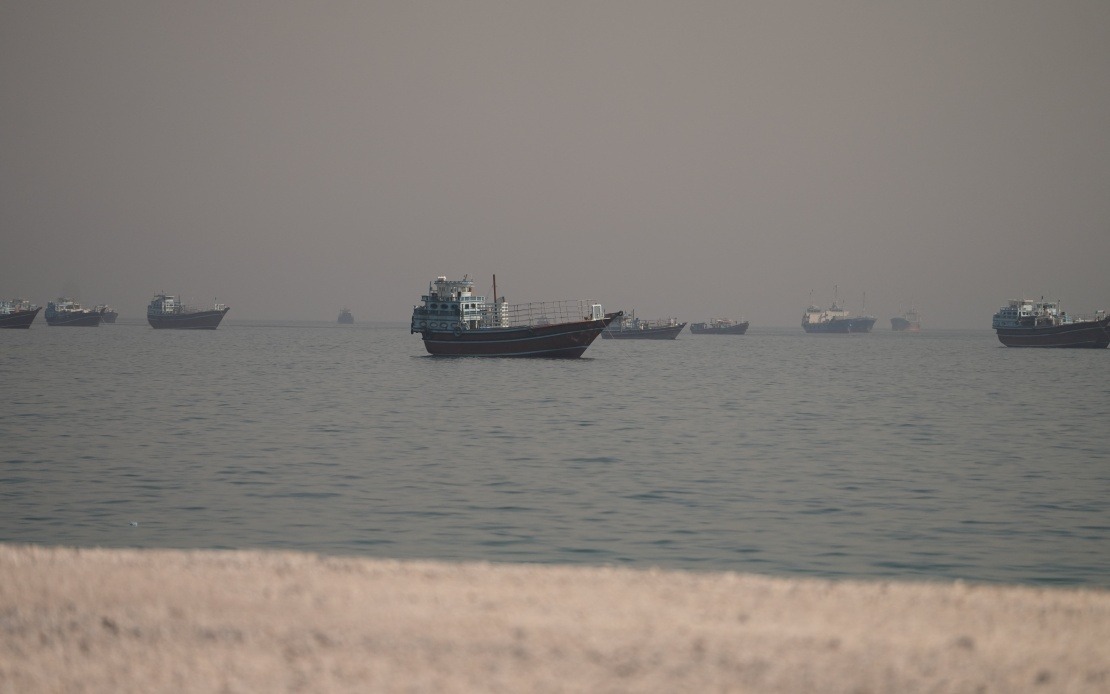
Britain and France have declared their willingness to establish a multinational military operation aimed at protecting maritime traffic through the Strait of Hormuz, one of the world's most economically vital shipping corridors. The announcement, made jointly by British Prime Minister Keir Starmer and French President Emmanuel Macron on Friday, represents a significant escalation in Western efforts to counter what they perceive as threats to international commerce. The initiative directly contradicts Iranian policy, which has consistently rejected external military intervention in the waterway and asserts that only littoral states possess legitimate authority over the corridor's security arrangements.
The Strait of Hormuz remains indispensable to the global energy economy, serving as the passage through which roughly one-fifth of the world's seaborne oil and gas transits daily. For Southeast Asian energy-importing nations including Malaysia, Singapore, and Thailand, any disruption to this shipping lane carries immediate economic consequences. The strait's strategic importance explains why Britain and France have framed their initiative as essential to maintaining international commerce and economic stability. Their joint statement emphasised that restoring unimpeded passage for merchant vessels of all flags constitutes not merely a regional concern but a matter affecting global security and prosperity.
The European powers have secured Oman's cooperation to implement their maritime security initiative within Omani territorial waters. This diplomatic achievement provides crucial legitimacy for the multinational force, as it anchors the operation within the consent framework of a regional state rather than imposing it unilaterally. Oman's participation signals that at least one Gulf nation shares concerns about navigation hazards in the waterway and recognises the benefits of coordinated international maritime surveillance. The agreement reflects careful diplomatic choreography designed to present the initiative as locally supported rather than as Western powers imposing their will on the region.
Iran's response to such foreign military deployments has been consistently hostile. Iranian officials have repeatedly warned that external powers projecting military force into the Strait of Hormuz violate international law and regional norms. Tehran maintains that waterway security falls exclusively within the remit of littoral states—primarily Iran and Oman—and that any multinational military presence constitutes unwarranted interference in affairs belonging to regional nations. This ideological position reflects Iran's broader foreign policy doctrine that privileges regional sovereignty and rejects what it characterises as neo-colonial interventionism by Western powers.
The British and French announcement occurs within a context of escalating maritime tensions in the Gulf region. Recent incidents involving shipping disruptions and seizures have created investor anxiety about the reliability of trade routes transiting the strait. Western nations attribute these incidents to Iranian actions or Iranian-aligned proxy forces, allegations Tehran denies while emphasising that its own security concerns justify defensive measures. The multinational force proposal therefore represents not merely a security initiative but a statement about which actors should control maritime security architecture in one of Asia's most strategically vital regions.
For Malaysia and other ASEAN nations dependent on Strait of Hormuz transit for energy supplies and trade, this geopolitical contest carries profound implications. Malaysian shipping companies and energy importers have strong interest in stable, predictable conditions within the waterway. Yet the nation also values its non-aligned foreign policy orientation and seeks to maintain balanced relationships across competing powers. Any multinational force composed primarily of Western nations might complicate Malaysia's diplomatic positioning, requiring careful navigation between supporting international maritime freedom and avoiding appearance of alignment with specific power blocs against regional states.
The joint British-French statement articulated commitment to respecting state sovereignty and upholding international law, language seemingly designed to counter Iranian claims that the initiative violates such principles. By emphasising their dedication to regional stability and cooperation with regional partners, the European leaders attempted to present the multinational force as beneficial to all regional states rather than as a threat. This framing suggests awareness that unilateral Western military expansion could generate backlash from regional governments seeking to balance among great powers.
The feasibility and effectiveness of the proposed force remain uncertain. Previous attempts at international maritime coalitions in the Gulf have encountered variable participation and unclear mandate boundaries. The multinational force would require sustained commitment from multiple nations, coordination of naval assets across significant distances, and rules of engagement acceptable to participating states. Questions about enforcement authority, operational transparency, and dispute resolution mechanisms have not yet been publicly addressed but will prove critical to the initiative's credibility.
For Southeast Asian observers, this development exemplifies broader patterns of great power competition extending into Asian maritime zones. The Strait of Hormuz lies beyond the ASEAN region yet profoundly affects Southeast Asian economies. Similar competitions over navigation freedom, military deployment rights, and coastal state authority have emerged in the South China Sea, creating analogous tensions between principles of international maritime law and regional sovereignty claims. How the British-French initiative unfolds may offer lessons relevant to managing comparable disputes closer to ASEAN territory.
Longer-term implications depend substantially on how Iran responds and whether other regional and extra-regional powers choose to support, oppose, or ignore the multinational force. Escalatory cycles in the Gulf risk disrupting the fragile equilibrium that has prevailed despite persistent bilateral tensions. Conversely, if the force operates without provoking major Iranian reactions and successfully enhances maritime security perceptions, it could establish new norms for international cooperation in critical sea lanes. The coming weeks will likely reveal whether this initiative represents a sustainable framework for managing Gulf maritime security or merely another chapter in the region's cycle of competitive posturing and strategic uncertainty.

