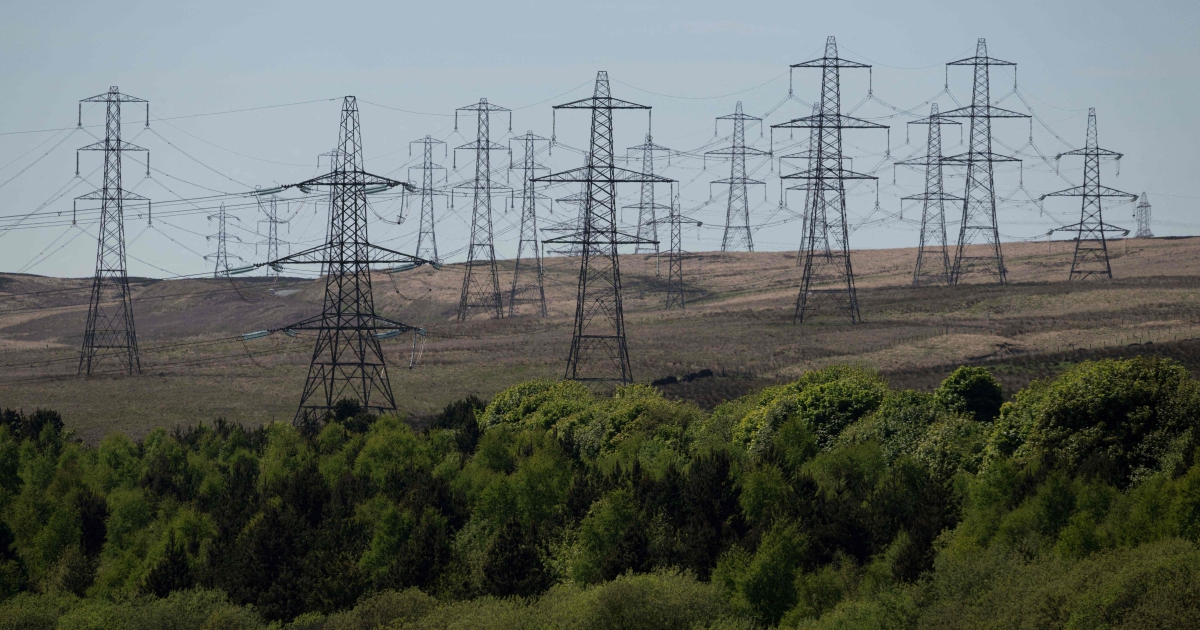
The incoming British administration led by Prime Minister Andy Burnham has confirmed it will implement tax cuts specifically targeting electricity charges, according to an official statement released from Downing Street on Tuesday. The policy move represents a direct response to the escalating household energy affordability crisis that has gripped the United Kingdom and neighbouring European economies in recent years, marking one of the new government's initial steps to honour its electoral commitments on economic relief.
The timing of this announcement underscores the severity of energy cost pressures facing British households. Over the past two years, electricity bills have surged dramatically across the region, straining household budgets and forcing difficult choices between essential services. For Malaysian readers accustomed to relatively stable utility costs, the magnitude of these increases may be striking—many British families have experienced bill rises exceeding 100% during the recent crisis period, fundamentally altering consumption patterns and household financial planning across the nation.
Tax relief on electricity represents a nuanced policy tool that differs from direct price caps or subsidy mechanisms. By reducing the levies and duties applied to power consumption, the government aims to provide immediate relief at the point of purchase while maintaining market mechanisms. This approach reflects broader ideological preferences within the incoming administration regarding the balance between state intervention and market function, a debate increasingly relevant across Southeast Asia as regional economies grapple with their own energy transition challenges.
For context, the United Kingdom has implemented various energy support measures since energy prices began escalating in 2021, including direct household grants and temporary levy freezes. However, such emergency interventions carry substantial fiscal costs and have proved unsustainable as baseline energy prices remain elevated. Tax reduction mechanisms offer a different pathway, potentially providing longer-term relief whilst signalling confidence in eventual market stabilisation.
The broader implications of this policy extend beyond immediate household relief. Energy cost inflation has fundamentally reshaped European political discourse, contributing to electoral shifts and forcing governments to reconsider energy policy frameworks. For Malaysia and Southeast Asia, watching how developed economies manage the political economy of energy costs provides instructive lessons as the region simultaneously pursues decarbonisation goals whilst managing affordability concerns—a tension already visible in debates surrounding renewable energy transitions and fossil fuel pricing.
Andy Burnham's emphasis on delivering tangible relief reflects growing political vulnerability around cost-of-living pressures. Polling data across Europe indicates that household energy affordability ranks among voters' most pressing concerns, often superseding traditional policy priorities. The new Prime Minister's early action signals recognition that addressing immediate economic hardship will define the government's initial credibility and public support trajectory, even as longer-term energy infrastructure reforms proceed.
The electricity tax cut announcement also reflects calculations about which sectors can absorb policy shifts without triggering cascading effects. Energy retailers and generators will experience reduced revenue from governmental levies, yet the government presumably anticipates that lower consumer bills will not trigger corresponding price reductions or cost-shifting elsewhere. This reveals fundamental questions about market structure and whether energy markets function as governments expect when price signals shift.
Sectors dependent on stable energy costs—including manufacturing, data centres, and industrial users—may view household-focused tax relief with mixed reactions. If electricity taxes decline primarily for residential consumers whilst remaining high for commercial users, this could reshape relative competitiveness. The policy design details, which remain under development, will substantially influence economic effects across different sectors and regions of Britain.
Comparative energy policy across democracies demonstrates recurring tensions between short-term affordability and long-term sustainability objectives. Tax relief mechanisms effectively subsidise current consumption patterns, potentially incentivising usage continuity rather than efficiency improvements. Whether paired with efficiency programmes or conservation messaging will determine whether this represents a temporary relief measure or a signal that consumption patterns face reduced pressure to evolve toward lower-intensity models.
The announcement also occurs within broader European discussions about energy security and independence, particularly following disruptions to Russian energy supplies. If tax relief encourages increased electricity consumption, this could heighten demand pressures precisely as European nations attempt to improve energy security through reduced overall consumption and accelerated renewable transitions. The policy therefore sits at the intersection of multiple competing strategic objectives—affordability, security, and decarbonisation—that frequently pull governments in opposing directions.
For Malaysian policymakers and energy consumers, developments in British energy policy warrant attention as precedents in managing politically volatile price adjustments. As Malaysia contemplates its own energy sector evolution, balancing domestic affordability with investment requirements and climate commitments, the British experience illustrates how quickly energy costs can dominate political agendas and constrain policy flexibility. The Burnham government's approach to this challenge through targeted tax mechanisms offers one possible model for reconciling competing pressures, though implementation details and actual household impact remain to be observed.
The success of this initiative will be measured not only in immediate household financial relief but in whether tax reductions stabilise political pressure sufficiently to permit longer-term energy infrastructure modernisation. This dual challenge—providing near-term relief whilst enabling transition—increasingly defines energy governance across developed democracies, with implications extending far beyond Britain itself.

