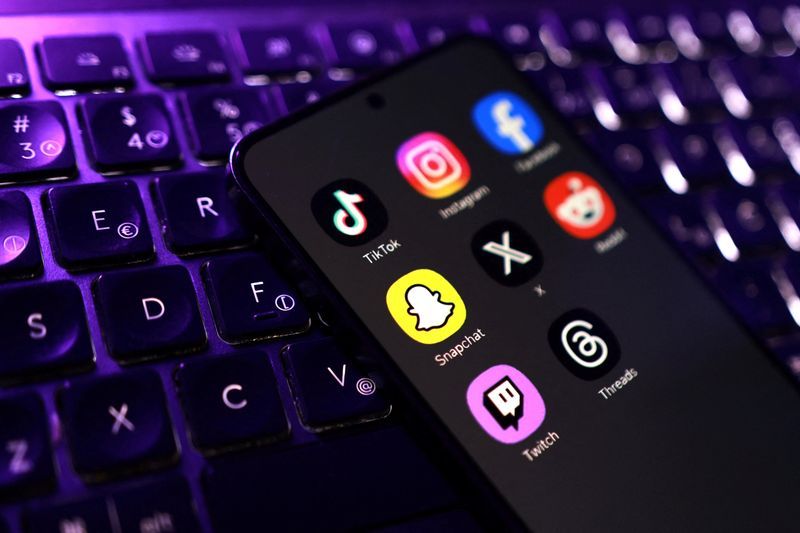
British teenagers participating in a government-commissioned trial demonstrated measurable improvements in sleep quality, mental focus and overall wellbeing when their access to social media was deliberately restricted, according to research published this week. The findings emerge from a significant study involving 309 households where adolescents aged 13 to 17 agreed to implement various limitations on their social media consumption over a four-week period. The trial was conducted before Prime Minister Keir Starmer announced plans to pursue legislation banning social media access entirely for under-16s, suggesting the government is building an evidence base to support forthcoming policy decisions on digital regulation.
Researchers tested three distinct intervention models to determine which approach offered the best balance between effectiveness and practicality. Participants were randomly assigned to one of three groups: those who accepted a 15-minute daily limit per social media application, teenagers who maintained a social media curfew between 9 p.m. and 7 a.m., or young people who removed social media apps entirely from their devices. Each restriction strategy produced measurable benefits across multiple wellbeing dimensions, including sleep patterns, mood regulation, academic concentration, study time allocation and the quality of family interactions. This breadth of reported improvements suggests that reducing social media exposure generates genuine physiological and psychological gains for adolescents, a finding likely to intensify policy discussions across Europe and beyond.
The overnight curfew emerged as the most sustainable intervention from a practical standpoint. Families found this approach significantly easier to implement and maintain compared with the other two options, and teenagers in this group reported the most consistent and reliable improvements in sleep quality. This outcome has important implications for future policy design, as it suggests that age-appropriate restrictions targeting specific times rather than total prohibition may encounter less resistance and achieve better compliance rates. The overnight curfew effectively addresses the widely documented phenomenon of sleep disruption caused by late-night social media use, which has been linked to adolescent depression and anxiety in previous research.
A complete removal of social media applications from devices delivered the most pronounced improvements in concentration and academic focus, demonstrating that total elimination produces superior cognitive benefits. However, this more stringent approach came with a significant social cost. Teenagers assigned to the complete ban group frequently reported feeling isolated and disconnected from their peer networks, suggesting that while the cognitive gains were substantial, the emotional and social consequences may be psychologically harmful for developing adolescents. This tension between cognitive benefits and social wellbeing presents a genuine dilemma for policymakers attempting to craft regulations that protect adolescent health without creating isolation.
The 15-minute daily limit per application proved the most problematic intervention in practice. Participants consistently described this approach as impractical and difficult to implement effectively, primarily because it interrupted ongoing conversations and real-time communication with friends. When social media serves as the primary communication channel—particularly platforms like Snapchat where ephemeral messaging dominates peer interaction—imposing strict time limits fragments social connection and creates frustration rather than fostering healthy digital habits. The low compliance rate associated with this strategy suggests that overly rigid interventions targeting specific time allocations may be counterproductive, especially for teenagers who rely on these platforms for essential peer communication.
A critical finding concerns the ease with which teenagers circumvented intended restrictions. Many participants worked around limitations by accessing social media through alternative devices including tablets, laptops and older mobile phones that hadn't been included in the intervention protocols. This workaround strategy reveals a fundamental enforcement challenge that regulators must address: restricting access on a single device provides only superficial protection unless entire digital ecosystems are modified. Moreover, adolescents themselves proposed that broader restrictions could be bypassed through virtual private networks and by falsifying their age during account creation. These insights highlight the technical sophistication of young people and suggest that regulatory approaches relying on device-level controls alone will prove inadequate.
The emotional impact of social disconnection during the trial period deserves particular attention. Participants reported feeling excluded from peer group activities, missing important social updates, and experiencing anxiety about being left out of conversations. These feelings intensified in cases where a single platform dominated peer communication channels. For developing adolescents navigating crucial identity formation and social integration, such isolation carries psychological weight that extends beyond the trial period. The finding suggests that any regulatory framework must account for the reality that social media has become integral to adolescent social functioning, not merely optional entertainment.
Research participants expressed nuanced views about how restrictions should be designed and implemented. They advocated for approaches that account for developmental maturity, suggesting that age-sensitive policies allowing greater autonomy for older teenagers might achieve better outcomes than blanket regulations. This perspective from the teenagers themselves provides valuable guidance for policymakers: adolescents demonstrate capacity for reasonable digital self-regulation when given developmentally appropriate autonomy, and overly paternalistic restrictions may generate resentment and circumvention behaviour rather than building healthy habits.
The timing of this research is significant for Malaysia and the broader Southeast Asian region, where youth social media penetration exceeds many Western countries. As policymakers across the region contemplate digital regulation targeting young people, the evidence from this UK trial provides actionable insights about which interventions generate genuine benefits and which approaches encounter implementation obstacles. The challenge of enforcement through alternative devices is particularly relevant in developing markets where many teenagers own multiple connected devices and have ready access to workaround technologies. Malaysian regulators considering similar policies should heed the practical lessons from this trial, particularly the finding that sustainable restrictions must address the full range of devices and demonstrate respect for the legitimate social functions that social media serves in adolescent peer relationships.

