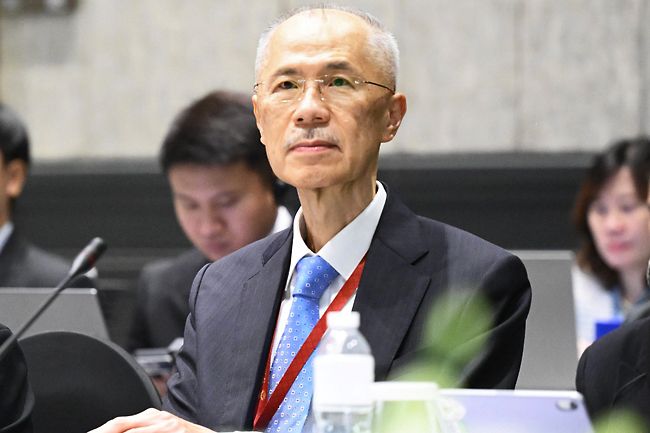
Brunei Darussalam has reaffirmed its dedication to advancing the rule of law and deepening judicial cooperation throughout the Asean region, with Chief Justice Dato Seri Paduka Steven Chong presenting this message at the 13th Meeting of the Council of Asean Chief Justices in Bangkok last month. The council gathering, which convened from July 21 to 23, brought together senior judicial leaders from across Southeast Asia to address pressing issues confronting modern courts and justice systems in an increasingly complex world.
The rapid transformation of societies across the region—driven by technological innovation, changing economic structures and mounting environmental pressures—is fundamentally altering how courts operate and what they must contend with. Chong underscored that artificial intelligence, emerging forms of digital assets, and disputes arising from climate-related matters now regularly appear before judicial systems that were designed for a different era. These developments demand that courts not only understand new legal questions but also possess the technological capacity to manage cases effectively in an age of digital evidence, virtual proceedings and algorithmic decision-making.
Recognising these shifts, Asean's judicial leadership has initiated a series of forward-looking projects designed to equip courts for the decades ahead. The CACJ has championed advancements in court technology infrastructure and frameworks governing AI use within judicial systems. An expanded e-learning portal now provides judges and court staff across member states with access to training materials and professional development resources without geographical barriers. Additionally, the council has prioritised dialogue on how courts should approach climate justice—a field that will likely generate increasing caseloads as environmental regulation tightens and resource disputes multiply.
Yet technological adaptation forms only part of the council's agenda. Chong emphasised that the human dimension of justice remains paramount, with courts obligated to serve people fairly and compassionately. The CACJ has therefore invested in judicial education programmes that go beyond conventional legal training, encompassing areas such as judicial wellbeing—recognising that judicial officers face significant occupational stress. Equally important is the council's work on victim-sensitive approaches to adjudication, particularly in trafficking in persons cases, which represent some of the most traumatic matters courts encounter.
Brunei itself has contributed meaningfully to this agenda. Earlier in 2024, the nation successfully hosted the Second Asean Multilateral Judicial Knowledge Exchange focused specifically on victim-sensitive adjudication of trafficking cases. This initiative demonstrates how regional cooperation extends beyond formal resolutions to practical capacity-building. By bringing together judges from across Asean, creating spaces for candid discussion of judicial approaches, and enabling mutual learning, such exchanges strengthen the professional networks that underpin effective regional governance. The relationships forged through these meetings often prove as valuable as the formal knowledge exchanged.
The Bangkok meeting itself encompassed extensive deliberations across multiple specialised areas. Working groups reported on developments in judicial education, civil proceedings, case management systems and technological infrastructure. The council also reviewed progress on the Asean Judiciaries Portal, a shared resource platform that is helping standardise practices and facilitate information-sharing. Discussions extended to cross-border disputes affecting children, a category of cases requiring particular sensitivity and coordination among jurisdictions. Additional working groups examined climate justice, insolvency law, intellectual property protection, and the increasingly complex legal status of digital and virtual assets—areas where Asean courts must develop coherent approaches or risk inconsistency that undermines investor confidence and consumer protection.
Parallel to the main council session, senior judges conducted bilateral and multilateral meetings addressing specific sectoral concerns. Chong met separately with Chief Justice of the Supreme Court of Singapore Sundaresh Menon, reaffirming the close relationship between Brunei and Singapore's judiciaries and their shared commitment to strengthening cooperation. This bilateral engagement reflects how even within formal Asean structures, bilateral relationships remain crucial to building trust and coordination. The two chief justices, representing neighbouring jurisdictions with interconnected legal systems and commercial relationships, signalled their intention to continue deepening these ties.
The Brunei delegation also participated in specialised meetings on insolvency law and intellectual property, two fields where cross-border coordination is essential. As regional trade deepens and companies operate across multiple Southeast Asian jurisdictions, inconsistent insolvency frameworks or differing intellectual property standards can create legal uncertainty that discourages investment. By facilitating dialogue between judges, practitioners and policymakers across these fields, Asean is gradually building greater harmonisation while respecting the legitimate differences between national legal systems.
The commitment to strengthening judicial cooperation carries particular significance for Malaysia and other regional economies. A more cohesive Asean judicial architecture promises benefits spanning commercial dispute resolution, cross-border litigation, environmental protection and human rights. When courts in different Asean countries develop shared understandings of how to approach novel legal questions—whether concerning digital assets, AI governance or climate liability—it reduces transaction costs for businesses operating regionally and strengthens protection for vulnerable populations such as trafficking victims or displaced persons. Yet such cooperation cannot be imposed; it requires the kind of voluntary engagement and reciprocal commitment that Brunei and other member states have consistently demonstrated.
The Bangkok Declaration signed at the meeting's conclusion formalises this renewed commitment, though its significance lies not merely in the document itself but in the collective will it represents. Asean's judiciaries have chosen to tackle emerging challenges collaboratively rather than in isolation, recognising that legal systems in an interconnected region cannot afford to drift apart. For Malaysia, which maintains extensive ties throughout Asean and faces similar pressures from technological change, environmental challenges and transnational crime, this commitment to deeper judicial cooperation offers a valuable framework for addressing problems that invariably cross borders.

