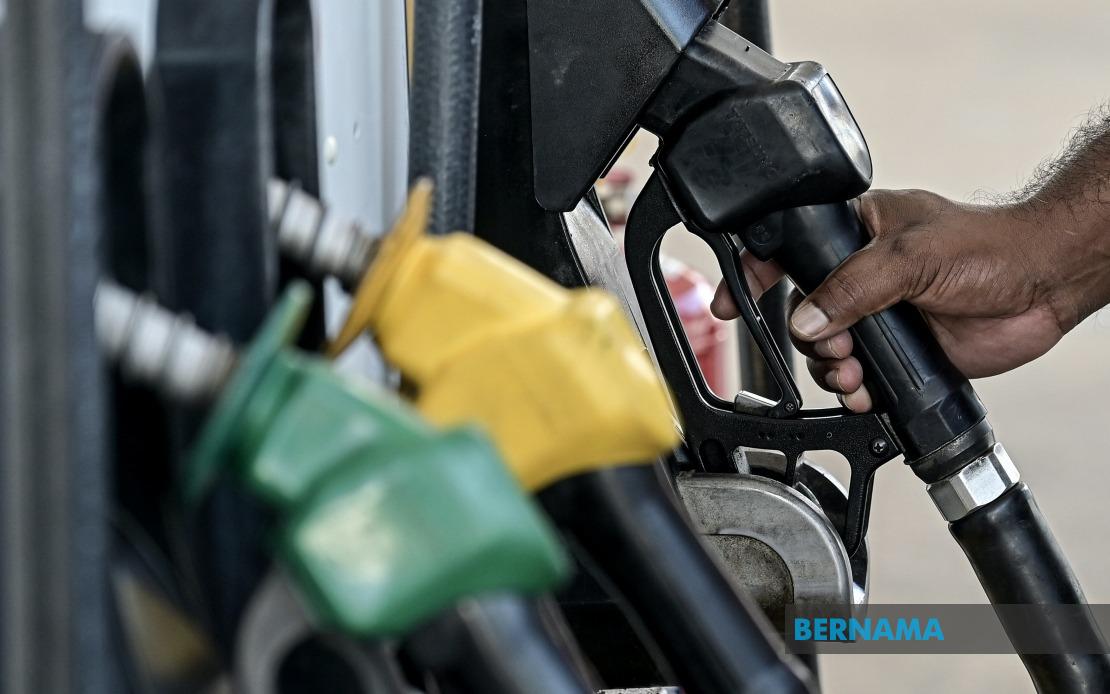
Malaysia's fuel subsidy programme enters a new phase today with the full rollout of BUDI Diesel, a scheme aimed at easing cost-of-living pressures for hundreds of thousands of vehicle owners. The initiative brings subsidised diesel to approximately 700,000 private vehicle owners across the country, marking a substantial jump in coverage compared to the previous BUDI Diesel Individu programme, which provided monthly financial assistance to just 180,000 recipients in Peninsular Malaysia.
The Ministry of Finance has structured the initiative geographically, with 400,000 eligible private diesel vehicle owners in Peninsular Malaysia benefiting at the primary rate of RM2.10 per litre, while 300,000 owners in Sabah, Sarawak, and the Federal Territory of Labuan participate in the scheme. This regional approach reflects the government's recognition that fuel costs represent a significant household expense across different parts of the country, with particular weight given to the East Malaysian states and federal territory where transportation infrastructure and distances often necessitate higher fuel consumption.
Beyond private vehicles, the government has broadened eligibility criteria to encompass commercial operations. Approximately 70,000 commercial and goods transport vehicles in Sabah, Sarawak, and Labuan now qualify for subsidised diesel at RM2.15 per litre through the SKDS system. Notably, the programme has extended to company-registered private pickup trucks and jeeps, subject to specified conditions, acknowledging the role these vehicles play in small business operations and agricultural activities across Malaysia.
Early indicators suggest smooth implementation and strong uptake. During the early access phase that commenced on 27 June for Peninsular Malaysia diesel vehicle owners, approximately 80,000 transactions had been recorded by midday on 30 June. These transactions encompassed roughly 3.2 million litres of subsidised fuel valued at nearly RM7 million. The MyKad verification system at petrol stations functioned without significant disruptions, indicating that the technological infrastructure supporting the scheme is functioning as intended, though teething problems may emerge as transaction volumes increase substantially.
The portal mechanism for additional quota applications has also demonstrated considerable interest. Within hours of the announcement, more than 22,000 applications were submitted through the BUDI MADANI portal by eligible pickup and jeep owners seeking the additional 100 litres of diesel monthly allowance. This response underscores the relevance of the scheme to vehicle-dependent sectors such as agriculture, small-scale transport, and rural commerce.
To reduce administrative friction and encourage participation, the government has introduced complementary measures addressing vehicle ownership challenges. A three-month waiver on ownership transfer fees of up to RM100 takes effect today, facilitating individuals who operate vehicles registered under family members' names. This provision is particularly relevant to Malaysian households where vehicles may be registered under elders' names or spouses' identities for various reasons, including insurance considerations or family asset management structures. The Road Transport Department has scheduled extended weekend operations at all state JPJ offices and state UTC branches from 4 to 26 July, operating between 8 am and 5 pm, to accommodate this anticipated surge in transfer applications.
Recognising practical family dynamics where licensed drivers may not be the registered vehicle owner, the Ministry of Finance has created a transfer mechanism allowing initial beneficiaries to reassign their subsidy eligibility to a spouse, parent, child, or sibling. This one-time transfer preserves overall household benefit while permitting flexibility in actual fuel purchasing. By 9 am on 30 June, nearly 1,000 transfer applications had already been received, demonstrating demand for this provision and suggesting many households faced exactly the scenarios the mechanism was designed to address.
The subsidy expansion carries significant economic implications for Malaysia's cost-of-living narrative. Fuel constitutes a substantial component of household transport expenses and business operating costs, particularly for diesel-dependent sectors including public transport, logistics, agriculture, and rural commerce. By fixing diesel prices below market rates for a defined beneficiary pool, the government aims to insulate these segments from volatile global petroleum markets while managing fiscal expenditure more carefully than a blanket subsidy would permit. The extension to commercial transport operators recognises their critical role in distributing goods and maintaining economic connectivity across the country.
From a policy design perspective, the BUDI Diesel approach represents targeted subsidisation rather than universal price controls. This targeting mechanism aims to direct limited fiscal resources toward those most dependent on diesel consumption while reducing the fiscal burden compared to subsidising all diesel sales. However, implementation complexity increases with multiple tiers of eligibility, verification requirements, and transfer procedures, creating potential for administrative friction and beneficiary confusion as the scheme scales beyond its pilot phase.
The scheme's success will partly depend on sustained MyKad verification accuracy and protection against potential abuse or misuse of eligibility. The Ministry of Finance will need to monitor whether actual monthly consumption patterns align with allocated quotas and whether the transfer mechanism functions as intended without facilitating unintended subsidies to ineligible parties. Transparency regarding programme costs, beneficiary demographics, and fuel volume subsidised will be crucial for maintaining public confidence, particularly as global oil prices fluctuate and opportunity costs of subsidies become more apparent.
For Southeast Asian context, Malaysia's approach of targeted rather than universal fuel subsidies aligns with regional trends toward fiscally sustainable support mechanisms. Indonesia, Thailand, and other regional peers have similarly moved toward means-tested or sector-specific subsidy schemes to manage budgetary pressures while addressing legitimate cost-of-living concerns. The BUDI Diesel expansion demonstrates Malaysia's commitment to supporting vulnerable transport-dependent populations while attempting to control fiscal exposure in an era of volatile energy markets and constrained government resources.
As the programme matures beyond its launch phase, policymakers will be monitoring transaction volumes, subsidy costs, and distributional outcomes. The scheme's political credibility rests partly on delivering promised benefits to 700,000 vehicle owners without creating perverse incentives or fiscal crises. Early administrative success and strong initial uptake suggest the government's implementation preparations were thorough, though the true test will emerge as volumes increase and edge cases emerge from a nationwide beneficiary population.

