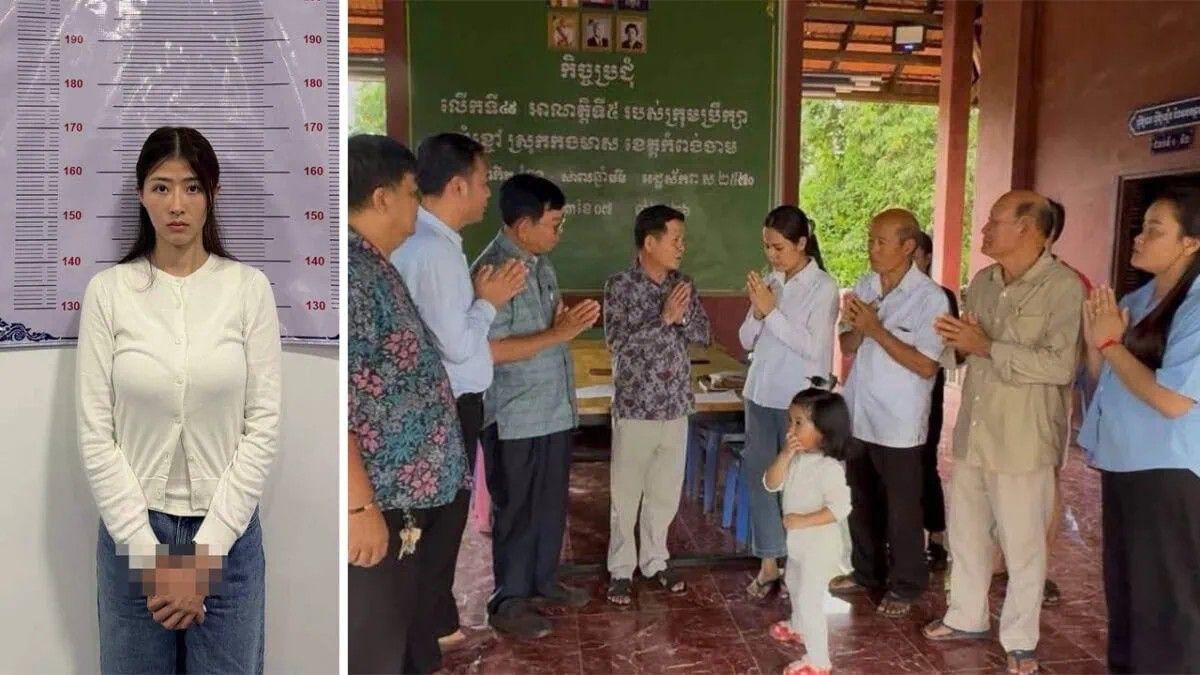
The family of Kuoch Limhan, a construction laboratory official with Cambodia's Ministry of Public Works and Transport, has formally withdrawn a civil complaint against the driver accused of killing him in a fatal traffic collision in Phnom Penh last month, following receipt of S$60,000 in compensation. The settlement between the two parties was finalised through an out-of-court agreement signed on August 6, though the more serious criminal case against driver Sam Meychou will proceed independently through the Cambodian court system.
According to the documented settlement, Oknha Tong Hok Seng, father of the accused driver, arranged payment of the full civil compensation amount to Limhan's widow. Seung Kimhor, representing the victim's family in the civil proceedings, became a signatory to the agreement alongside the defendant's family. The accord was formally witnessed by Kong Sekleng, commune chief, and lawyer Phon Thearin, lending official weight to the out-of-court resolution.
The civil agreement, marked as Case No. 4396 and dated July 31, 2026, explicitly stated that both parties had agreed to resolve the dispute through an amicable and mutually understanding approach. In exchange for the compensation payment, the victim's representatives agreed to formally withdraw their civil complaint filed with the Phnom Penh Municipal Court. Both parties also committed to cease pursuing any additional claims or demands related to the incident, with the understanding that the matter had been conclusively settled through goodwill and direct negotiation.
The tragic incident that sparked the legal action occurred on the evening of July 28 in Phnom Penh's Sen Sok district. According to court records and eyewitness accounts, Meychou was driving when she allegedly crossed the centreline while attempting to overtake another vehicle. Her vehicle then struck Limhan's motorcycle, killing him instantaneously. Limhan was reportedly heading home with milk for his young daughter when the collision occurred.
Footage recovered from the scene painted a stark picture of the immediate aftermath. Video evidence showed Meychou and a companion departing the accident location in a tuk tuk while Limhan's body remained on the rain-soaked pavement. The accused driver did not remain at the scene, prompting charges not only for the fatal traffic accident but also for leaving the scene of the collision—a compound offence under Cambodian traffic law.
The accused turned herself in to authorities on the afternoon of July 30, two days after the collision. By the following day, July 31, the Phnom Penh Municipal Court had formally announced charges against Meychou for causing a fatal traffic accident and fleeing the scene. Following questioning of the accused and review of investigative evidence, the court's investigating judge ordered her to be held in pre-trial detention pending further proceedings.
It is crucial to distinguish between the civil and criminal dimensions of this case, as they operate under separate legal frameworks in Cambodia. While the civil settlement conclusively resolves the family's financial claims for damages and eliminates their standing to pursue compensation through the courts, it carries no bearing whatsoever on the state's criminal prosecution. The Phnom Penh Municipal Court retains full authority to proceed with charging and potentially trying Meychou for the more serious criminal offences of fatal traffic accident and hit-and-run.
Such settlements are not uncommon in Southeast Asian jurisdictions where civil compensation can sometimes ease the burden on grieving families and provide swift financial redress, though critics argue they may inadvertently diminish the gravity of criminal accountability. In this instance, the victim's family evidently determined that accepting substantial compensation represented a practical resolution to their immediate financial circumstances, independent of their views on criminal justice outcomes.
The distinction between civil and criminal proceedings reflects broader legal principle: while a victim's family may resolve financial disputes through settlement, only the state—acting through its prosecutorial and judicial institutions—can determine whether criminal charges should proceed to trial and what penalties, if any, should be imposed. Meychou's placement in pre-trial detention suggests the investigating judge determined sufficient evidence existed to warrant continued detention and eventual court proceedings on the criminal charges.
For Malaysian observers, the case illustrates how hit-and-run incidents and traffic fatalities are handled across the region, where civil compensation negotiations sometimes proceed in parallel with criminal investigations. While such settlements address victims' families' immediate needs, the continuation of criminal proceedings underscores the state's independent responsibility to ensure accountability for serious traffic offences, regardless of private financial arrangements between parties.

