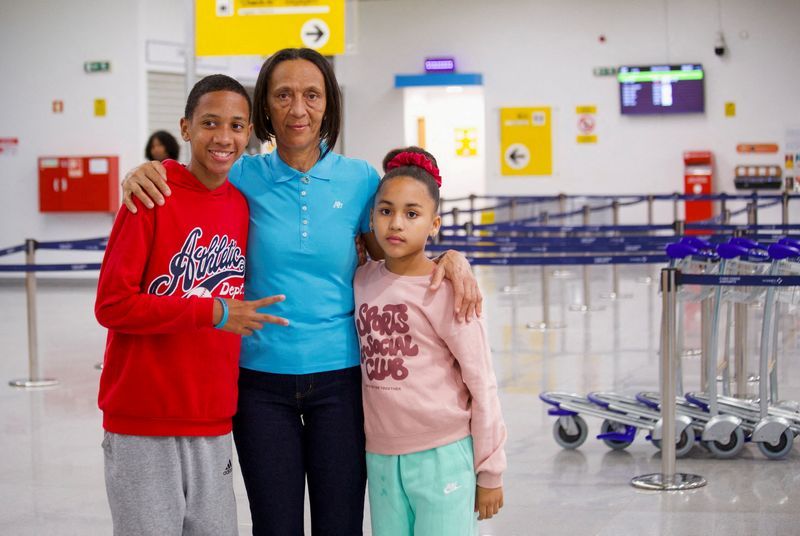
A dramatic twist in what could have been a heartwarming World Cup story has finally reached its resolution. Ana Candida Evora, mother of Cape Verde's custodian Vozinha, will now be able to travel to the United States to support her son in his nation's historic World Cup campaign after the US State Department intervened to grant her the necessary visa documentation. The 40-year-old goalkeeper's tearful revelation that his mother had been unable to attend his match against Spain—one of the tournament's most talked-about performances—prompted swift diplomatic action that would not have seemed possible just days earlier.
Vozinha's display against the reigning European champions in Atlanta captured global attention for all the right reasons. Operating behind a modest defensive line, the Cape Verde shot-stopper made seven crucial interventions to preserve a scoreless draw, a result that represented nothing short of a seismic upset in modern international football. His commanding presence and distribution suggested years of accumulated experience at the highest levels of club competition, and scouts in the stadium recognised they were witnessing something genuinely special. The designation of Cape Verde's player of the match was merely formalising what every observer had already concluded—this was a once-in-a-lifetime tournament performance from the African nation's custodian.
What should have been an occasion of pure celebration became instead a poignant reminder of the accessibility gaps that still plague international sport. After securing his side's greatest result, Vozinha spoke publicly about the absence of his greatest supporter, visibly overcome by the knowledge that his mother had been unable to witness what may be the crowning achievement of his professional career. His emotional disclosure resonated far beyond the sporting community, tapping into universal themes about family, sacrifice, and the barriers that money and bureaucracy can erect between loved ones during momentous occasions.
The underlying issue was a visa application rejection rooted in Washington's tightened immigration policies. Under policies implemented during President Donald Trump's administration, citizens from numerous nations—including Cape Verde—faced demands to post substantial bonds, with some required to lodge up to $15,000 USD in security deposits before gaining entry to United States territory. For most families in Cape Verde, a nation with a per capita income substantially below global averages, such a requirement represented an insurmountable financial obstacle, transforming what should have been an accessible family moment into an impossible luxury.
When Vozinha's story went public, it illuminated the human cost of these restrictive measures in ways that abstract policy discussions rarely achieve. The State Department's visa processing operations, particularly the team stationed in Praia, became the focus of international attention and evident public pressure. Officials responded by confirming that their consular staff had engaged directly with Evora to navigate the approval process, pledging to move her application through with the full resources available to them. A State Department representative confirmed the reversal to travelling journalists, declaring that procedures and standards would be maintained while ensuring that Evora would receive clearance to travel to the United States without delay.
Solving Evora's predicament required acknowledging another layer of complexity. While the State Department had previously implemented a blanket bond requirement for most Cape Verdean nationals seeking entry, they had subsequently created an exception for individuals holding legitimate World Cup match tickets. This carve-out recognised that legitimate sporting visitors should not face the same barriers as other travellers. However, the financial hurdles had already discouraged Evora from pursuing the Atlanta journey in the first place, making the technical exception meaningless without the broader diplomatic push that followed Vozinha's emotional disclosure.
The goalkeeper will now have his mother's support for Cape Verde's forthcoming fixture against Uruguay in Miami on Sunday, representing the nation's second group-stage assignment. This match carries significant implications for Cape Verde's tournament trajectory, as the Atlantic island nation competes in a grouping that includes some of football's traditional powerhouses. Having Evora in the stands will provide profound emotional reinforcement for Vozinha as he faces the sustained pressure of defending against Uruguay's creative attacking players, potentially influencing his mental state and, by extension, his physical performance during ninety challenging minutes.
The broader context reveals how World Cup hosting can sometimes expose structural inequities in global movement and access. Nations conducting World Cup operations face pressure to facilitate attendance by family members and supporters, yet immigration frameworks designed for other purposes can inadvertently create obstacles that transcend simple sporting logistics. Vozinha's case represents merely one individual story, yet it encompasses questions about whose families get to witness the greatest moments in football, whose celebrations remain constrained by geography and economics, and how sport's universal aspirations sometimes collide with nationalism's restrictive impulses.
For Malaysian and Southeast Asian observers, Vozinha's journey carries resonance beyond the sporting narrative. Many regional citizens have navigated their own visa application challenges when seeking to travel internationally for significant personal occasions. The outcome in this case, where public attention and diplomatic intervention overcame bureaucratic obstacles, offers both encouragement and a sobering reminder that such interventions remain exceptional rather than systemic. While sporting achievement can occasionally mobilise institutional resources, most families facing similar circumstances lack the profile to generate comparable attention, leaving them to navigate systems designed without consideration for their particular circumstances.
The resolution also underscores football's unique capacity to transcend national boundaries and generate the kind of public sympathy that can occasionally move governments toward different courses of action. Vozinha's vulnerability and emotional honesty created a narrative that resonated across cultures and continents, transforming a technical visa denial into a symbol of human resilience and the bonds between parents and children that endure regardless of tournament outcomes or bureaucratic procedures. His mother's eventual arrival in Miami will complete a story that began in disappointment but ends, against considerable odds, with family unity at sport's grandest stage.