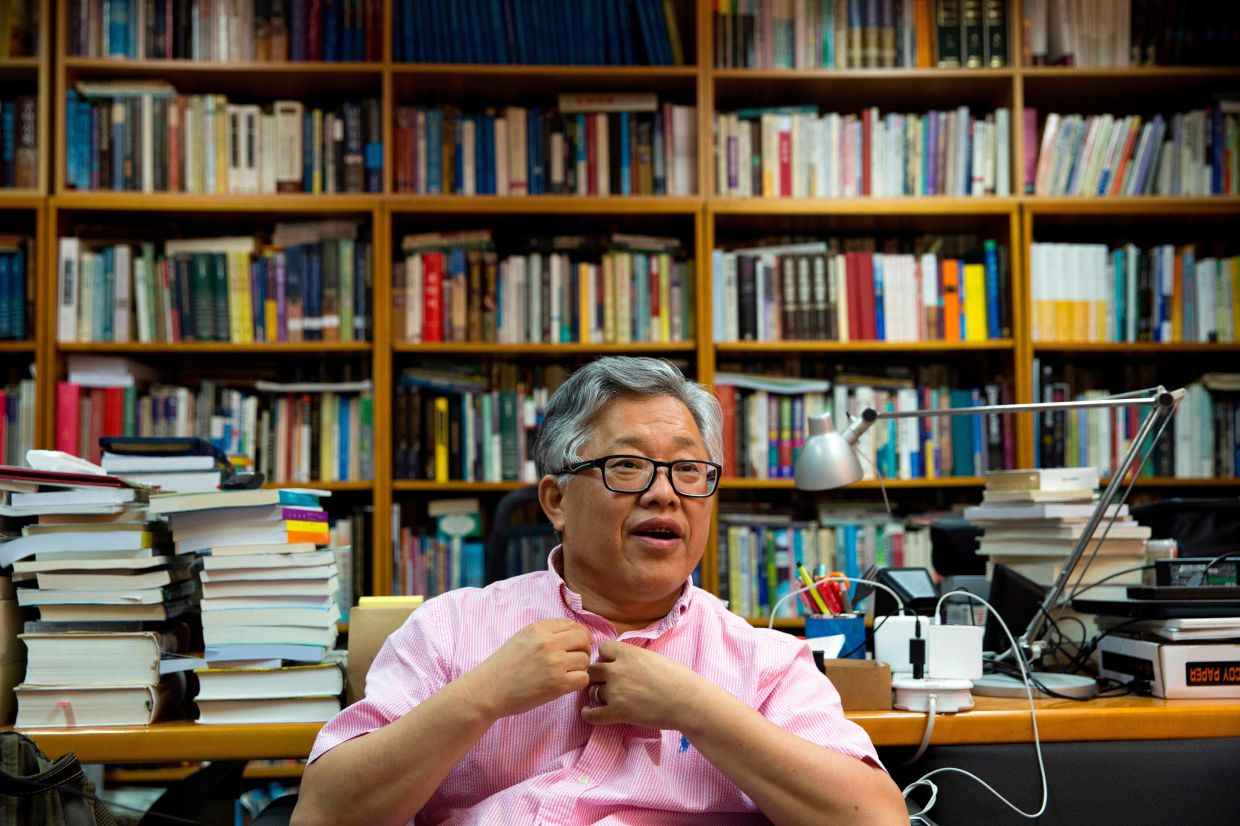
China has freed Ezra Jin, the founder of Zion Church, an underground religious congregation that has operated outside state control in Beijing, ending a detention that began in October when authorities arrested him alongside other church members. The release, confirmed by his family and the church itself, marks a rare intervention by Washington in a sensitive religious freedom issue that has increasingly strained US-China relations under the current political administration.
Jin, known by his Chinese name Mingri, leads one of China's most prominent unregistered churches—faith communities that Christians deliberately choose over state-approved alternatives to maintain doctrinal autonomy and worship practices free from government oversight. When arrested on October 10 alongside other congregants, officials cited "suspicion of the illegal use of information networks" as the formal charge, a broadly worded accusation frequently deployed against religious groups that maintain digital communication channels and online communities.
The intervention by US President Donald Trump appears decisive in the outcome. During a May visit to Beijing, Trump specifically raised Jin's case with Chinese President Xi Jinping and indicated that the Chinese leader had pledged to "strongly consider" granting his release. This direct diplomatic engagement reflects growing American pressure on religious freedom issues in China, particularly affecting Christian communities whose independent worship has drawn increasing state scrutiny over the past decade.
According to rights organisation ChinaAid, Jin arrived in Los Angeles shortly after his release, and Chinese officials explicitly linked the decision to discussions between Trump and Xi, framing it as a gesture of goodwill timed to coincide with American Independence Day celebrations. This characterisation suggests deliberate choreography designed to signal diplomatic cooperation between Washington and Beijing despite broader trade and geopolitical tensions between the nations. For Jin's family, the release carries profound personal significance after years of separation—his daughter Grace stated that he had not seen his two young sons and most family members for over seven years due to travel restrictions imposed after 2018.
The broader context of Jin's detention reflects an intensifying crackdown on religious expression under Xi Jinping's leadership. The Communist Party has long viewed organised religion with deep suspicion, viewing independent congregations as potential challenges to state authority. Under Xi's tenure, this oversight has expanded significantly, with authorities systematically targeting unregistered churches, mosques, and temples perceived as existing outside proper ideological control. Recent months have witnessed accelerating raids and restrictions that extend far beyond individual arrests.
Zion Church itself represents a significant religious community by Chinese standards. Founded in 2007, it expanded to encompass approximately 1,500 members before authorities pressured it to close in 2018. Despite this formal shutdown, the congregation maintained vibrant digital engagement that intensified during the COVID-19 pandemic lockdowns, eventually establishing a following across forty Chinese cities through online platforms. This expansion into digital space likely triggered heightened state concern about the organisation's reach and influence beyond Beijing's immediate oversight.
Jin's personal journey illustrates the difficult choices facing religious leaders in contemporary China. After 2018, his family relocated overseas, but he chose to return to China to maintain direct leadership of his congregation, accepting the consequences of remaining in a country that had effectively banned him from leaving through travel restrictions. This decision to prioritise pastoral responsibility over personal safety demonstrates the commitment that attracts followers to unregistered churches—the willingness of leaders to endure state pressure rather than compromise doctrinal independence.
However, Jin's release remains a singular exception within a broader pattern of intensifying restrictions. Eight other Zion Church members arrested alongside him in October remain detained, signalling that his case was addressed through extraordinary diplomatic channels rather than reflecting systematic policy change. Similarly, other independent congregations continue facing raids and harassment. In June, authorities raided an Early Rain Covenant Church service in Sichuan province and detained leaders, following earlier January arrests of senior members. In Zhejiang province, officials physically dismantled the Yayang Church building and removed its cross—a symbolic assertion of state primacy over religious symbols and spaces.
The diplomatic mechanism through which Jin's release occurred merits careful scrutiny for Southeast Asian observers. The direct US presidential intervention suggests that religious freedom has become a specific point of leverage in great power negotiations, one where American administrations are willing to invest political capital. For religious minorities across Asia confronting government restrictions—whether Christian communities in various nations, Muslim minorities, or Buddhist practitioners in politically sensitive regions—the precedent raises questions about when and whether foreign governments prioritise such advocacy and what strategic calculations determine their intervention.
For Malaysia specifically, Jin's case resonates across multiple policy domains. As a nation with significant Christian and minority religious communities, Malaysia maintains state controls over religious expression through various legal mechanisms. The Zion Church model of intentionally unregistered worship outside government supervision parallels concerns that Malaysian authorities raise regarding certain Christian denominations and independent prayer groups. Additionally, the case demonstrates how global power dynamics intersect with local religious governance—when substantial geopolitical interests align with religious freedom advocacy, outcomes shift dramatically compared to situations where such alignment is absent.
Looking forward, Jin's release may signal subtle recalibration in US-China engagement on religious issues, or it may remain an isolated diplomatic gesture designed to ease broader bilateral tensions. The significant detail that Chinese officials explicitly attributed the decision to Trump's intervention suggests Beijing was willing to trade a single prominent case for perceived diplomatic gains. Whether this creates openings for advocacy on behalf of other detained religious figures, or whether authorities will intensify efforts against remaining congregants to limit future diplomatic leverage, remains uncertain but consequential for religious communities across China and the wider region.

