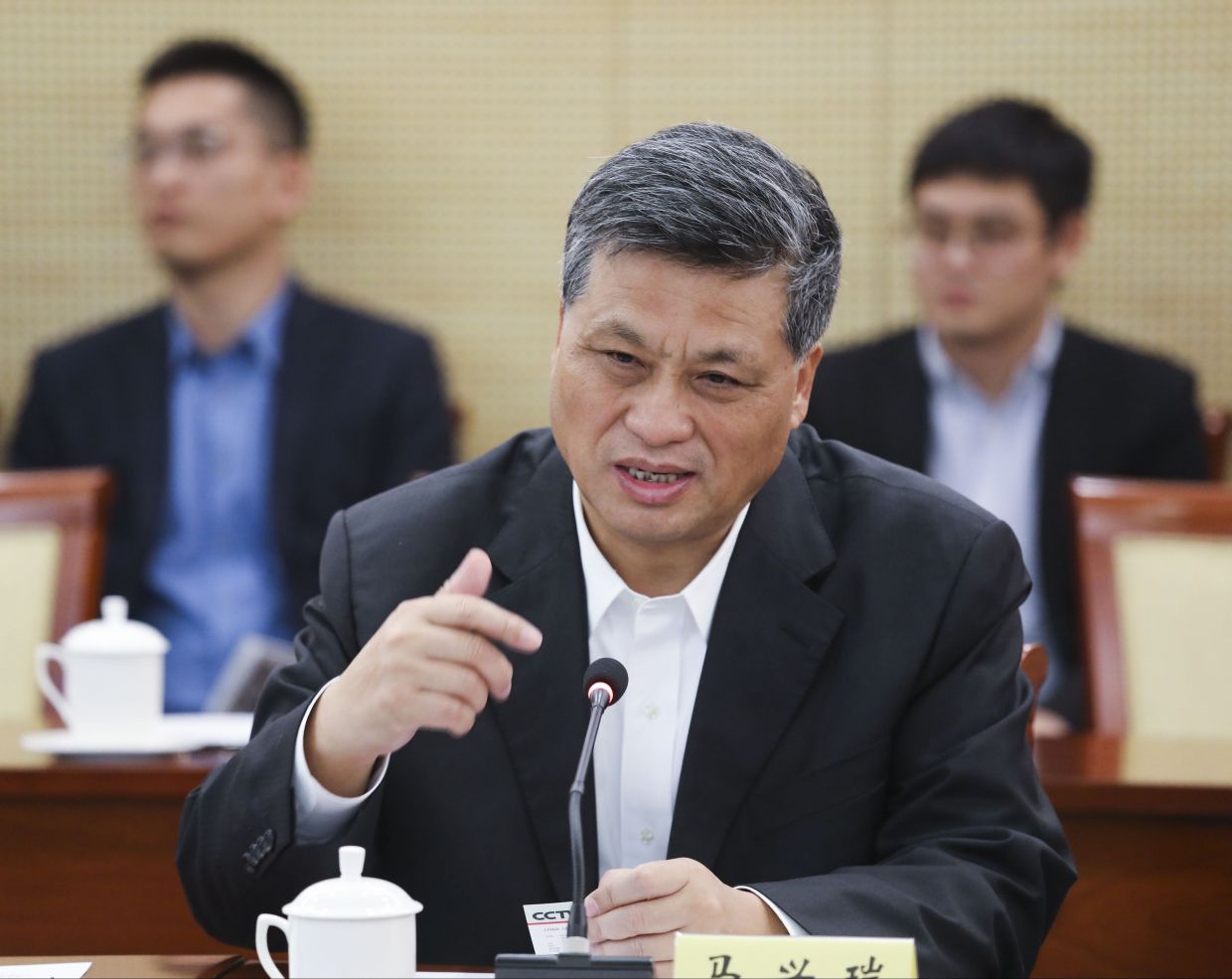
The Communist Party of China has formally confirmed widespread corruption allegations against Ma Xingrui, 67, a senior official whose trajectory from aerospace innovation to regional leadership has unraveled dramatically. The confirmation by the party's Central Commission for Discipline Inspection (CCDI) represents a significant moment in President Xi Jinping's ongoing anti-corruption campaign, which continues to ensnare figures at the highest echelons of power with increasing frequency.
Ma's case carries particular weight because it involves not merely personal misconduct but what investigators characterize as systemic family-level malfeasance. The CCDI documented that Ma created an environment enabling relatives to exploit his political standing for financial gain, with accusations including improper acceptance of gifts and money, orchestrated property purchases at artificially reduced prices, and transactions involving abuse of power in exchange for sexual favours. The commission's investigation uncovered evidence that family members and associates channelled substantial sums of cash and valuable assets through unofficial pathways, creating networks of enrichment predicated entirely on Ma's access to decision-making authority.
The scope of Ma's alleged transgressions extends deep into his administrative functions across multiple jurisdictions. As party secretary of Shenzhen and subsequently governor of Guangdong before his appointment to lead Xinjiang in 2021, he reportedly weaponized official capacity for personal advancement and that of his connections. Investigators found he intervened improperly in cadre appointments, steered contracts and business opportunities toward preferred associates, and leveraged his office to arrange employment for relatives in positions where they possessed no conventional qualifications. These patterns paint a picture of institutional capture where public institutions became instruments for private enrichment rather than serving their intended public mandates.
The CCDI's assessment emphasizes Ma's ideological deterioration alongside his material crimes. Officials concluded he had "lost his ideals and beliefs" and "abandoned his political conviction," betraying the Communist Party's foundational mission. This ideological framing distinguishes Ma's case from conventional corruption prosecutions; the party seeks to establish that his transgressions reflected deeper moral bankruptcy rather than mere opportunistic wrongdoing. His failure to provide truthful confessions during preliminary inquiries compounded the gravity, demonstrating what authorities characterize as obstruction and persistent defiance of party discipline even after Xi's 2012 anti-corruption directives took effect.
What distinguishes Ma's downfall is its placement within a larger pattern of Politburo-level removals. He represents the third elite member investigated under the current political term beginning in 2022, an occurrence that party leadership considers historically unusual. Two former military figures—He Weidong, the Central Military Commission's vice-chairman, and another senior defence official—faced expulsion from both the party and armed forces in recent months. These concurrent investigations suggest systematic vulnerability within China's highest governing circles, potentially indicating either that corruption penetrated deeper into the elite than previously acknowledged or that Xi's anti-corruption machinery has achieved unprecedented reach into previously protected ranks.
The Xinjiang connection warrants particular scrutiny given regional sensitivities and international scrutiny. Ma succeeded Chen Quanguo as party boss of the Xinjiang Uygur Autonomous Region, a position with extraordinary security and administrative responsibilities. The region has been the focal point of both massive investment and intense international controversy regarding governance practices. That corruption investigations now ensnare multiple senior Xinjiang officials—including Chen Weijun and Li Xu in recent months—suggests potential institutional breakdown in the region's administrative apparatus, with implications for governance reliability and resource stewardship across one of China's most strategically significant territories.
Ma's earlier career in China's aerospace sector, where he served as general manager of the China Aerospace Science and Technology Corporation and held senior roles in the manned space programme and new-generation carrier rocket project, highlights how corruption investigations have penetrated into technical and defence-adjacent bureaucracies. Several of his former subordinates in aerospace have faced investigation in recent years, suggesting that Ma may have cultivated corrupt relationships across the technology and defence sectors—relationships that could implicate other officials and contractors operating in sensitive domains critical to Chinese strategic advancement.
The party's decision to release detailed findings through state media reflects Xi's administration's approach to anti-corruption messaging: public exposure serves both as deterrent and as demonstration of the system's ostensible self-cleansing capacity. By broadcasting Ma's downfall, party leadership communicates that even those who reach the Politburo face accountability, theoretically strengthening institutional legitimacy through transparency. However, the concentrated focus on personnel removals without addressing structural incentives for corruption raises questions about whether such investigations target symptoms rather than underlying causes of official malfeasance.
The removal of Ma and military figures reduces the Politburo from 25 to 21 members, creating vacancies that trigger significant succession and power-balancing questions within the party's upper hierarchy. These absences may create opportunities for advancement among remaining members while potentially destabilizing established networks and factional alignments that depend on stable membership. For Malaysia and Southeast Asian observers, such upheaval within China's elite decision-making body carries implications for policy consistency, investment reliability, and diplomatic engagement with Beijing, particularly regarding initiatives spanning infrastructure, trade, and security cooperation.
Ma's case also illuminates the vulnerability of officials working in provinces with substantial economic activity and development investments, such as Guangdong—a region with deep commercial ties throughout Southeast Asia. The exposure of systemic corruption involving property transactions, contract steering, and cadre appointments raises questions about deal-making integrity and institutional reliability in provinces that serve as crucial economic gateways. Southeast Asian governments and businesses operating across these jurisdictions may need to reassess risk profiles associated with major projects and partnerships pending clarification of administrative continuity.
The CCDI confirmed that Ma's ill-gotten gains will face confiscation and that he will be transferred to judicial authorities for criminal prosecution, signalling that investigation conclusions translate into formal legal proceedings. This transition from party discipline to criminal justice marks a crucial threshold that many observed corruption cases traverse. How authorities structure charges, what evidence surfaces during trial, and what sentences emerge will provide insight into whether the party views Ma's case primarily as disciplinary correction within the system or as criminal liability warranting severe punishment. The precedent established could shape how officials perceive risk calculus around corruption engagement during coming years, potentially influencing governance practices across provincial and municipal administrations throughout China and by extension affecting the business environment that foreign investors and Southeast Asian enterprises navigate.

