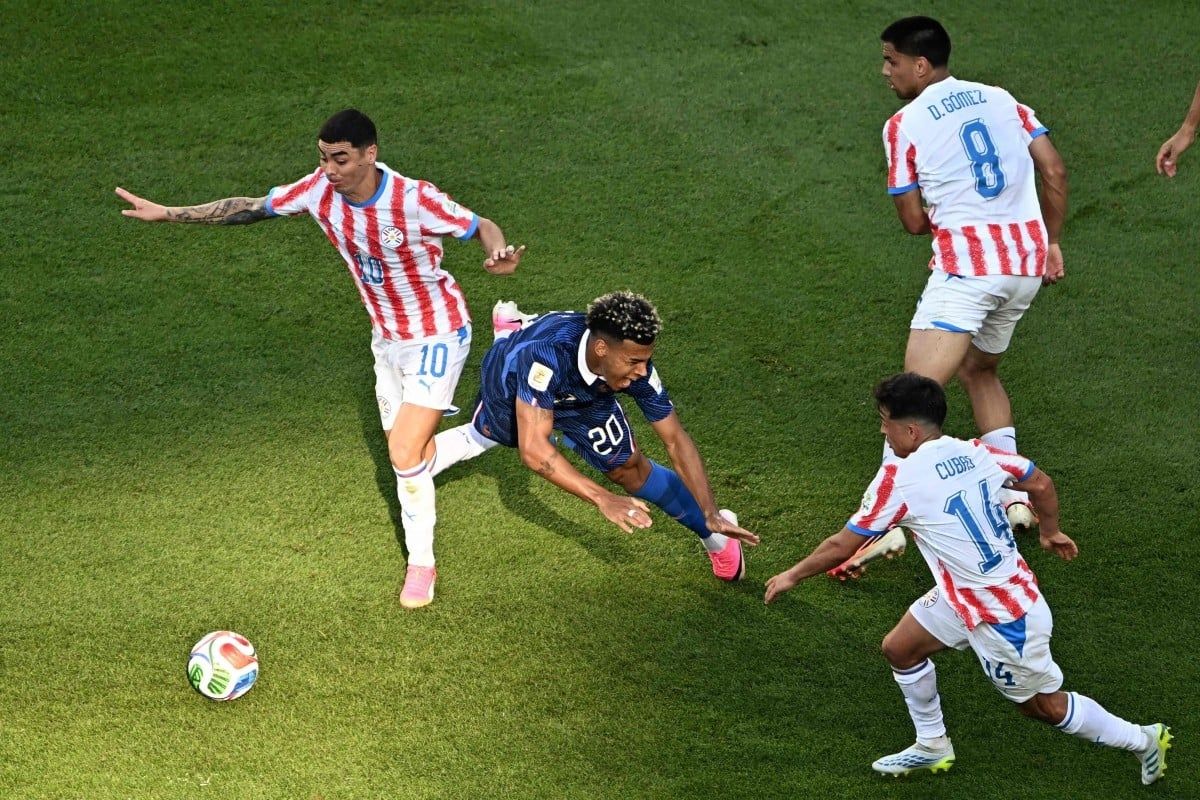
The World Cup round-of-16 encounter between Paraguay and France in Philadelphia on Saturday has sparked considerable discussion among Chinese football enthusiasts, who found themselves increasingly focused on the match officials rather than the action on the pitch. Paraguay's approach throughout the game—which France ultimately won through a Kylian Mbappe penalty scored 20 minutes from the final whistle—struck many observers as prioritizing physical intimidation over genuine attempts to score, a tactical choice that did not go unnoticed by fans monitoring the competition from across the Asian continent.
China's substantial football fanbase has long held a particular respect for their domestic referee Ma Ning, whose strict enforcement standards have earned him the nickname "card master" among supporters. The contrast between Ma's disciplinary approach and the performance of Uzbekistan referee Ilgiz Tantashev became a central point of discussion on Chinese social media platforms, where users reflected on how differently the match might have unfolded under Ma's watch. Tantashev distributed just four yellow cards throughout the encounter, with three going to France, a distribution that struck many Chinese commentators as insufficient given the volume of minor infractions and tactical fouls that punctuated the game.
One popular comment on Chinese social platforms captured the prevailing sentiment: "If Ma Ning was officiating the match, I guess Paraguay would only have their goalkeeper left in the match." This observation highlighted widespread perception that Tantashev's management of the game fell short of standards expected at football's premier competition. Other Chinese users drew direct comparisons, with some sarcastically noting that Mbappe would now understand why Ma Ning's refereeing reputation extended far beyond China's borders. The discussion revealed a generational pride in Chinese football infrastructure and the international recognition of the country's officials.
The quality of Tantashev's officiating came under particularly sharp scrutiny from Chinese social media users, many of whom rated his performance as "very low standard" and questioned his consistency throughout the match. Beyond legitimate critiques of his card distribution, some commenters ventured into more speculative territory, suggesting that the Uzbekistan referee, who has held FIFA credentials since 2013, might have harbored biases against France. One particularly pointed observation noted that Tantashev "was almost wearing a Paraguay jersey today," reflecting frustration with what some perceived as asymmetrical application of the rules.
Contextual factors added another dimension to Chinese fans' analysis. Paraguay had dramatically eliminated Germany in the previous round, and some Chinese observers questioned whether the South American team's competitive level explained their apparent reliance on physical tactics in the France match. One commenter sardonically suggested that Paraguay's need to resort to fouls indicated a significant gap in quality between the two opponents, implying that the team's questionable discipline reflected desperation rather than tactical sophistication. This analysis reinforced the prevailing Chinese view that legitimate football should emphasize skill and technique over confrontational play.
Mbappe's composed response to Paraguay's physical attention demonstrated the temperament expected of elite performers under pressure. The French forward acknowledged that his team had anticipated the style of opposition they would face and stated matter-of-factly that France possessed the capability to match Paraguay's physical intensity when necessary. His comments—"If we have to get our hands dirty, we will get our hands dirty"—paradoxically reassured observers that France could respond to provocation while maintaining sufficient control to progress in the tournament. This message resonated across Chinese social media, where users appreciated Mbappe's refusal to be rattled by the South American team's tactics.
French coach Didier Deschamps provided additional context regarding incidents beyond the playing surface itself. The 57-year-old former World Cup winner revealed that Paraguay's approach extended to the sidelines, where coaching staff exchanged insults that Deschamps found objectionable. His criticism was notably measured, acknowledging that each team played according to its own philosophy while clearly signaling displeasure at unprofessional conduct. This behind-the-scenes dimension reinforced Chinese perceptions that Paraguay's gameplan transcended tactical football and ventured into broader behavioral territory.
An incident involving Paraguay goalkeeper Orlando Gill crystallized Chinese concerns about sportsmanship. After the final whistle, Gill appeared to throw the ball at Mbappe's back following the forward's apparent dismissal of the goalkeeper's gesture. While Gill later attributed the moment to post-match emotions running high, Chinese social media users rejected this explanation outright. Comments reflected disappointment at what viewers characterized as childish conduct unbecoming of professional athletes at the world's most prestigious sporting event. This reaction highlighted that Chinese football audiences, while acknowledging the intensity of competitive matches, maintain expectations regarding basic respect and dignity.
The broader context of Chinese football's engagement with international tournaments reveals how domestic fans use major competitions as opportunities to assess global refereeing standards and playing cultures. Paraguay's approach, filtered through discussion on Chinese social platforms, became emblematic of broader questions about acceptable levels of physical play in modern football. The widespread criticism suggested that prevailing attitudes among Chinese fans favor technical and tactical sophistication over confrontational physicality, and that they increasingly reference their own officials as benchmarks for standards rather than assuming all international referees operate at equivalent levels.
The match outcome—France's advancement to face Morocco in the quarter-finals—appeared almost secondary to discussions about refereeing performance and behavioral standards. This phenomenon itself prompted reflection from Chinese observers, with one Weibo user noting that when an official's performance becomes the focal point of discussion rather than the quality of football on display, something has gone significantly wrong. This meta-commentary reflected sophisticated understanding among Chinese football fans that match officials bear responsibility not merely for enforcing rules but for maintaining the integrity and aesthetic quality of the sport itself.
As France prepared for its next challenge, the debate initiated by Paraguay's approach and Tantashev's management continued resonating through Chinese football communities. The discussion transcended simple dismissal of Paraguay as a "dirty" team, instead engaging with substantive questions about refereeing standards, tactical philosophy, and professional conduct at the highest levels of sport. For Chinese fans accustomed to Ma Ning's particular style of enforcement, the contrast had proven instructive in understanding how different approaches to officiating can fundamentally alter match narratives and perceptions of competing teams.

