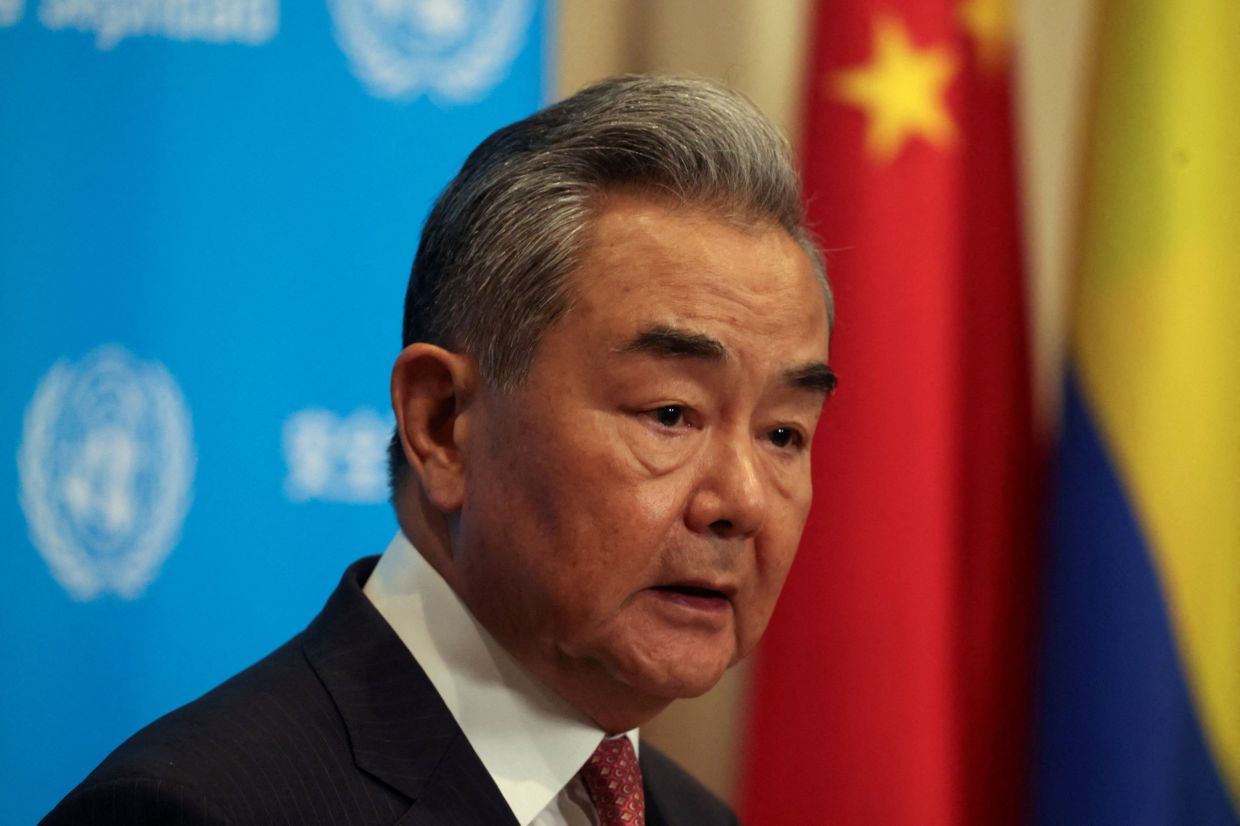
China's Foreign Minister Wang Yi has issued a direct warning to US Secretary of State Marco Rubio to approach Taiwan with "utmost caution", signalling Beijing's heightened sensitivity around the self-governed island during what appears to be a stabilizing phase in Sino-American relations. The Tuesday conversation between the two diplomats underscores the delicate balancing act both nations must maintain as they seek to rebuild confidence following months of escalating tensions, even as fundamental disagreements persist on several fronts.
Wang framed his message in terms of enlightened mutual self-interest, arguing that constructive and strategically stable ties between Washington and Beijing benefit not only both countries but the international community at large. He called on both sides to "remove interference, overcome obstacles, and stay firmly on this correct path", using language that reflects Beijing's broader diplomatic strategy of positioning itself as the reasonable actor seeking stability while implicitly casting Washington's Taiwan policies as destabilizing.
The foreign minister stressed that building a collaborative relationship cannot remain merely aspirational. Wang emphasised that genuine progress requires concrete action, meaningful engagement, and sustained effort from both parties working towards each other. This framing is significant because it places responsibility squarely on Washington to demonstrate commitment through tangible moves, not merely words or diplomatic courtesy.
Central to Wang's message is a framework for managing the bilateral relationship that Beijing has been promoting: lengthening the list of areas where the two countries can cooperate while simultaneously shortening the agenda of contentious issues. In practical terms, this means expanding collaboration on trade, climate, public health, and other domains while compartmentalizing disputes over technology, geopolitics, and sovereignty. The approach reflects Beijing's pragmatic strategy of seeking workable coexistence even amid profound strategic competition.
Beijing's consistent position treats Taiwan as an internal matter rather than an international issue, a stance that fundamentally shapes how Chinese leadership interprets any American diplomatic engagement with the island or commentary on its political status. This worldview explains the intensity of Wang's warning; from Beijing's perspective, external interference in Taiwan affairs constitutes a red line that threatens not merely bilateral relations but could escalate into military confrontation.
The timing of Wang's call gains additional significance when considered against the backdrop of President Trump's summit with Chinese President Xi Jinping in May, an encounter widely viewed as a watershed moment in resetting US-China dynamics. During that landmark meeting, Xi explicitly raised Taiwan, cautioning Trump that mishandling the issue risked pushing bilateral relations into an "extremely dangerous situation" and potentially triggering armed conflict. The president's apparent receptiveness to Beijing's concerns at that meeting suggested a shift in the American approach to the island question.
Washington has characterised the May summit as a diplomatic triumph, highlighting commitments Beijing made regarding supply chain resilience and addressing American economic grievances. Official American fact sheets publicised the agreements as historic victories delivering concrete benefits for US workers and businesses, establishing a narrative that frames Trump's engagement with Xi as productive and consequential. This framing attempts to demonstrate that the summit produced measurable results rather than merely atmospherics.
Yet beneath the surface of ostensible stabilisation, warning signs have emerged suggesting the relationship remains fragile. Tensions have surfaced in recent weeks, hinting that the goodwill generated by the May meeting may be eroding or proving insufficient to overcome structural competitive pressures. These fissures could widen if either side perceives the other as violating the implicit understandings reached during Trump's summit with Xi, or if new developments—particularly regarding Taiwan—unsettle the carefully constructed framework.
For Southeast Asian observers and governments, these diplomatic exchanges carry outsized importance. The region has historically served as a buffer zone and sometimes a flashpoint in US-China competition, with Taiwan's security directly affecting regional stability and freedom of navigation through vital shipping lanes. Any deterioration in Washington-Beijing relations risks pulling regional states into uncomfortable positions, forcing them to navigate between their major trading partners and security partners with competing interests.
Marco Rubio's appointment as Secretary of State has itself raised concerns in Beijing. Rubio has historically taken a harder line on China than some predecessors, and his public statements on Taiwan have occasionally reflected greater sympathy for the island's democratic autonomy. Wang's warning to Rubio thus serves a dual purpose: signalling Beijing's expectations while simultaneously testing whether Rubio, now assuming one of America's highest diplomatic offices, intends to maintain the apparent consensus on restraint regarding Taiwan that seemed to emerge from Trump's May meeting with Xi.
The language Wang employed—invoking the need for both sides to move toward each other and emphasising that constructive relations require persistent effort—suggests Beijing believes American commitment to the stabilisation framework remains uncertain. By publicly cautioning Rubio during their call, Wang aimed to reinforce that Beijing takes Taiwan seriously and will not tolerate what it perceives as American attempts to undermine its sovereignty or internationalize what Beijing considers a purely Chinese matter.
Moving forward, Wang's statement will likely shape how the two countries manage their relationship in coming months. If Washington accommodates Beijing's expectations on Taiwan, the relationship may continue stabilising along the lines seemingly agreed in May. Conversely, if the new Trump administration pursues policies Beijing interprets as violating those understandings, escalation could follow rapidly, with implications extending far beyond bilateral US-China relations to reshape regional security architecture and economic relationships throughout Asia.

