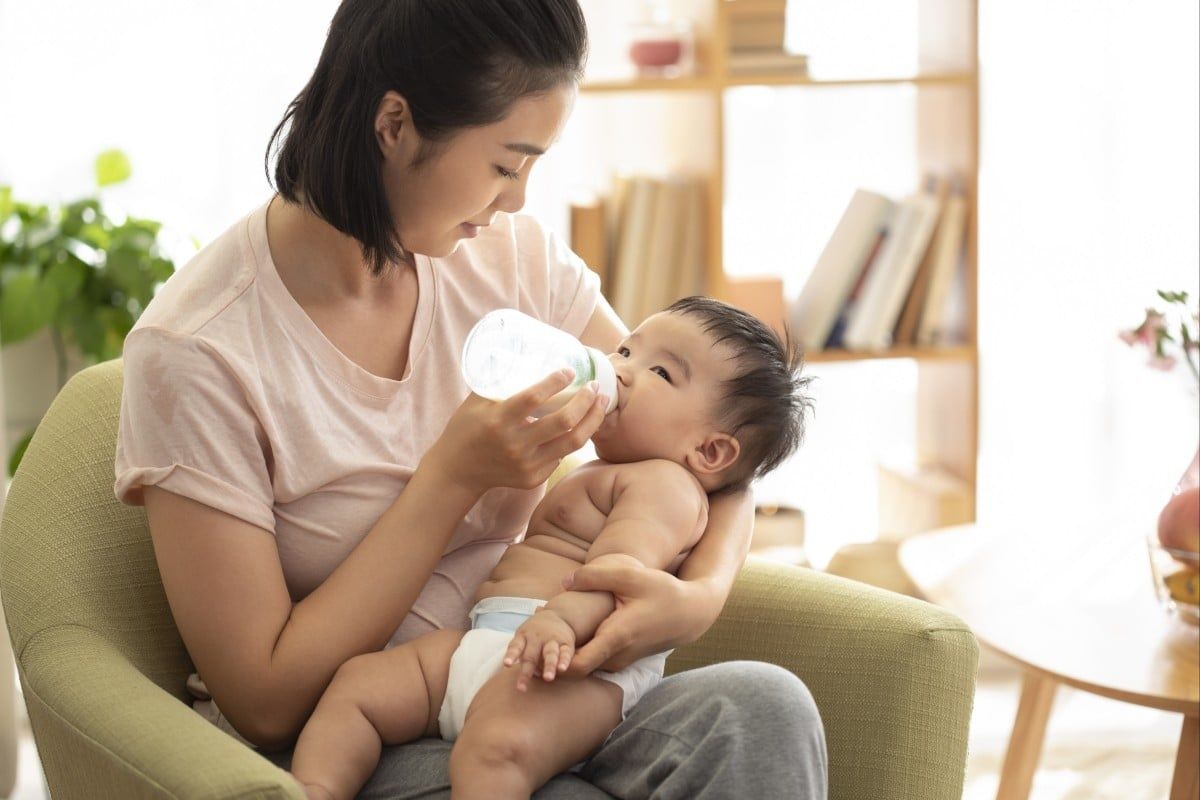
A three-month-old boy in southern China was admitted to intensive care after his parents unwittingly poisoned him by preparing infant formula with boiled vegetable juice instead of plain water. The incident at Zhongshan Women and Children's Hospital in Guangdong province underscores the critical importance of proper infant feeding practices and the dangers posed by well-intentioned but medically misguided parental decisions. The case, reported by Zonglan News, has reignited concerns across China about non-standard infant nutrition, a topic that frequently generates heated discussion on the country's social media platforms.
The baby's symptoms appeared rapidly and with alarming severity. Shortly after consuming the contaminated formula, the infant's complexion turned a concerning purple hue, his lips and mouth area developed a purplish-blue discolouration, and he began struggling to breathe normally. The combination of these physical signs prompted his parents to rush him to the hospital, where medical staff immediately recognised the gravity of his condition and admitted him to the ICU for intensive monitoring and treatment. The speed of symptom onset itself provided crucial diagnostic information to attending physicians.
Hospital doctors quickly identified the underlying cause: nitrite poisoning. The parents explained that they had deliberately substituted vegetable juice for water when mixing the powdered formula, motivated by the belief that vegetables would provide superior nutritional value compared to plain water. This reasoning, while understandable from a general nutrition perspective, proved catastrophically dangerous in the context of infant feeding. Their decision reflected a broader misconception common among some parents that "natural" or "nutrient-rich" substitutes are automatically beneficial for babies, regardless of developmental stage or individual circumstances.
The medical explanation for the poisoning reveals why infants are uniquely vulnerable to this type of contamination. When vegetables are boiled at length, the cooking process converts nitrates present in the plant matter into nitrites, which accumulate in the resulting liquid. These nitrite compounds are far more toxic than the original nitrate compounds found in raw vegetables. For adults with fully developed digestive and kidney systems, small amounts of nitrites pose manageable risks because our bodies can process and eliminate them efficiently. However, a three-month-old infant exists in an entirely different physiological situation, with immature organ systems incapable of handling even modest concentrations of these toxic compounds.
Once nitrites enter an infant's bloodstream, they interfere with the fundamental oxygen-transport capacity of haemoglobin, the protein responsible for carrying oxygen throughout the body. This chemical interference between nitrite and haemoglobin prevents normal oxygen delivery to tissues and organs. The visible symptoms—the purple skin discolouration, bluish lips, and compromised breathing—all result from this oxygen deprivation. The baby's body was literally struggling to obtain adequate oxygen, manifesting in the alarming colour changes that finally prompted his parents to seek emergency medical care.
Medical staff treated the infant aggressively over a two-day period, and fortunately the case concluded positively when the baby was discharged in mid-June. However, hospital physicians emphasised that outcomes might have been far less favourable had treatment been delayed. The recovery underscores both the severity of acute nitrite poisoning in infants and the effectiveness of prompt medical intervention. Had the parents waited even slightly longer before bringing the child to hospital, the consequences could have been fatal.
The doctors at Zhongshan Women and Children's Hospital provided clear guidance to parents about appropriate infant feeding practices. Formula powder should be mixed exclusively with warm water—nothing else. Parents must categorically avoid substituting vegetable juice, rice water, fruit juice, soup stocks, or any other liquid for the plain water specified in infant formula preparation instructions. These instructions exist not as mere suggestions but as medical requirements based on rigorous evidence about infant nutritional needs and safety thresholds. Deviating from them, no matter how logical the reasoning might seem, places infants at serious medical risk.
Paediatrician Cao Qi from Nanning No 1 People's Hospital in Guangxi Zhuang autonomous region amplified these concerns through a social media warning directed at parents across the region. He stressed that recognising early symptoms of nitrite toxicity—abnormal skin discolouration, bluish lips, breathing difficulty, and lethargy—requires immediate hospital assessment. Cao emphasised that delays of even minutes in seeking treatment could prove fatal for affected infants. His warnings extended beyond the immediate medical emergency to address broader patterns in Chinese parenting culture, where trendy feeding approaches and subjective parental judgment sometimes override established medical guidance.
Cao's broader point merits careful consideration: the assumption that natural foods are inherently appropriate for young babies represents a dangerous logical fallacy. Infants occupy a unique developmental stage with highly specific nutritional and safety requirements. What constitutes healthy nutrition for an older child or adult may be unsuitable or actively harmful for a three-month-old. This distinction requires parental humility and willingness to follow medical rather than intuitive guidance when feeding young infants. The paediatrician explicitly cautioned against following social media trends or personal subjective assessments in infant nutrition decisions.
This incident is not isolated within China's recent public health history. Similar cases regularly surface, each highlighting different risks associated with unconventional infant feeding. The previous year saw a 52-day-old infant in Henan province hospitalised after botulism infection caused by honey contamination that the child's grandmother had added to the baby's water. That case involved a different pathogen and transmission method but reflected the same fundamental problem: parental deviation from evidence-based infant feeding protocols based on well-intentioned but medically unsound reasoning. These recurring incidents suggest systemic gaps in parental education about infant nutrition across Chinese communities.
For readers in Malaysia and Southeast Asia, these cases from China offer important cautionary lessons despite differences in local healthcare contexts and parenting cultures. Infant nutrition represents a domain where professional medical guidance supersedes personal opinion or internet trends. Paediatricians across the region emphasise consistent messages about formula preparation and early infant feeding. The principle remains universal: infants require precisely formulated nutrition administered according to rigorous safety protocols. Parents who feel their babies need nutritional enhancement beyond standard infant formula should consult healthcare providers rather than improvising solutions independently. The stakes—infant health and survival—are simply too high for guesswork or experimentation.