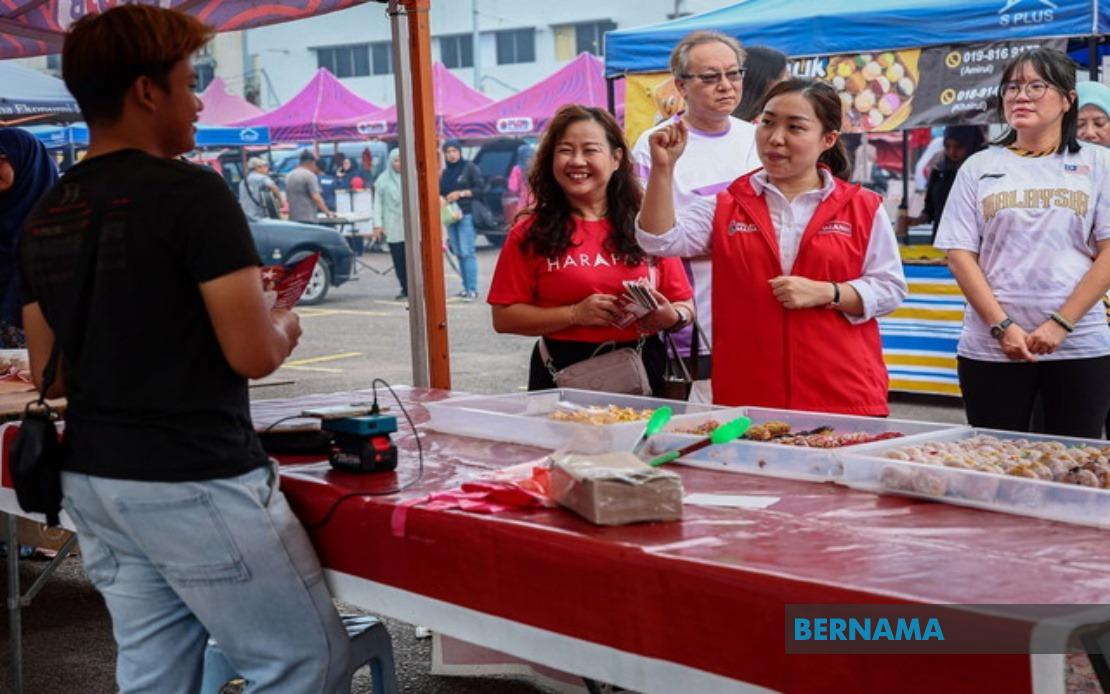
Chu Poh Yee, a lawyer and Pakatan Harapan candidate contesting the Mengkibol state seat, has outlined an ambitious yet focused campaign blueprint centred on three interconnected pillars designed to address the immediate needs of constituents in the Kluang area. Speaking ahead of the July 11 polling day, she articulated a vision that weaves together physical infrastructure development, local economic dynamism, and strengthened social safety nets as the foundation for improving residents' quality of life if voters grant her the mandate in the upcoming Johor state election.
Infrastructure forms the bedrock of her platform. Chu has committed to prioritising the upgrading of basic facilities throughout Mengkibol, with particular emphasis on road quality improvements that would facilitate better connectivity within the constituency. Beyond conventional infrastructure, she has championed the expansion of community farming initiatives through urban agriculture projects, recognising that such grassroots efforts can deliver tangible benefits to local communities whilst addressing food security concerns and promoting sustainable livelihoods.
On the economic dimension, Chu has diagnosed Kluang as possessing considerable untapped potential for growth and development. Her strategy involves cultivating a more entrepreneurial ecosystem by creating accessible platforms for business creation and nurturing quality employment opportunities that would counteract the persistent challenge of youth outmigration. This diagnostic insight reflects a deeper understanding that local economies thrive when opportunities exist for young people to build careers without necessity abandoning their roots and relocating to urban centres.
Chu has specifically pointed to existing successes in the area as proof of concept for her broader economic vision. The Kluang Rail Festival, for instance, has demonstrated that creative tourism and cultural events can generate meaningful spillover benefits that ripple through the broader community beyond direct participant numbers. Such initiatives, she argues, establish the foundation upon which further economic diversification can be built, creating employment in hospitality, retail, transportation, and ancillary services.
Gender equity in the workplace constitutes a significant component of her agenda. Recognising that women's participation in the formal economy remains constrained by structural challenges around balancing professional and familial responsibilities, Chu has advocated for creating workplace environments that facilitate rather than impede such balance. Her particular focus rests on establishing well-equipped and properly staffed childcare facilities that would reduce the burden on working parents, particularly mothers who often bear disproportionate responsibility for childcare arrangements alongside employment commitments.
This emphasis on family-friendly workplace infrastructure speaks to evolving demographic realities across Malaysia, where dual-income households have become increasingly normative, yet institutional support structures have not kept pace with changed family dynamics. By positioning childcare accessibility as a key electoral commitment, Chu is addressing a practical concern that directly affects household economics and women's career progression prospects across Kluang and similar communities throughout the region.
The campaign itself has not proceeded without friction. Chu acknowledged incidents of provocation and vandalism directed at Pakatan Harapan's campaign materials at multiple locations within the constituency. Rather than viewing such incidents as indicators of waning momentum, she has reframed them as motivational challenges that galvanise rather than demoralise her campaign team. This rhetorical positioning of adversity as catalyst reflects political maturity and an understanding that campaign resilience under pressure resonates with voters seeking determined representatives willing to persist despite obstacles.
Mengkibol represents one of fourteen constituencies within the Johor state election contested as straight fights between two candidates, simplifying voter choice whilst intensifying competition. Chu faces Barisan Nasional candidate Yap Zhi Peng in what amounts to a direct ideological and personality-based contest without third-party complications. This binary structure concentrates attention on the two candidates' respective visions and track records, making individual candidate attributes and policy specificity particularly consequential in determining electoral outcomes.
The broader electoral context encompasses 172 candidates competing across all 56 Johor state seats, with early voting scheduled for July 7 and main polling occurring on July 11. This statewide election carries implications beyond Johor itself, functioning as an important bellwether for voter sentiment regarding Pakatan Harapan's trajectory following the previous general election. The party's performance in traditionally competitive states like Johor provides indicative signals regarding its recovery or decline in popular confidence.
Chu's campaign articulation reflects broader strategic positioning within Pakatan Harapan's 2024 electoral narrative, emphasising bread-and-butter issues of infrastructure, employment, and family-friendly policies that resonate across demographic and socioeconomic divides. Her emphasis on economic empowerment and youth retention speaks particularly to anxieties in smaller towns and semi-urban centres throughout Malaysia where young people perceive limited opportunity and subsequently migrate towards larger metropolitan areas, draining local talent and dynamism.
The integration of urban agriculture initiatives into her platform also signals awareness of sustainability concerns and community resilience that have gained prominence in contemporary political discourse. Such initiatives offer multifaceted benefits encompassing food security, environmental stewardship, community cohesion, and micro-economic opportunity simultaneously, making them particularly attractive to voters seeking holistic solutions to interconnected challenges rather than single-issue addressing.

