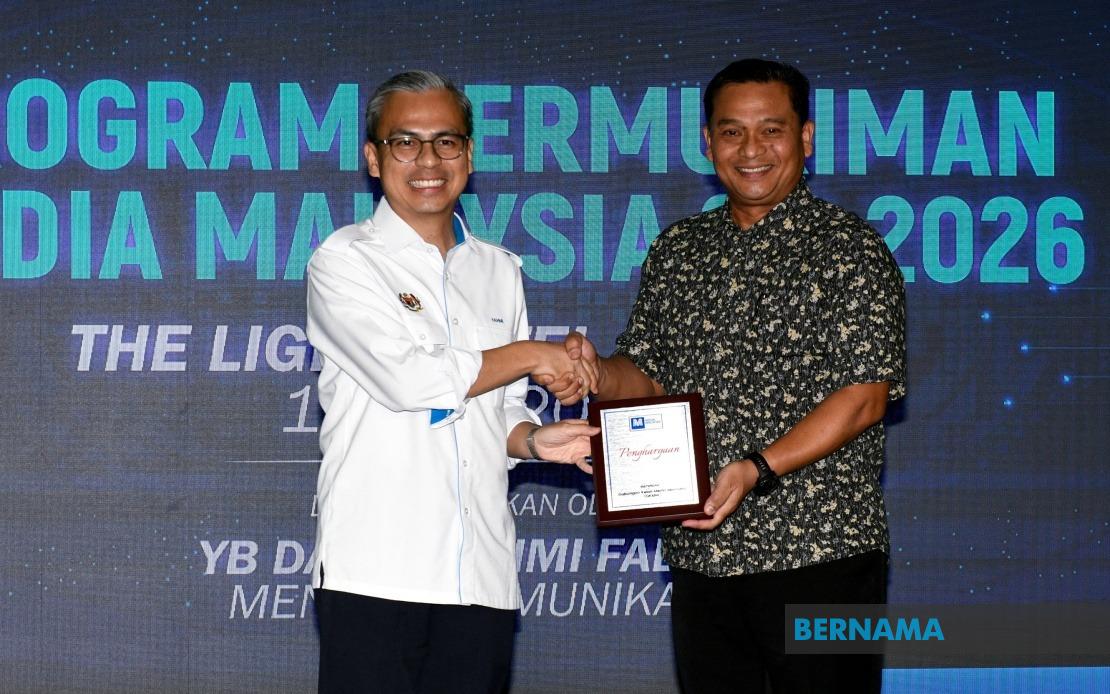
Communications Minister Datuk Fahmi Fadzil announced at the Malaysia Media Retreat Programme 2.0 in Butterworth that the Ministry of Communications is channelling RM10,000 to every state media club holding membership in the Malaysian Media Clubs Association (GKMM), whilst the association will receive a separate allocation of RM30,000. The funding is specifically earmarked for activities and programmes aimed at advancing the welfare of journalists across the country.
Fahmi expressed confidence that the financial injection would be deployed effectively to serve the interests of media professionals. During his address, he emphasised that GKMM functions as an indispensable platform through which practitioners can articulate their concerns, raise issues affecting their livelihoods, and articulate their perspectives on the trajectory of journalism in Malaysia. He framed the contribution as part of a broader governmental commitment to the media industry at a time when the sector faces considerable structural and economic pressures.
The minister's remarks underscored the irreplaceable role that journalists occupy in the information ecosystem. Fahmi noted that while artificial intelligence and automated systems continue to advance, the human element of journalism—grounded in investigation, critical analysis, and ethical reporting—cannot be replicated by machines. This assertion reflects a nuanced position in global debates about technology's impact on newsrooms, particularly relevant in Southeast Asia where media sustainability remains fragile.
Fahmi articulated a dual commitment: preservation of journalism employment and sustained engagement with media practitioners in policy formulation. He highlighted that the government intends to continue consulting the media industry on legislative matters, citing the drafting of the Malaysian Media Council Act as an example where substantial input from news organisations shaped the final legislation. This consultative approach signals an effort to build stronger institutional relationships between government and the fourth estate.
The minister acknowledged that GKMM, whilst not formally constituted as a labour union, nonetheless carries significant weight in representing media workers' interests and channelling their grievances to policymakers. By legitimising GKMM's advocacy role, Fahmi suggested a recognition that informal but organised collective representation can complement statutory mechanisms for workers' protection and welfare advancement. This has implications for how journalist associations throughout Southeast Asia might position themselves in relation to government support frameworks.
The funding announcement, made during a dedicated media retreat, signals government priority for sustaining the journalism profession during a period marked by industry consolidation, advertising revenue challenges, and digital transformation. Malaysian media outlets have experienced recurring difficulties in maintaining newsroom strength and editorial independence amidst these pressures. Direct government support to journalist associations offers a counterbalance to commercial pressures, though it simultaneously raises questions about editorial autonomy that media scholars and advocacy groups continuously debate.
Several senior officials attended the event, including Communications Ministry secretary-general Datuk Abdul Halim Hamzah, Malaysian National News Agency (Bernama) chief executive officer Datin Paduka Nur-ul Afida Kamaludin, and Bernama editor-in-chief Arul Rajoo Durar Raj. Their presence underscored the significance placed on the media sector within government circles and the collaborative relationship between the ministry and national news infrastructure.
The distribution model—allocating identical sums to each state media club regardless of size or membership base—reflects an approach aimed at ensuring equitable support across Malaysia's diverse regional media communities. This methodology acknowledges that journalism functions exist in varying capacities throughout the country, from major urban centres to smaller states, and that supporting peripheral media communities requires deliberate resource allocation.
For Malaysian journalists navigating economic uncertainty and changing business models, such allocations may provide modest resources for professional development, social activities, or advocacy initiatives. However, the sums involved, whilst meaningful at the state club level, represent limited support when distributed across individual practitioners or considered against the scale of industry challenges. The funding should be understood as supplementary rather than transformative in addressing systemic issues within the sector.
The broader context involves Malaysia's evolving relationship with its media landscape. Recent years have witnessed attempts to strengthen media regulation, introduce new legislative frameworks, and navigate tensions between government communication goals and press freedom principles. Announcements like this funding allocation reflect attempts to demonstrate governmental support for the profession whilst simultaneously engaging constructively with media institutions on policy matters.
Regionally, Malaysia's approach invites comparison with other Southeast Asian nations' engagement with media sectors. While some governments provide institutional support or advertising revenue to state-aligned outlets, targeted funding to journalist associations represents a more nuanced intervention. The approach suggests an attempt to balance state interests with recognition of journalism's independent value proposition and practitioners' welfare needs.
%22%2F%3E%3C%2Fpattern%3E%3C%2Fdefs%3E%3Crect%20width%3D%22100%25%22%20height%3D%22100%25%22%20fill%3D%22url(%23ph27rvxg)%22%2F%3E%3Crect%20width%3D%22100%25%22%20height%3D%22100%25%22%20fill%3D%22url(%23ph27rvxp)%22%2F%3E%3Ctext%20x%3D%2250%25%22%20y%3D%2250%25%22%20text-anchor%3D%22middle%22%20dominant-baseline%3D%22central%22%20fill%3D%22rgba(255%2C255%2C255%2C0.95)%22%20font-family%3D%22Georgia%2C%20'Times%20New%20Roman'%2C%20serif%22%20font-weight%3D%22700%22%20font-size%3D%22320%22%20letter-spacing%3D%22-0.02em%22%3EKTMB%3C%2Ftext%3E%3C%2Fsvg%3E)