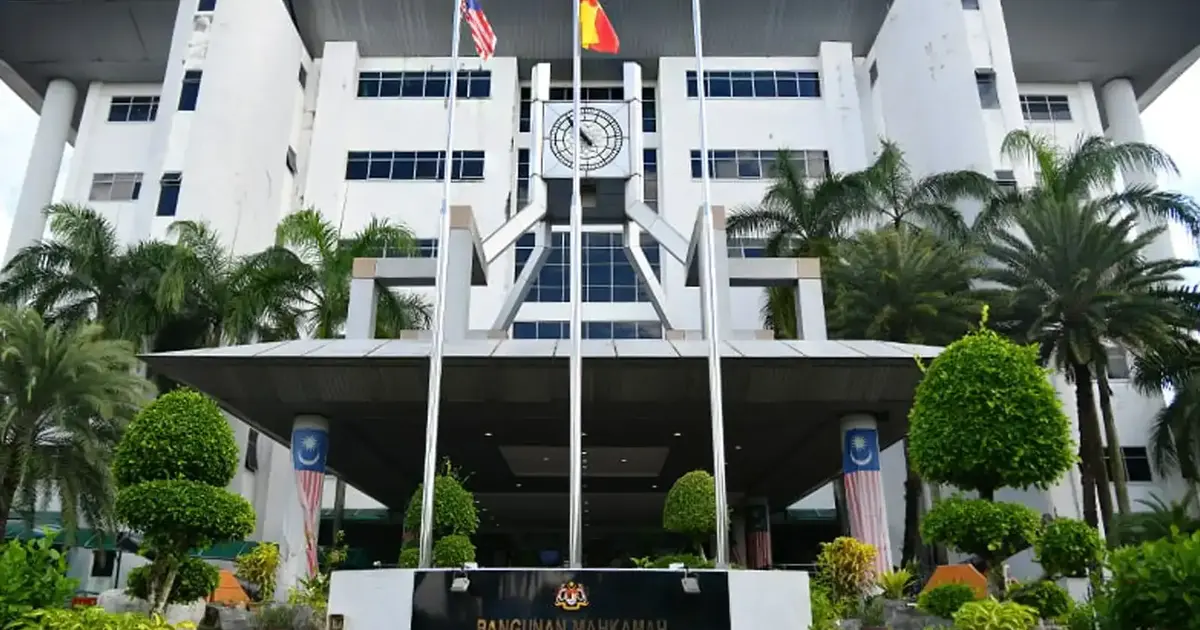
Judicial Commissioner Asmah Musa has delivered a significant ruling on the limits of judicial review, determining that Malaysian civil courts cannot serve as venues for disputing the attorney-general's prosecutorial decisions. This pronouncement carries substantial implications for how the country's legal system will handle challenges to law enforcement discretion, effectively drawing a boundary between the executive's charging authority and the judiciary's supervisory role.
The distinction Asmah Musa emphasizes reflects a longstanding principle in Commonwealth legal traditions: that the decision to initiate criminal proceedings falls squarely within the attorney-general's constitutional remit and is not ordinarily subject to challenge through civil litigation. This doctrine protects prosecutorial independence from being undermined by defendants or their representatives attempting to circumvent criminal proceedings through parallel civil actions. In Malaysia's legal framework, where the attorney-general holds broad constitutional authority to institute, conduct, or discontinue any criminal proceeding, this ruling reinforces the separation between those executive powers and judicial oversight mechanisms.
The practical consequence of this judgment is significant for legal practitioners and accused persons alike. Individuals facing prosecution cannot now pursue civil suits as a tactical maneuver to delay, challenge, or discredit the attorney-general's decision to bring charges. Such attempts would be dismissed at the threshold, on the grounds that courts lack jurisdiction to second-guess discretionary charging decisions. This principle prevents the civil courts from becoming an alternative battlefield where the merits of prosecution decisions could be relitigated, which would fundamentally alter the balance between law enforcement authorities and the judiciary.
However, the ruling does not mean that prosecutorial action is entirely beyond legal scrutiny. Malaysian jurisprudence has established narrow grounds on which the courts may intervene, such as when the attorney-general acts in violation of constitutional principles, engages in manifest abuse of power, or proceeds in a manner that offends natural justice. The distinction Asmah Musa draws is between examining the merits of a prosecution decision itself and examining whether the decision-making process violated fundamental legal principles. Civil suits remain an inappropriate mechanism for the former, but constitutional remedies or judicial review proceedings might still address the latter in exceptional circumstances.
For Malaysia's legal community and civil society observers, this ruling clarifies the operational distinction between two separate domains: the criminal sphere, where prosecutors exercise their statutory authority, and the civil sphere, where ordinary contractual and tort disputes are resolved. By preventing the blurring of these boundaries, the judgment preserves the integrity of criminal proceedings and ensures that prosecution decisions are challenged, if at all, through appropriate criminal law mechanisms such as trial defenses, appellate review, and habeas corpus applications.
The timing of this judicial pronouncement arrives as Malaysia continues to refine its legal frameworks around prosecutorial accountability and judicial oversight. Regional jurisdictions including Singapore, Australia, and the United Kingdom have grappled with similar questions about the appropriate scope of prosecutorial discretion and the limits of judicial review. Most have arrived at conclusions broadly consistent with the principle Asmah Musa articulates: that while prosecutorial decisions may be challenged on grounds of illegality, procedural impropriety, or irrationality, the substantive merits of whether to prosecute remain executive prerogatives.
The implications extend beyond individual cases to the broader governance of Malaysia's criminal justice system. If civil courts were permitted to adjudicate prosecutorial decisions, they would effectively be substituting their judgment for that of the attorney-general, a constitutional officer with institutional expertise and accountability mechanisms distinct from the judiciary. This could create perverse incentives where accused persons might proliferate civil suits to obstruct criminal proceedings, thereby undermining the efficient administration of justice.
Yet the ruling also invites careful consideration of the guardrails around prosecutorial discretion itself. While courts cannot second-guess charging decisions through civil suits, the attorney-general remains bound by constitutional constraints and principles of natural justice. The government's prosecution policies must be applied consistently and not used as instruments of political persecution or arbitrary targeting. Asmah Musa's judgment implicitly assumes that prosecutorial discretion will be exercised responsibly and within legal boundaries—an assumption that depends on the attorney-general's institutional culture and external accountability mechanisms, including parliamentary oversight and public scrutiny.
For the Malaysian legal profession and civil practitioners, the ruling necessitates a reorientation of litigation strategy. Those who believe a prosecution is unjust or wrongly motivated must pursue remedies through criminal defenses, appellate mechanisms, or established constitutional law avenues rather than through civil suits framed as challenges to the charging decision itself. This constrains the available legal tools but reflects a deliberate judicial choice to preserve the structural integrity of the criminal justice system.
The judgment also reflects the court's concern about forum-shopping and vexatious litigation. Allowing civil suits to challenge prosecution decisions would invite a proliferation of collateral proceedings that could paralyze criminal administration and impose substantial costs on the state and the courts themselves. By foreclosing this avenue, Asmah Musa prevents the civil justice system from being weaponized as a mechanism to obstruct criminal proceedings.
Looking forward, this ruling establishes clearer parameters for how Malaysia's courts will interact with prosecutorial authority. It does not grant prosecutors immunity from all judicial scrutiny, but it does establish that civil litigation is not the appropriate mechanism through which such scrutiny may be exercised. Advocates seeking judicial oversight of prosecutorial decisions must therefore channel their efforts through constitutional and administrative law remedies, where available, or through the criminal trial process itself, where the merits of the case against the accused are directly engaged.

