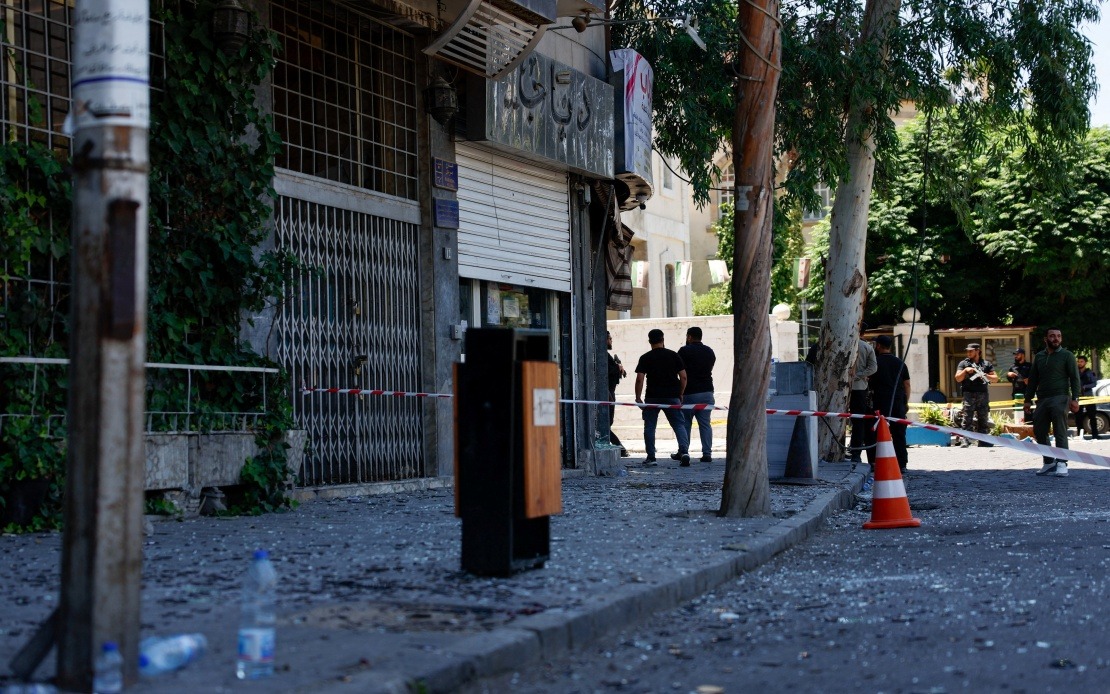
Two improvised explosive devices detonated in Damascus on Tuesday, leaving at least 18 people injured, including four police officers, according to Syria's Interior Ministry. The explosions occurred near the hotel accommodating French President Emmanuel Macron during his groundbreaking visit to the country, though the French leader remained unharmed and was secured at the presidential palace during the incident. The blasts punctuated what has become a historic diplomatic engagement, marking the first visit by a European Union leader to Syria in over a decade amid the country's ongoing political complexities.
Syrian Observatory for Human Rights, the Britain-based monitoring organisation that tracks developments in the Middle Eastern nation, documented a sequence of two distinct explosions. The initial blast was succeeded within seconds by a more powerful detonation, both occurring in close proximity to Macron's lodgings. This proximity to the French delegation's location raised immediate security concerns, though rapid response by emergency services prevented what could have been a more severe tragedy. The Élysée Palace in Paris swiftly confirmed the president's safety, providing reassurance to French authorities and international observers tracking the visit.
Emergency response teams and ambulances mobilised quickly to the affected areas in the Syrian capital. Security forces immediately established cordons around the blast zones, restricting access and conducting preliminary investigations into the nature and origin of the devices. The speed of the security response underscored Damascus's commitment to protecting the visiting French delegation, despite the volatile security situation that has characterised Syria in recent years.
Macron's arrival on Monday evening represented a significant diplomatic gesture toward the Assad government and signalled potential shifting international engagement with Syria. His status as the first EU leader to visit Damascus since 2010 reflected a notable recalibration of European policy toward the country, moving beyond the previous years of isolation and sanctions. The visit came amid broader geopolitical developments in the Middle East and represented an opportunity for France to reassert its diplomatic influence in the region following years of limited institutional engagement.
During the incident, Macron remained at the presidential palace where high-level bilateral discussions between French and Syrian delegations were proceeding. The continuation of these talks despite the explosions demonstrated the determination of both sides to maintain momentum on their diplomatic engagement. The location of Macron at the presidential compound rather than at the hotel where the explosions occurred provided a buffer against direct danger, though the psychological impact on the security situation was considerable.
The timing of the explosions during the French president's visit raised immediate questions about the security environment in Damascus and the motivations behind the attacks. The proximity to Macron's accommodation suggested either a deliberate targeting of the French delegation or a broader security concern affecting the Syrian capital. For Malaysian observers and policymakers, the incident highlighted the persistent security challenges facing Syria and the risks inherent in high-level diplomatic engagement in regions experiencing ongoing instability.
The explosions triggered considerable alarm among Damascus residents, many of whom remain sensitive to security incidents following years of conflict and external pressures. The blasts served as a reminder of the fragile security situation that continues to characterise daily life in the Syrian capital, despite the relative cessation of major military operations. Residents' anxiety reflected broader concerns about the sustainability of the recent diplomatic openings and the underlying instability that continued attacks underlined.
For Southeast Asian nations including Malaysia, the incident underscored important considerations about engagement with countries emerging from prolonged conflict. Macron's visit itself represented a model of diplomatic re-engagement, suggesting that international isolation may eventually yield to dialogue and incremental normalisation. However, the security incidents demonstrated that such re-engagement occurs within contexts of genuine operational risk and requires careful calibration of security protocols and diplomatic objectives.
The explosions also highlighted the complexity of Syria's security landscape, where state institutions maintain certain areas of control while non-state actors and extremist groups retain the capability to conduct attacks in major urban centres. The Interior Ministry's rapid confirmation of casualty figures and official response suggested institutional capacity to manage crisis situations, though the occurrence of such attacks in the capital raises fundamental questions about the comprehensive nature of security control in the country.
Macron's determination to proceed with bilateral talks despite the security incident conveyed a strong message about French commitment to Syrian engagement and the primacy of diplomatic objectives over security concerns. The decision reflected confidence in the protective measures established by both French and Syrian security services, as well as a calculation that withdrawal would signal weakness and undermine the purpose of the visit.
For regional observers, the bombing incident during the French president's visit illustrated the delicate balance that international powers must maintain when engaging with Syria. The country remains a strategically significant location in Middle Eastern geopolitics, yet continues to experience security challenges that complicate conventional diplomatic operations. Macron's visit, despite its complications, represented a signal that international re-engagement with Syria, however tentative, continues to advance among key Western powers seeking to influence developments in one of the region's most strategically important nations.

