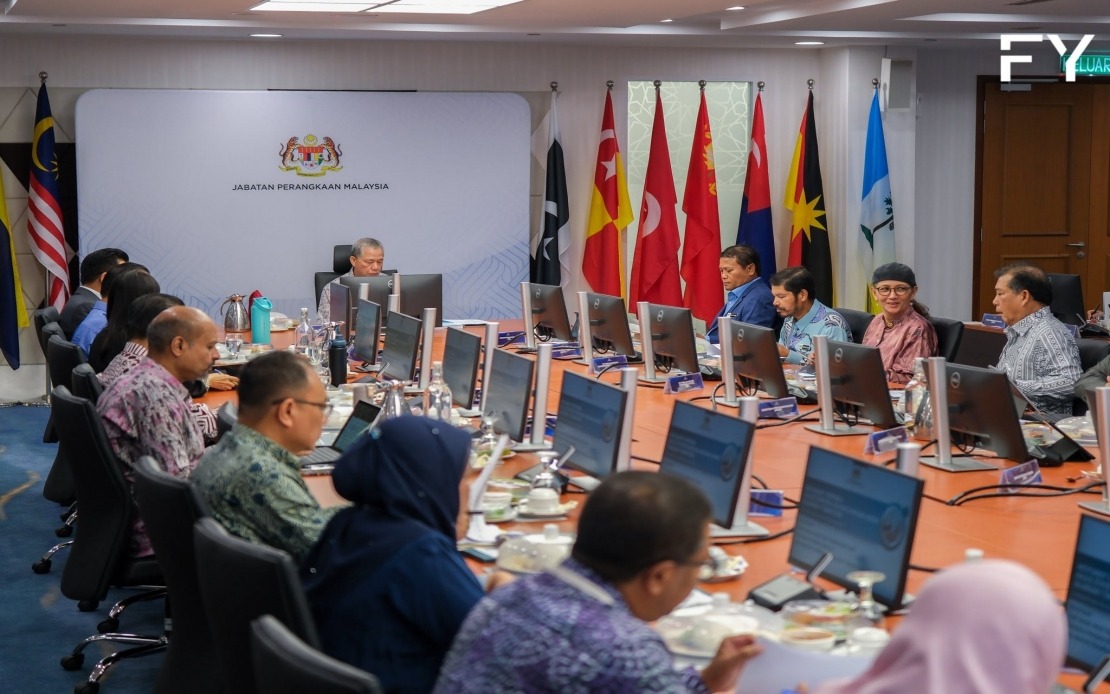
Malaysia's government has identified data analytics and artificial intelligence as pivotal tools for implementing the 13th Malaysia Plan (13MP) 2026-2030, with Deputy Prime Minister Datuk Seri Fadillah Yusof outlining a comprehensive strategy to embed data-driven decision-making across public institutions. Speaking following a high-level meeting of the National Statistics and Data Council (MSDN), Fadillah articulated how a robust statistical infrastructure underpins the nation's ability to navigate contemporary complexities ranging from economic instability to climate pressures and rapid technological disruption.
The emphasis on strengthening the National Statistical System (NSS) reflects a fundamental shift in how Malaysian policymakers approach governance. Rather than treating statistics as mere bureaucratic outputs, the government now frames data as strategic national assets capable of enhancing public service delivery, improving policy outcomes and bolstering economic resilience. This conceptual reorientation carries significant implications for how ministries, agencies and regional governments coordinate development initiatives over the next five years, particularly as Malaysia confronts interconnected challenges that demand precision in targeting resources and measuring impact.
Fadillah stressed that the 13MP's success depends critically on data of superior quality, integrity and timeliness. Without reliable statistics, policymakers operate with incomplete information when designing programmes, allocating budgets, monitoring implementation and evaluating results. For Malaysian readers, this means government initiatives—whether in healthcare, education, infrastructure or economic development—will increasingly be informed by hard evidence rather than assumption or historical precedent. The framework acknowledges that effective governance in an uncertain world requires continuous adaptation grounded in real-time information.
The government's recent economic performance underscores this philosophy. Malaysia recorded gross domestic product expansion of 5.4 per cent in the first quarter of 2026, a figure Fadillah attributed directly to development policies formulated through data analysis. This example illustrates how statistical rigour can translate into tangible economic outcomes, creating a virtuous cycle where evidence-based policymaking delivers measurable prosperity. For a regional economy facing external pressures from geopolitical tensions and shifting trade patterns, maintaining this growth momentum depends on continuous refinement of policy instruments informed by comprehensive data.
The integration of artificial intelligence into Malaysia's statistical apparatus represents a particularly forward-looking initiative. By leveraging AI capabilities alongside traditional analytics, Malaysian agencies can process vastly larger datasets, identify subtle patterns invisible to conventional analysis, and accelerate decision cycles. This capacity becomes essential when addressing multifaceted problems requiring simultaneous consideration of numerous variables—climate adaptation, for instance, demands understanding interactions between energy systems, water resources, agricultural productivity and demographic patterns. AI-assisted analytics enable simultaneous exploration of these interdependencies.
Fadillah, who also oversees the Energy Transition and Water Transformation portfolio, identified these strategic sectors as requiring comprehensive data infrastructure. Energy transition involves managing the shift from fossil fuels to renewable sources while maintaining grid reliability and affordability. Water sector transformation demands balancing competing demands across agriculture, industry and household consumption against climate variability. Sustainable development encompasses environmental protection, economic advancement and social equity. Each domain involves trade-offs that become negotiable through transparent data analysis rather than opaque bureaucratic arbitration.
The initiative emphasises strengthening collaboration among government ministries, federal agencies, state authorities, private enterprises, universities and research institutions. This horizontal integration addresses a perennial Malaysian governance challenge: siloed decision-making where different agencies pursue overlapping objectives without coordinating. By establishing shared data infrastructure and common statistical standards, the government creates conditions for more coherent policy implementation. State governments gain access to national comparative data, enabling them to benchmark performance and learn from peer experiences. Private sector participation expands the dataset to include commercial intelligence, consumer behaviour and market dynamics government alone cannot capture.
One particularly significant initiative involves standardising official statistical standards across government. Inconsistencies in how different agencies define and measure variables have historically complicated national picture-building. A farmer in Kedah, an administrator in Sabah and an economist in Kuala Lumpur might all work from slightly different definitions of agricultural productivity, making aggregation and comparison problematic. Standardisation creates common language enabling seamless information flow across jurisdictions and sectors.
Data governance arrangements warrant careful attention as Malaysia expands its statistical ambitions. Integrating information from multiple sources—administrative records from tax authorities, health data from clinics, transaction data from financial institutions—raises legitimate privacy and security concerns. The government must establish clear protocols determining who accesses what data under which circumstances, with transparent accountability mechanisms protecting citizen interests. Successful implementation requires public trust that statistical expansion serves development rather than enabling surveillance or political manipulation.
The development of integrated databases across strategic sectors—energy transition, climate change, water management, youth development—signals recognition that siloed information systems cannot address interconnected challenges. A young person's educational achievement, employment prospects, health status and geographical location represent different data streams typically managed separately. Integrated analysis reveals how these factors interact, enabling more precisely targeted interventions. However, such integration must be executed transparently, with clear public understanding of data uses.
Malaysia's commitment to leveraging science, technology and innovation talent represents acknowledgement that data infrastructure alone proves insufficient without skilled personnel. The nation must develop capability in data science, statistical analysis, software engineering and AI specialisation. Universities, vocational institutions and private training providers should align curricula with national requirements. Regional talent mobility within ASEAN could supplement domestic capacity, attracting specialists to contribute to regional development. Conversely, developing these capabilities positions Malaysia to export expertise and services regionally.
The 13MP framework's emphasis on data and AI reflects global best practice in development planning. Leading economies increasingly employ sophisticated analytics for policymaking, and Malaysia must match these standards to compete for investment and talent. However, the Malaysian context involves specific challenges—geographic dispersion across Peninsular and East Malaysia, substantial rural populations with limited digital connectivity, and diverse state governments with varying administrative capacities. Any national statistical system must accommodate these realities, ensuring data collection reaches peripheral areas and state institutions receive capacity support.
Looking forward, the success of this data-driven governance agenda depends on political commitment sustained across election cycles. Statistics offer no immediate political rewards—building infrastructure, establishing standards and developing talent require years of patient investment before evidence manifests in improved living standards. However, the alternative—continuing with less rigorous approaches—condemns Malaysia to slower adaptation and missed opportunities. For citizens, policymakers and businesses seeking prosperity in an increasingly complex world, the shift toward evidence-based governance represents essential modernisation of how the nation makes decisions that shape everyone's future.
%22%2F%3E%3C%2Fpattern%3E%3C%2Fdefs%3E%3Crect%20width%3D%22100%25%22%20height%3D%22100%25%22%20fill%3D%22url(%23ph3twyhg)%22%2F%3E%3Crect%20width%3D%22100%25%22%20height%3D%22100%25%22%20fill%3D%22url(%23ph3twyhp)%22%2F%3E%3Ctext%20x%3D%2250%25%22%20y%3D%2250%25%22%20text-anchor%3D%22middle%22%20dominant-baseline%3D%22central%22%20fill%3D%22rgba(255%2C255%2C255%2C0.95)%22%20font-family%3D%22Georgia%2C%20'Times%20New%20Roman'%2C%20serif%22%20font-weight%3D%22700%22%20font-size%3D%22170%22%20letter-spacing%3D%22-0.02em%22%3EMalaysia%3C%2Ftext%3E%3C%2Fsvg%3E)