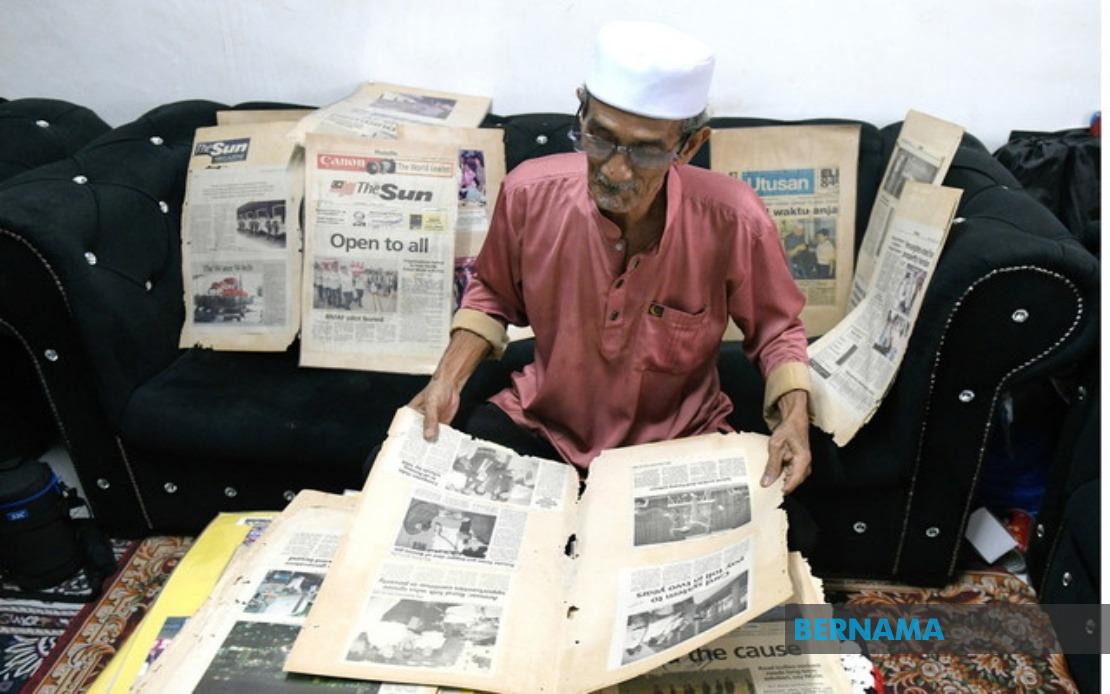
Azmi Sapiei has spent more than three decades pursuing the perfect shot, often at considerable personal cost. The 64-year-old veteran photographer and cameraman, who has worked across Malaysia's major news organisations, carries vivid memories of his profession's darker moments—including being kicked and spat upon by a suspect during a court assignment around 2001. Yet these troubling encounters have not dimmed his passion for visual journalism, nor prevented him from passing his expertise to the next generation, including his own son now working in television.
Sapiei's journey through Malaysian media began in the mid-1980s, before he formally joined Bernama, the national news agency, in 1993. After nearly three years with Bernama, he moved to The Sun newspaper in late 1996, eventually returning to his native Penang where he worked with Bernama TV and Radio Televisyen Malaysia. His retirement in mid-2020 marked the end of a career spanning multiple technological eras, each presenting distinct challenges and learning opportunities. Throughout this period, he witnessed and documented some of the nation's most significant historical events, gaining a front-row perspective on how Malaysia's media landscape transformed.
One assignment that exemplifies both his skill and determination involved the return of Shamsiah Fakeh, a former Malayan Communist Party member, from China in July 1994. Sapiei managed to secure exclusive photographs of her arrival at her nephew's residence in Gombak by arriving at the location before authorities cordoned off the area. The story illustrates a crucial element of successful photojournalism—anticipation and positioning—skills that cannot be taught in a classroom but only developed through experience and understanding of news cycles.
The early phase of Sapiei's career coincided with the analogue era, when photographers relied entirely on film cameras and had no way of reviewing their work until prints were developed. This fundamental limitation demanded both technical precision and creative intuition. After photographing Shamsiah Fakeh's return, Sapiei returned to the Bernama office with three rolls of film, only to face criticism from his editor who deemed this insufficient. However, when the images were developed and distributed to newspaper customers the following day, major publications across the country featured his photographs prominently. This experience taught him valuable lessons about news judgment and the importance of comprehensive coverage, even when initial feedback seemed discouraging.
Beyond this high-profile assignment, Sapiei's tenure at Bernama served as a professional foundation. He describes the agency as a 'school' that cultivated discipline and news sense among its visual journalists, emphasizing not merely the technical capture of images but their editorial value and accuracy. This institutional training proved invaluable as he transitioned between different news organisations and technological platforms throughout his career. The rigour instilled during his Bernama years shaped how he approached assignments and mentored younger professionals entering the field.
The transition from print to television journalism marked a significant shift in Sapiei's career demands. When he worked as a part-time cameraman for Bernama TV, he encountered equipment that tested his physical endurance in ways still photography never had. The Betacam cameras used during that period weighed approximately 12 kilogrammes and had to be held on the shoulder during extended filming sessions. Sapiei and his colleagues jokingly referred to this equipment as 'junk iron' due to its considerable weight and the exhaustion that accompanied extended shoots. This period highlighted an often-overlooked aspect of broadcast journalism—the physical toll required to maintain visual quality and consistency in the field.
Sapiei's career trajectory reflected the broader evolution of Malaysian media infrastructure and technology. The shift from film-based to digital capture represented not merely a technical upgrade but a fundamental change in how journalists worked and thought about their assignments. The instantaneous feedback possible with digital systems eliminated the tension and uncertainty that characterised the film era, yet brought new pressures related to immediate publication and the need to verify images on location. Throughout these transformations, Sapiei maintained professional standards and adapted his methodologies, demonstrating the flexibility required of long-term practitioners in any evolving field.
Despite the challenges inherent in photojournalism, Sapiei emphasises that the profession demands more than technical competence. Physical resilience is necessary—carrying heavy equipment while maintaining compositional awareness requires conditioning and determination. Mental toughness proves equally important, particularly when confronting hostile subjects or dangerous situations. The assault he experienced during a court case assignment in 2001 exemplified the unpredictability journalists face when pursuing stories in sensitive or volatile environments. Rather than viewing such incidents as reasons to abandon the profession, Sapiei frames them as experiences that deepened his understanding of the broader context in which journalists operate.
Recognition of Sapiei's contributions came through the 2006 Penang State Media Award in the visual electronic media category, acknowledging his sustained excellence in the field. This honour reflected not only technical skill but also his commitment to quality journalism and his role in documenting important moments in the state's history. Throughout his career, Sapiei maintained high standards even when working part-time or in less prominent positions, suggesting that professional integrity matters regardless of organisational hierarchy or employment status.
The continuation of Sapiei's legacy through his second son, Muhammad Syafiq, represents a natural progression in Malaysian media. Syafiq, now 30, works with Media Prima Television Network after beginning his career by accompanying his father on assignments following his secondary school completion in 2016. Unlike many professions where generational transition involves formal apprenticeships or structured training programmes, Sapiei's transmission of knowledge occurred through informal mentorship and practical exposure. Syafiq credits his father not only with teaching technical skills—including camera operation, shot composition, and visual angle selection—but also with instilling the discipline and dedication essential for sustained success in broadcast journalism.
The relationship between Sapiei and his son illustrates how professional values and technical expertise pass between generations within Malaysian media families. Syafiq describes his father as simultaneously a parent, teacher, and mentor, roles that cannot be easily separated in a profession where the workplace often extends beyond conventional office environments. This model of knowledge transfer has long characterised journalism, particularly in visual media where hands-on learning proves more effective than theoretical instruction. The presence of seasoned professionals willing to invest in younger journalists strengthens the industry's institutional capacity and ensures that accumulated wisdom does not disappear when veterans retire.
Looking at Malaysian photojournalism more broadly, Sapiei's career illuminates both the profession's demands and its importance. News photographers and cameramen operate at the intersection of multiple pressures—editorial demands for timely and compelling images, technological constraints and capabilities, physical and personal safety considerations, and the need to maintain ethical standards while pursuing commercially viable stories. These competing tensions never fully resolve; instead, practitioners develop strategies to navigate them productively. Sapiei's three decades of work demonstrate that long careers in this field require not just talent but resilience, adaptability, and a genuine commitment to documenting events as they unfold.
As Malaysia's media landscape continues evolving with digital platforms, mobile technology, and instantaneous distribution, the foundational principles that guided Sapiei's career remain relevant. Accuracy, news judgment, safety awareness, and respect for both subjects and audiences cannot be automated or outsourced. The shift toward citizen journalism and user-generated content, while expanding the sources of visual information, does not eliminate the need for trained professionals who understand how to tell stories responsibly and effectively. Sapiei's legacy—embodied in both his published work and his son's continuing career—suggests that professional photojournalism, despite its challenges, remains a vital component of Malaysia's media ecosystem.