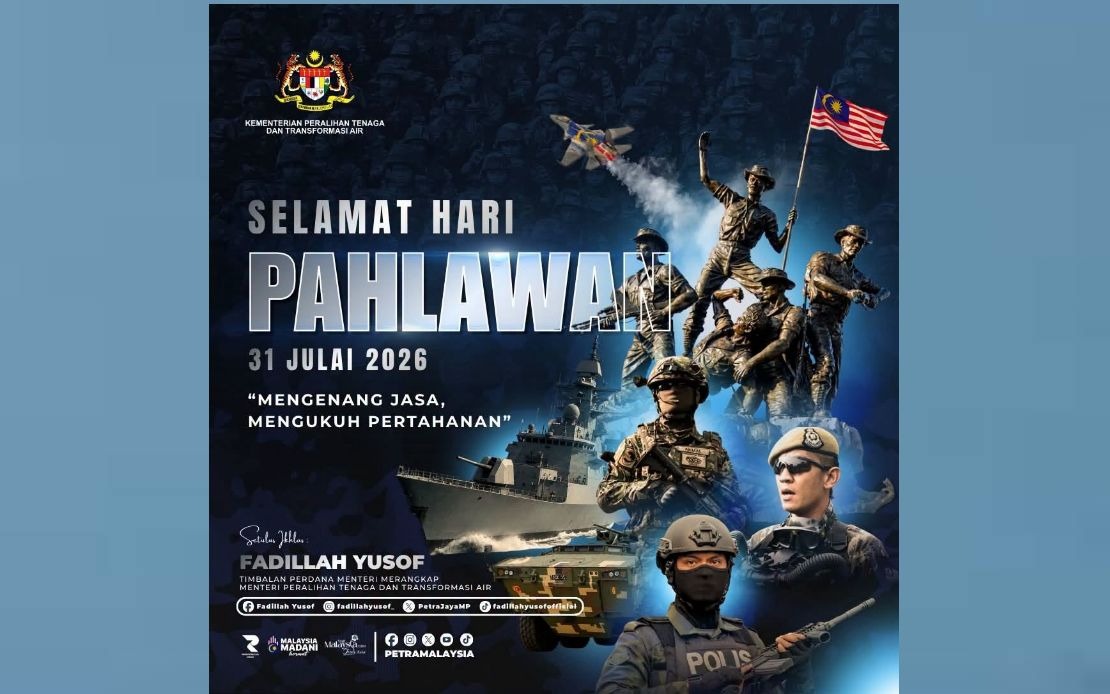
Malaysia's Deputy Prime Minister Datuk Seri Fadillah Yusof has issued a clarion call to citizens to recognize and celebrate the extraordinary contributions of the nation's fallen and serving military personnel, marking the 2026 Warriors' Day observance with a message centred on gratitude and national resilience. Speaking through social media, Fadillah emphasized that honouring these defenders represents a fundamental duty for all Malaysians, transcending the ceremonial nature of the annual commemoration to instead serve as a moment of profound national reflection.
The 2026 Warriors' Day theme, "Mengenang Jasa, Mengukuh Pertahanan"—which translates to remembering contributions and strengthening defence—encapsulates a dual purpose that extends beyond mere tribute. According to Fadillah, the observance should galvanize patriotic sentiment and deepen public understanding of the pivotal role security forces have played throughout Malaysia's modern history, from the independence struggle against colonial powers through the long counter-insurgency campaign against communist militants, to contemporary security operations that continue protecting the nation's borders and citizens.
The Deputy Prime Minister articulated a philosophical perspective on military sacrifice, characterizing the service of national heroes as embodying core values that form the bedrock of Malaysian society. He described their dedication as a manifestation of courage, steadfast loyalty, and an unconditional devotion to the homeland—qualities that extend far beyond individual acts of bravery to represent a collective commitment to national ideals. This framing positions military service not as a specialized profession divorced from civilian life, but as an expression of the highest form of patriotic citizenship that all Malaysians should aspire to emulate in their respective capacities.
Fadillah, who also holds the portfolio of Minister of Energy Transition and Water Transformation, connected the sacrifices of Malaysia's warriors directly to the contemporary stability and prosperity that citizens now enjoy. This causal link—drawing a line from past military achievements to present-day economic development and social harmony—carries particular resonance in the Malaysian context, where historical security challenges shaped the trajectory of national development. By making this explicit connection, the Deputy Prime Minister underscored that defence and national security remain foundational prerequisites for all other development endeavours, from economic transformation to environmental sustainability initiatives.
The messaging also reflects broader regional dynamics affecting Malaysia's security posture. Southeast Asia continues to navigate complex geopolitical challenges, including maritime security concerns, transnational threats, and evolving security paradigms. In this context, Warriors' Day serves not only as a historical commemoration but as an opportunity to reinforce public support for defence spending and military modernization efforts. Fadillah's invocation of the need to strengthen national defence suggests an implicit recognition that Malaysia's security environment requires sustained commitment and resources.
Central to Fadillah's appeal is the concept of national unity, which he presented as a direct consequence of honouring military sacrifice. The Deputy Prime Minister urged Malaysians to internalize the virtues displayed by security personnel—courage, loyalty, and patriotism—as mechanisms for building stronger social cohesion. This aspirational messaging attempts to transform commemoration into civic action, encouraging citizens to translate reverence for heroes into tangible contributions toward national progress and unity. For a multi-ethnic, multi-religious society like Malaysia, such framing offers a common national narrative that transcends communal boundaries.
The Deputy Prime Minister's invocation of Islamic spiritual values, through references to divine mercy and prayers for the fallen, reflects Malaysia's position as a Muslim-majority nation where religious sentiment and national identity are deeply intertwined. This approach ensures that Warriors' Day messaging resonates with the religious convictions of the majority population while remaining fundamentally inclusive of the nation's diverse citizenry who share common stakes in national security and stability. The spiritual dimension adds gravitas to the commemoration, elevating it beyond secular nationalism to encompass transcendent values of sacrifice and redemption.
Warriors' Day itself occupies a significant place in Malaysia's national calendar, though it remains less widely observed compared to some other commemorative occasions. Fadillah's public emphasis on the day reflects efforts by government leadership to elevate its prominence and ensure broader popular participation. This strategic promotion suggests recognition that public memory of historical sacrifices requires constant reinforcement, particularly among younger generations who did not directly experience the security challenges of earlier eras. Without such deliberate commemoration and messaging, institutional memory of past threats and sacrifices risks fading.
The Deputy Prime Minister's message also carries subtle implications for military recruitment and public support for defence establishment activities. By framing military service as the highest expression of patriotism and by publicly celebrating the virtues of serving personnel, government messaging creates an enabling environment for defence recruitment while building broader public legitimacy for security sector operations. This approach has proven effective in societies where strong civil-military consensus exists around national security priorities.
Fadillah's emphasis on those "who continue to serve" alongside commemoration of the fallen suggests a recognition that national security remains an ongoing endeavour. This forward-looking dimension prevents Warriors' Day from becoming merely a historical remembrance divorced from contemporary security realities. Instead, it frames current military personnel as inheritors of an honourable legacy, thereby linking past sacrifice to present duty and potentially future challenges. For Malaysia, which faces persistent maritime security concerns, internal security threats, and evolving regional geopolitical competition, this continuous framing maintains heightened awareness of ongoing defence requirements.
The broader implications of such commemoration extend to Malaysian society's relationship with its defence establishment and security forces. Public expression of gratitude and honour from senior political leadership reinforces positive civilian-military relations and ensures that defence personnel feel valued by the societies they protect. This psychological dimension of civil-military relations contributes to professional military culture and institutional cohesion, factors that prove essential during periods of national stress or security challenge. Fadillah's public recognition thus serves multiple functions simultaneously—honouring the past, supporting the present, and building foundations for future national security endeavours.

