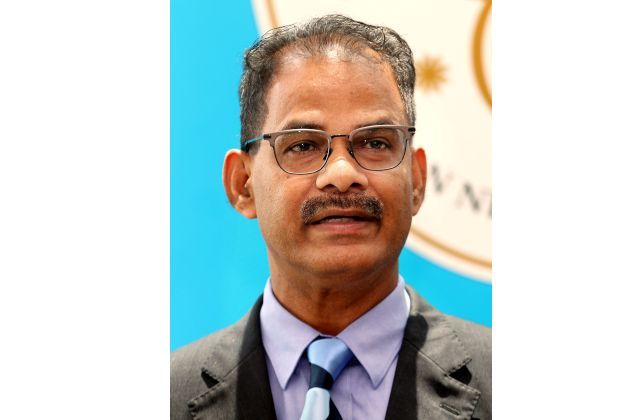
Malaysia's flagship East Coast Rail Link (ECRL) infrastructure megaproject is set to unlock substantial employment prospects in Selangor's locomotive manufacturing ecosystem, with state officials estimating around 2,000 job openings emerging from the RM50.27 billion national undertaking. V. Papparaidu, who chairs Selangor's human resources and poverty eradication committee, underscored during the state assembly session at Bangunan Dewan Negeri Selangor in Shah Alam on Tuesday, August 11, that the bulk of these positions—approximately 80 percent—will demand locally-sourced talent rather than foreign labour, representing a tangible economic opportunity for Selangor's workforce.
The assertion carries significant implications for Malaysia's skills development agenda, particularly as the ECRL enters critical construction and operational phases. Rather than importing specialised manpower, the state government has signalled its commitment to cultivating domestic expertise through structured education and vocational pathways. Papparaidu outlined that Selangor intends to equip its youth with industry-aligned competencies via targeted training curricula designed to address locomotive sector requirements directly. This strategic positioning reflects broader recognition within state leadership that infrastructure megaprojects succeed not merely through capital investment but through integrated workforce development that anchors employment gains locally.
Selangor has already crystallised several institutional mechanisms to bridge the gap between job-seeker capabilities and employer specifications. The state-led Kerjaya Selangor initiative, executed in partnership with the Social Security Organisation (PERKESO) via the MyFuture Jobs platform, functions as a matching apparatus that channels candidates toward suitable positions after evaluating their qualifications and competency profiles against industry demand. These efforts extend beyond passive job listing; state authorities have instituted JobCare Selangor, a structured programme that amalgamates job fairs with direct interview opportunities, enabling Technical and Vocational Education and Training (TVET) graduates to transition swiftly into employment. Between January and July 10 this year, PERKESO data revealed that Selangor produced 10,111 TVET graduates, establishing a pipeline of semi-skilled and skilled workers positioned to absorb ECRL-related opportunities.
The broader labour market context in Selangor demonstrates robust demand for qualified personnel across high-value sectors. During the same January-to-July period, the state recorded 78,030 job vacancies requiring diploma-level or advanced qualifications. Of these openings, 3,965 positions clustered within high-skill domains spanning automotive engineering, semiconductor fabrication, and advanced manufacturing—fields demanding technical specialists including automotive engineers, data scientists, and software developers. These roles represent exactly the competency profiles that TVET curricula are designed to cultivate, suggesting an emerging alignment between training output and labour market absorption capacity. The implication for Selangor is that deliberate skills development in vocational channels translates directly into improved labour force utilisation and reduced structural unemployment.
Yet the state administration recognises that matching graduate competencies to sectoral requirements demands more granular knowledge than aggregate employment statistics provide. During the assembly sitting, Assemblyman Nushi Mahfodz (PN-Semenyih) interrogated whether Selangor possessed the analytical infrastructure to conduct district-level mapping exercises that would align individual graduate cohorts with localised economic structures and industry clusters. This concern reflects awareness that Selangor's geography encompasses highly differentiated economic zones—Shah Alam's automotive and engineering concentration differs substantively from Pelabuhan Klang's maritime and logistics orientation, just as semiconductor clusters in the Klang Valley vary from agro-industrial areas in outlying districts. Papparaidu acknowledged this complexity, noting that meaningful spatial alignment requires granular data harvesting from universities and technical institutions to enumerate graduate production by field and geographic location.
The commitment to district-level skills mapping signals a maturation in Selangor's workforce development philosophy. Rather than deploying uniform training interventions across the state, this approach would enable targeted curriculum design that reflects local industry structures and employer specifications. For instance, a district hosting significant logistics infrastructure would benefit from vocational training emphasising supply chain management, whereas regions centred on semiconductor manufacturing would prioritise electronics and precision engineering qualifications. This granularity becomes particularly consequential when infrastructure projects like the ECRL concentrate employment opportunities within specific geographic corridors, creating localised labour demand that a poorly calibrated educational system might fail to satisfy.
The ECRL's employment implications extend beyond Selangor itself, carrying implications for Malaysia's regional competitiveness and Southeast Asian infrastructure discourse. As neighbouring countries pursue comparable megaprojects—Thailand's rail expansions, Indonesia's port developments—the capacity to absorb massive labour inflows through domestic skills cultivation rather than expatriate workforces becomes a competitive differentiator. Malaysian policymakers are implicitly positioning Selangor as a model state that harnesses infrastructure investment to strengthen human capital accumulation, education-to-employment pathways, and inclusive growth outcomes. This framing resonates with international development narratives emphasising that infrastructure gains durability and social legitimacy when employment benefits flow to local populations rather than concentrating returns among capital owners and foreign contractors.
The convergence of infrastructure demand with vocational skills development also addresses longstanding Malaysian challenges regarding graduate absorption and youth unemployment. Despite expanding higher education enrolment, Malaysia has historically experienced friction between university graduate aspirations and labour market realities, while simultaneously facing skills shortages in technical trades where TVET qualifications prove directly applicable. The ECRL opportunity permits Selangor to test whether systematic coordination between infrastructure labour demands, vocational education provision, and job-matching platforms can resolve this mismatch. Success would generate a replicable model applicable to other major projects and economic sectors, whilst failure would suggest that structural constraints—geographical immobility, qualification-expectation misalignment, or employer hiring preferences—persist despite institutional reforms.
Looking forward, Selangor's institutional architecture for workforce development will require continuous refinement as the ECRL progresses toward full operational status. The current emphasis on TVET credential expansion and job-matching platforms represents necessary but insufficient measures; deeper interventions might include employer-led curriculum co-design, apprenticeship subsidies, or geographic mobility support for workers relocating toward ECRL employment zones. Additionally, the state government's willingness to conduct granular data collection and district-level mapping should extend to monitoring training programme completion rates, job placement outcomes, wage trajectories, and sectoral retention—metrics that would illuminate whether the projected 2,000 employment opportunities genuinely materialise and whether they translate into sustainable career pathways rather than transient project-phase employment.

