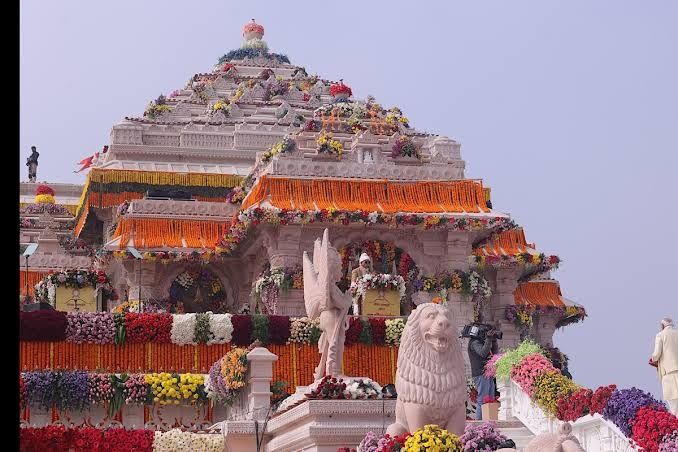
A major religious scandal has engulfed one of India's most symbolically important temples after authorities arrested eight people on suspicion of systematically stealing from donations at the Ram Mandir in Uttar Pradesh. The arrests, confirmed by police in Lucknow on Thursday, stem from an investigation into irregularities in how the temple handles the vast sums of money and valuables deposited by millions of visiting devotees. This development strikes at the heart of Prime Minister Narendra Modi's political legacy, as the temple's construction and inauguration in 2024 represented a watershed moment in his Hindu nationalist agenda.
The Ram Mandir occupies an extraordinary place in India's contemporary politics and religious consciousness. The shrine was built on the site where the Babri mosque had stood for nearly five centuries until it was demolished in 1992 by Hindu nationalist activists. That destruction became a galvanising moment for Modi's Bharatiya Janata Party, then operating from opposition benches, and the temple's eventual completion two decades later symbolised the party's ascendancy to national power. Modi himself presided over the temple's grand inauguration ceremony in 2024, an event orchestrated to showcase the fulfilment of a decades-old Hindu nationalist project that had fundamentally reshaped Indian electoral politics.
The scale of the alleged theft remains officially undisclosed, though opposition parties and investigative media reports suggest the missing funds could total more than US$20 million. Among those arrested are multiple temple employees who worked directly with the monetary donations and precious metal offerings that flow continuously into the temple from Hindu pilgrims. Their specific roles centred on counting cash donations and processing gold and silver items contributed by worshippers from across India and overseas. The temple trust has not yet released a comprehensive audit or public accounting of the alleged losses, leaving the true extent of the financial irregularity shrouded in uncertainty.
The criminal charges authorised against the eight suspects include criminal breach of trust, theft, conspiracy and corruption—offences that carry serious penalties under Indian law. Uttar Pradesh Chief Minister Yogi Adityanath, a Hindu nationalist firebrand whose state government initiated the special investigation team probe, has publicly sworn that those found culpable will face the full weight of legal consequences. This political posturing reflects the sensitivity surrounding the case; allowing such serious allegations to fade without vigorous prosecution could undermine the government's religious credentials with its Hindu voter base.
The broader impact of this scandal extends far beyond administrative lapses. Devotees who made financial contributions to construct and maintain the temple now face profound questions about whether their offerings were properly safeguarded and deployed. Viti Saxena, a homemaker aged 44 who had donated to the project, expressed the anxieties cascading through the Hindu community. She voiced distress that a temple of such transcendent spiritual significance should become mired in theft allegations, transforming it into an international symbol of institutional corruption rather than religious piety. Saxena's concerns reflect a deeper erosion of confidence in the temple's management and the integrity of its administrative structures.
The construction of the Ram Mandir itself cost an estimated US$240 million, assembled entirely through public donations rather than government funding. This reliance on voluntary contributions from ordinary Hindu devotees across India and the diaspora created a profound sense of collective ownership over the project. The allegations that portions of these accumulated funds were subsequently misappropriated therefore feel like a betrayal of that communal trust and sacrifice. For many Hindu believers, the temple represented not merely a religious structure but a tangible manifestation of their faith restored after centuries of perceived humiliation.
The religious foundation underpinning the temple's construction reaches back into Hindu theology and mythology. Devout followers maintain that the deity Ram was born in Ayodhya more than seven millennia ago, making the location sacred ground. The Babri mosque, constructed during the 16th century by a Muslim emperor, was viewed by Hindu nationalists as an unwanted imposition on this hallowed site. The 1992 demolition, carried out by activists aligned with the BJP and related organisations, became one of India's most consequential moments, triggering communal violence but ultimately catalysing the political rise of Hindu nationalism as an electoral force.
The theft case arrives at a delicate moment for Modi's administration as it continues consolidating power through appeals to Hindu identity and historical grievances. The temple served as the ultimate vindication of the BJP's long-term political project—proof that Hindu nationalist mobilisation could achieve tangible outcomes even when opponents controlled national institutions. However, this scandal threatens to complicate that triumphalist narrative by exposing corruption within the very apparatus built to steward this sacred symbol. If investigations reveal systematic embezzlement by trusted officials, it could raise uncomfortable questions about whether the institutional culture surrounding Hindu nationalism creates opportunities for malfeasance.
For Malaysia's multicultural context, the Ram Mandir scandal offers instructive parallels regarding the governance challenges that arise when religious institutions accumulate substantial resources and political significance. Malaysia's own experience managing donations to houses of worship across multiple faith communities underscores the importance of transparent financial oversight and independent auditing. The case also demonstrates how deeply entwined religion and politics can become in South Asia, a pattern that carries implications for regional stability and communal relations whenever institutional failures threaten the symbolic importance of major religious sites.
The investigation's trajectory will likely prove politically significant across India, influencing perceptions of the Modi government's commitment to institutional integrity and rule of law. Opposition parties will undoubtedly weaponise the scandal, challenging the BJP's claims to represent Hindu interests faithfully. Simultaneously, the government faces pressure to demonstrate that elite figures connected to Hindu nationalist movements face genuine accountability rather than preferential treatment. Whether the special investigation team operates independently or becomes influenced by political considerations will reveal much about the state of India's institutions and the subordination of the judiciary to electoral considerations.

