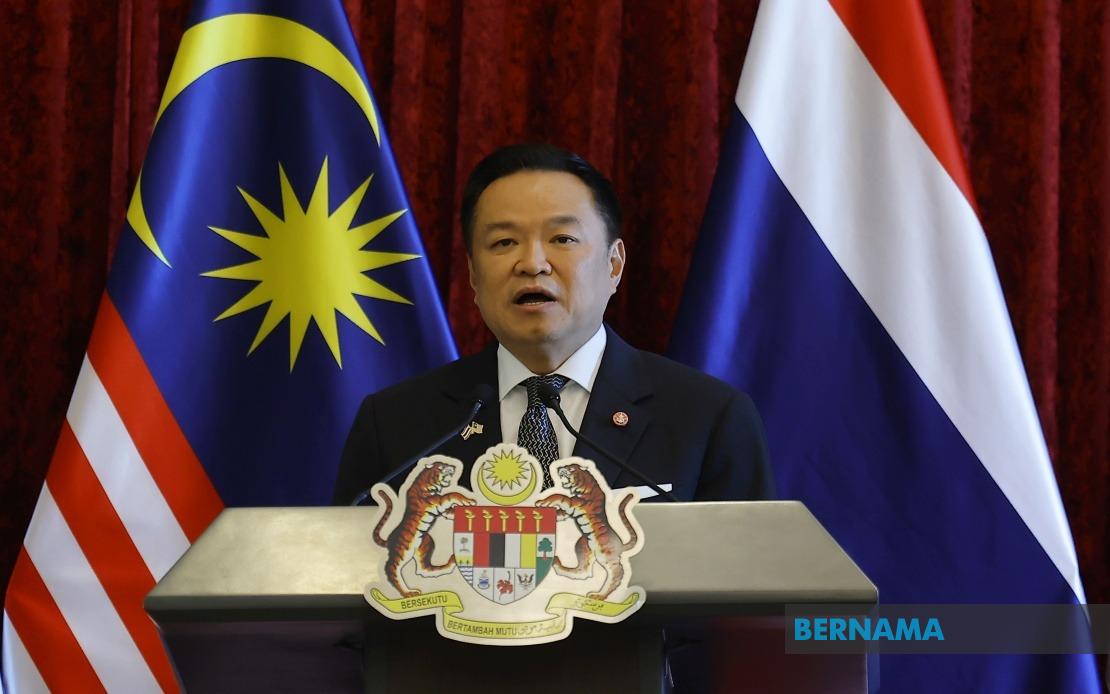
Thai Prime Minister Anutin Charnvirakul has reasserted his government's determination to bring lasting peace to the country's violence-plagued southern border provinces, framing the challenge as fundamental to broader economic and social progress in the region. During a joint press conference with Malaysian Prime Minister Datuk Seri Anwar Ibrahim in Putrajaya on Thursday, Anutin underscored that pacifying the restive southern territories remains among his administration's highest priorities, signalling the enduring significance Bangkok places on resolving a decades-long separatist insurgency that has claimed thousands of lives.
The Thai premier's emphasis on the security situation reflects the persistent instability that has characterised the Pattani, Yala, Narathiwat, and Satun provinces since the modern conflict erupted in 2004. These Muslim-majority areas along the Malaysia-Thailand border have witnessed recurring cycles of violence involving militant groups, security forces, and civilian casualties, creating a humanitarian toll that extends beyond military and political dimensions. Anutin's public commitment at the meeting signals Bangkok's recognition that unilateral security operations alone have proven insufficient, necessitating a multifaceted approach that integrates both developmental initiatives and dialogue mechanisms.
Crucially, Anutin articulated a conceptual framework linking peace and development as mutually reinforcing objectives rather than sequential goals. By asserting that "peace creates the conditions for development, while development helps build lasting peace," the Thai PM acknowledged a fundamental reality in post-conflict stabilization: sustainable security cannot be achieved through military means alone without addressing underlying economic grievances and structural inequalities that fuel grievance narratives among border communities. This perspective aligns with contemporary counterinsurgency scholarship emphasizing the importance of inclusive economic growth and governance improvements in conflict zones.
The meeting in Putrajaya highlighted Thailand's strategic reliance on Malaysian facilitation in peace negotiations, with Anutin explicitly commending Malaysia's role as a neutral mediator. Malaysia's geographical proximity, historical ties to the affected communities, and established diplomatic channels have positioned Kuala Lumpur as a crucial intermediary between the Thai government and armed groups involved in the conflict. This positioning reflects Bangkok's acknowledgment that external facilitation by a respected regional actor can lend credibility to negotiation processes and provide necessary buffer space for productive dialogue when direct engagement proves politically sensitive.
Anwar's reaffirmation that Malaysia neither endorses nor tolerates violence, coupled with Thailand's assurance of continued cooperative efforts to apprehend perpetrators, indicates shared commitment to a security-plus-dialogue approach. The Malaysian prime minister's position demonstrates Kuala Lumpur's careful balancing act: maintaining its role as a trusted facilitator while unambiguously opposing militant activities that destabilize the region. This dual posture—rejecting violence while engaging with armed groups through dialogue—reflects Malaysia's understanding that sustainable peace processes often require working across conventional divides of legitimacy.
The peace dialogue process involves coordination between Thailand's chief negotiator Thanat Suwannanont, director of the National Intelligence Agency, and Malaysia's team leader Datuk Mohd Rabin Basir, a former director-general of the National Security Council who assumed his position on July 1, 2024. The appointment of security sector veterans to lead dialogue efforts underscores both governments' intent to ground negotiations in institutional frameworks and leverage intelligence communities' understanding of threat landscapes. This institutional embedding of the peace process aims to ensure negotiations remain informed by ground realities while maintaining sufficient political distance from security operations.
The involvement of the Barisan Revolusi Nasional (BRN) in the dialogue process represents engagement with one of the primary armed groups operating in the southern provinces. BRN's participation, mediated through Malaysia, signifies recognition that durable settlements require incorporating significant militant actors who command genuine grassroots support and operational capacity. However, the presence of multiple armed factions in southern Thailand—including splinter groups and criminal networks sometimes difficult to distinguish from ideologically motivated insurgents—complicates negotiation efforts and raises questions about representativeness and implementation capacity of any eventual agreement.
For Malaysia and the broader Southeast Asian region, Thailand's security situation in the south carries substantial implications. Cross-border movement of militants, arms trafficking, and intelligence sharing requirements necessitate regional security cooperation mechanisms. Malaysia's own experience managing internal security concerns in Sabah and Sarawak, combined with its role hosting significant Thai Muslim migrant communities, creates multiple channels through which Thai southern conflict dynamics influence Malaysian security calculations. The border provinces' instability also constrains intra-regional trade and infrastructure development, affecting ASEAN's economic integration ambitions.
The emphasis on sustained cooperation between Thailand and Malaysia reflects recognition that border security challenges require long-term commitment rather than episodic interventions. Both governments have invested in joint intelligence-sharing arrangements, coordinated military operations in border areas, and humanitarian initiatives targeting displaced populations. However, sustainable progress depends on addressing root causes including historical grievances among southern Muslim communities regarding autonomy, representation, and cultural recognition within the Thai state structure. Whether current dialogue mechanisms can facilitate negotiations on substantive political arrangements—as opposed to temporary ceasefires or operational agreements—remains a critical question for the peace process's ultimate success.

