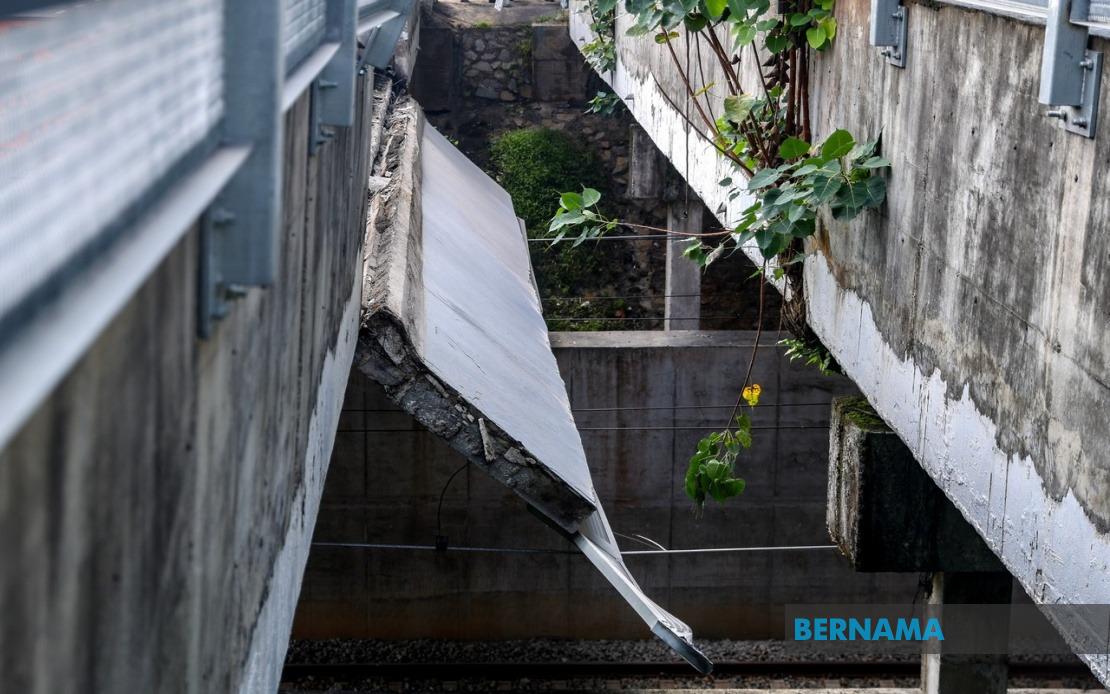
A collision involving a lorry on the Kulai-Kempas Baru rail corridor in Johor has forced Keretapi Tanah Melayu Berhad (KTMB) to activate emergency transport measures, deploying shuttle buses to maintain passenger connectivity while engineers work to restore critical rail infrastructure damaged in the incident. The disruption, which began earlier this week, has impacted multiple Electric Train Service (ETS) routes serving one of Malaysia's busiest rail corridors, prompting the national operator to coordinate a comprehensive contingency plan involving fleet redirection and passenger compensation options.
Three major ETS services originating from JB Sentral have been directly affected by the closure of the damaged rail section. ETS 9442, which normally operates to Padang Besar, ETS 9524 serving the Kuala Lumpur corridor, and ETS 9326 heading towards Butterworth have all been forced to adjust operations. To maintain service continuity, KTMB has introduced shuttle bus connections from both JB Sentral Station and Kempas Baru Station, delivering passengers directly to Kulai Station where they can transfer onto trains continuing to their final destinations without significant delay.
The underlying cause of the disruption traces back to an incident involving a heavy goods vehicle operated by Transmare-Chemie (M) Sdn Bhd. The lorry, which was carrying flammable materials, skidded near the rail corridor, causing a section of concrete parapet structure to collapse and make contact with the overhead line (OHL) system that supplies power to the trains. This mechanical damage has rendered the critical infrastructure section unsafe for train operations and necessitates comprehensive repair work before services can resume at full capacity.
Restoration efforts have proven complex, requiring specialized heavy machinery to remove the fallen concrete structure from the rail corridor. As of early morning on August 6, the 120-tonne crane necessary for lifting and removing the damaged parapet had not yet been secured by the responsible party, delaying the commencement of repair work. KTMB indicated that once equipment arrives at the site, removal operations are anticipated to begin around 10 am, though the timeline for complete line reopening remains uncertain and contingent on multiple operational factors.
Passengers facing disruption have been offered flexibility in their travel arrangements. Those choosing not to continue their journeys are eligible for complete refund of their ticket fares, a measure designed to minimize financial hardship for commuters whose plans have been disrupted by the infrastructure failure. KTMB staff stationed at affected stations are prepared to assist passengers seeking further information or resolution, helping them navigate alternative transport options or process refund requests efficiently.
The impact extends across KTMB's broader regional service network. While the Pasir Gudang-JB Sentral-Pasir Gudang route and the Kempas Baru-JB Sentral-Kempas Baru route on the Shuttle Selatan service continue operating normally, the direct Kulai-Kempas Baru-Kulai route has been temporarily suspended pending restoration completion. This segmentation of services, though disruptive, prevents cascading delays across the system while engineers concentrate on restoring the damaged corridor.
The challenge faced by KTMB reflects the vulnerability of Malaysia's rail infrastructure to external incidents, particularly accidents involving heavy vehicles operating near rail corridors. The overhead line system, essential for delivering power to electric trains, remains exposed at various points along routes, particularly where rail lines intersect with major roads or pass near industrial areas. This incident underscores the importance of implementing additional safety measures, potentially including protective barriers in high-risk sections, to minimize the risk of similar accidents.
For restoration to proceed, KTMB has emphasized that multiple prerequisites must be satisfied before operations can resume. Beyond the physical removal of the concrete structure, comprehensive technical inspections of both the track bed and the overhead line system must be completed to ensure that no hidden damage has compromised safety. Only after obtaining formal safety certification from relevant authorities will KTMB authorize the resumption of train operations on the restored corridor, reflecting the operator's cautious approach to passenger safety.
The coordination between KTMB and Transmare-Chemie (M) Sdn Bhd will be crucial in determining how quickly restoration work can be completed. The logistics company's responsibility for securing the necessary crane equipment and facilitating its deployment to the damaged site directly impacts the timeline for reopening the corridor. Any delays in equipment procurement or mobilization will extend the disruption period, placing greater strain on the shuttle bus network and affecting thousands of daily commuters relying on this critical transport artery.
From a regional transportation perspective, the incident highlights the importance of maintaining diverse transport connectivity between Johor's major centers and Kuala Lumpur. The ETS services on this corridor form a vital link in Malaysia's integrated transport network, serving business travelers, students, and daily commuters. Disruptions to this service, while managed through shuttle arrangements, still impose time costs and inconvenience on passengers and underline the need for infrastructure resilience across critical transport corridors serving the growing economic corridor between Johor and the Klang Valley.
Looking forward, the restoration process will provide KTMB with operational insights regarding emergency response protocols and shuttle bus deployment efficiency. The success of the contingency measures will inform future planning for managing infrastructure disruptions, potentially leading to improvements in passenger communication, service coordination, and alternative transport provision. As Malaysia continues developing its rail infrastructure network, lessons from incidents like this collision serve to strengthen system reliability and passenger service standards.

