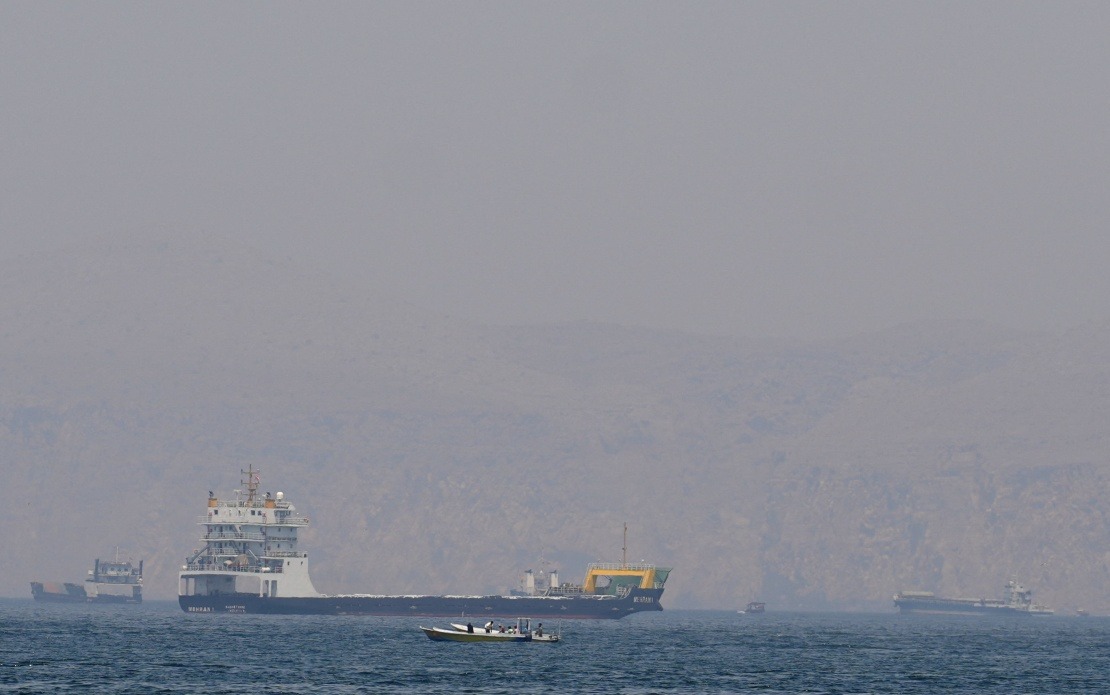
The European Union and the Gulf Cooperation Council have issued a forceful joint statement rejecting any attempt by a single nation to assert control over the Strait of Hormuz, one of the world's most critical shipping channels. The declaration, made following a high-level security forum, emphasises that no bilateral agreement or understanding between states can legally restrict passage through this strategically vital waterway, which serves as a conduit for roughly one-third of global maritime oil trade.
The statement emerged from the High-Level Forum on Regional Security and Cooperation, held in Brussels on July 13 and co-chaired by EU foreign policy chief Kaja Kallas and Bahraini Foreign Minister Abdullatif bin Rashid Al-Zayani in his capacity as chair of the GCC Ministerial Council. The timing underscores growing concerns about maritime security in the Middle East, where tensions have escalated significantly in recent months. For Malaysia and other Southeast Asian nations dependent on stable global trade routes, the Strait of Hormuz remains essential—disruptions threaten everything from energy supplies to manufacturing competitiveness across the region.
Both blocs reaffirmed that freedom of navigation through the Strait of Hormuz is protected under the UN Convention on the Law of the Sea, a foundational instrument in international maritime law. The statement explicitly notes that all states enjoy equal passage rights, which cannot be suspended, obstructed, or made subject to conditions imposed by any single actor. This principled stand reflects a broader commitment to the rules-based international order that underpins global commerce and security.
The joint declaration takes on particular significance given recent tensions involving Iranian actions against commercial vessels transiting the waterway. The EU and GCC condemned in the strongest possible terms attacks on merchant ships and strikes against the sovereign territories of regional states, characterising such actions as violations of international law and UN Security Council Resolution 2817. These incidents have endangered civilian lives and seafarers of multiple nationalities, creating a destabilising effect that reverberates throughout global shipping communities.
The blocs specifically called upon Iran to cease all attacks immediately and without conditions, while keeping the strait open to unimpeded international traffic. They rejected any notion of transit fees, service charges, or permits being imposed on vessels passing through the channel. Such restrictions would fundamentally alter the economic calculus for global commerce and disproportionately affect developing nations and smaller economies that depend on affordable, predictable shipping costs. For Malaysian traders and manufacturers, any disruption or imposition of additional charges would directly impact competitiveness and supply chain reliability.
The statement incorporated a crucial observation that any threat to one state's security through maritime interference represents a collective concern for all nations relying on the waterway's safety. This framing transforms the issue from a bilateral dispute into a matter of universal interest, binding together distant economies that might otherwise have limited strategic overlap. The EU and GCC pledged to coordinate closely in safeguarding maritime freedom and protecting international shipping, signalling a unified approach that could deter further provocations.
While the declaration takes a firm stance on specific violations, both organisations simultaneously called for restraint and emphasised dialogue as the pathway to resolving underlying tensions. This balance between principled opposition to unlawful actions and openness to diplomatic resolution reflects the delicate positioning required in contemporary Middle Eastern security challenges. The emphasis on diplomacy aligns with international norms and provides space for negotiated settlements, though the stronger language about attacks suggests patience has limits.
The backdrop to this statement includes intensifying military exchanges between the United States and Iran, creating a volatile environment where miscalculation could rapidly escalate regional conflict. Pakistan's June mediation effort, which produced a memorandum of understanding intended to conclude the regional war and establish lasting peace, appears insufficient to moderate on-the-ground tensions. This disconnect between formal diplomatic arrangements and continuing military actions highlights the complexity of Middle Eastern geopolitics and the fragility of ceasefire arrangements.
For Malaysia and its ASEAN partners, the implications extend beyond abstract principles of international maritime law. The Strait of Hormuz remains crucial to regional energy security and trade flows, with disruptions affecting everything from fuel prices to manufacturing costs. The unified EU-GCC statement, backed by formal declarations and coordinated messaging, strengthens the international consensus supporting free navigation—a consensus that benefits all trading nations, particularly smaller economies lacking naval power projection capabilities to independently guarantee their shipping safety.
The joint initiative also demonstrates how geographically distant regions—Europe and the Gulf—can align around shared interests in maintaining stable, predictable international commerce. This coalition-building approach, emphasising universal principles rather than particular interests, may serve as a template for addressing similar challenges elsewhere. However, effectiveness ultimately depends on whether declarations translate into concrete measures, whether other major powers reinforce the message, and whether the underlying drivers of Iranian behaviour can be adequately addressed through sustained dialogue.

