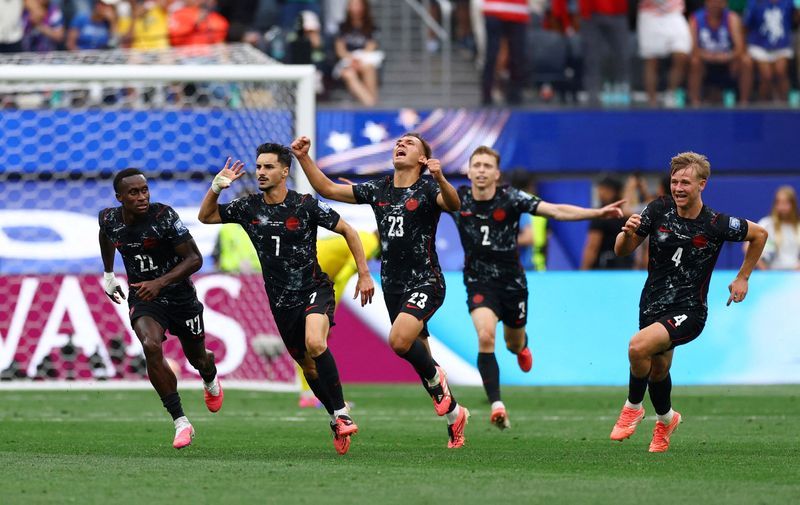
Stephen Eustaquio delivered one of the most dramatic moments in Canadian football history when he unleashed a powerful strike from the edge of the penalty area deep into stoppage time, handing Canada a thrilling 1-0 victory over South Africa at Los Angeles Stadium on Sunday. The goal, struck in the 92nd minute, propelled the co-hosting nation into the World Cup's last 16 for the first time, marking a watershed achievement for a programme that had endured repeated disappointments on the global stage. Eustaquio's composure and clinical finishing in that pivotal moment ensured that Canadian supporters who filled the stands would leave the stadium in euphoria rather than heartbreak.
The match itself embodied the tension and unpredictability that defines knockout football, with neither side willing to take excessive risks early on. South Africa, making their first-ever appearance in a World Cup knockout round at their fourth attempt, adopted a cautious approach that suggested they were content to carry the contest into extra time and potentially a penalty shootout. Canada, similarly inexperienced in such high-stakes encounters, created opportunities but lacked the clinical edge required to convert them into goals during a cagey first half that left little to separate the teams. The tactical conservatism that characterised much of the opening 45 minutes reflected the magnitude of the occasion and the slim margins that separate advancement from elimination at this level.
Canada's clearest opportunity before halftime emerged from a corner kick that created chaos in South Africa's penalty area. Moise Bombito directed a header toward goal, only for Aubrey Modiba to clear it off the line at the crucial moment. Seconds later, Tajon Buchanan found himself with a close-range chance but goalkeeper Ronwen Williams made a decisive save with his chest to deny what might have been the decisive moment. The near-misses prompted Canadian appeals for a penalty when Richie Laryea went down in the area shortly afterward, yet the referee's decision stood even after a VAR review, drawing loud protests from the Canadian contingent and an animated response from coach Jesse Marsch, who continued to dispute the call as teams departed for halftime.
The second half continued in similar fashion, with South Africa showing little ambition to dictate play. Canada generated another opportunity when Tani Oluwaseyi's shot found the goalkeeper, but Jonathan David could not capitalise on the rebound after Mbekezeli Mbokazi produced a vital defensive intervention. This pattern of Canadian pressure meeting South African resistance persisted throughout the half, with frustration mounting on the Canadian bench. Coach Marsch later acknowledged that his team had fashioned multiple chances but had not been sufficiently lethal in their execution, a critique that would have stung had the final outcome not been so favourable.
The breakthrough came in the most dramatic circumstances possible. As the match entered its closing stages and seemed destined for additional periods, Eustaquio received possession on the edge of South Africa's penalty area. Rather than passing or laying the ball off, the Canadian midfielder unleashed a rasping drive that beat the diving Williams and nestled into the net. In that instant, Canada's World Cup narrative transformed completely. Eustaquio's emotional response reflected the magnitude of what had been achieved, describing how the effort felt like a collective endeavour where every teammate contributed through their support and belief. The breakthrough immediately sparked desperate South African attempts to equalise, but the clock had turned against them and the final whistle confirmed Canada's extraordinary achievement.
The context surrounding this victory amplifies its significance considerably. Canada had arrived in Los Angeles with minimal rest, having absorbed a disappointing 2-1 defeat to Switzerland in their final group-stage match just three days earlier. Playing their first knockout-round match outside Canadian territory added another layer of difficulty to their challenge. Despite these obstacles, the team demonstrated the character and resilience that championship-winning squads often display when facing elimination. Marsch's post-match commentary emphasised precisely these qualities, labelling his players Canadian heroes and highlighting how their collective effort had transcended the sport itself to become a source of national pride.
Canada's progression carries significant implications for the remainder of the tournament and for the development of the sport within the country. The team will now face either the Netherlands or Morocco on July 4 in Houston, with a quarterfinal berth at stake. A win in that fixture would represent another historic milestone, further elevating the status of Canadian football in a nation where ice hockey has traditionally dominated sporting consciousness. Success in this tournament could catalyse increased investment in youth development, higher domestic league standards, and greater media coverage of football—consequences that could reshape Canadian sport in meaningful ways.
For South Africa, the exit represents a missed opportunity despite their own achievement in reaching the knockout stage for the first time at their fourth World Cup participation. Coach Hugo Broos, at 74 years old, indicated this would be his final World Cup, leaving open questions about the team's direction and whether they can build upon the foundation they have established. Their conservative approach ultimately proved costly, as a more aggressive strategy earlier in the match might have altered the complexion of the contest. Nevertheless, qualifying for the knockout rounds represents progress for a nation seeking to establish itself as a consistent World Cup participant.
Eustaquio's moment of brilliance will resonate throughout Canadian football for years to come, a symbol of the breakthrough that the nation's football programme has long pursued. His clinical finish and the manner in which it was executed—with such conviction and precision in the most pressurised circumstances imaginable—elevated him into the pantheon of Canadian sports heroes. The strike itself required not merely technical ability but the psychological strength to remain calm when others might have faltered, to trust his instincts, and to execute under conditions where a miss would have seen his name remembered in very different circumstances. Instead, Eustaquio has secured his place in Canadian sporting folklore.

