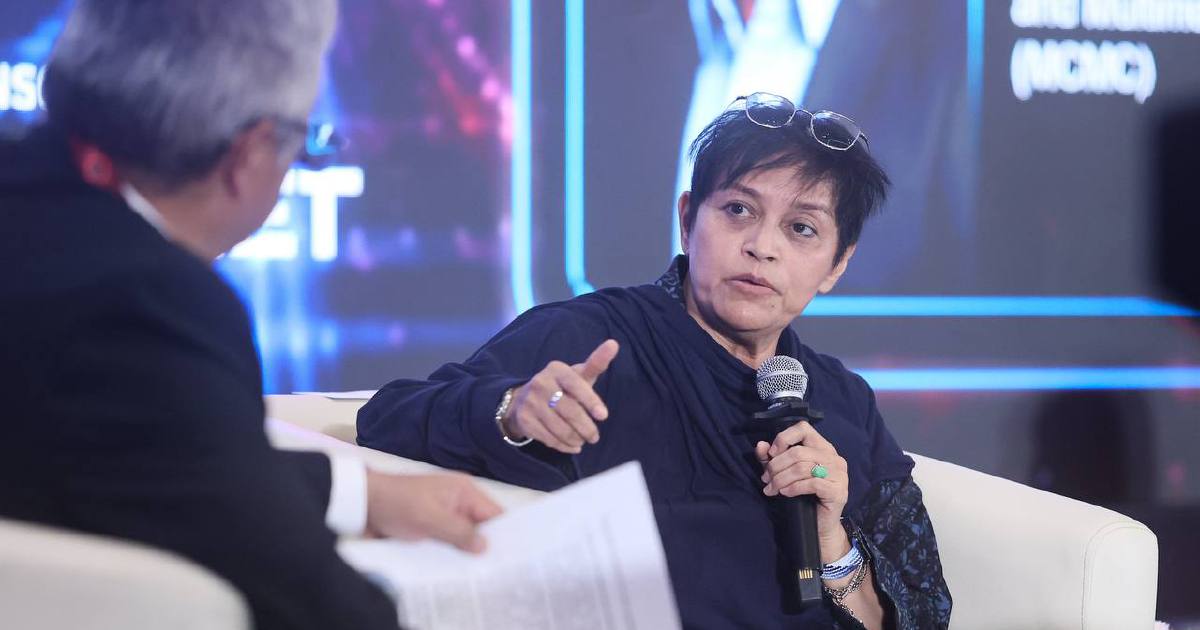
Malaysia's elections increasingly unfold in the digital realm, where social media campaigns, online messaging, and viral content shape voter perceptions as much as traditional rallies and broadcasts. With this shift in political communication, ensuring a level playing field online has become a critical governance challenge. Minister in the Prime Minister's Department (Law and Institutional Reform) Datuk Seri Azalina Othman Said has underscored this concern, urging the Malaysian Communications and Multimedia Commission to establish consistent and equitable monitoring protocols across all digital platforms during electoral contests.
The minister's intervention reflects growing anxiety among policymakers about the asymmetrical nature of digital campaigning. Unlike terrestrial television and radio, which operate within established regulatory frameworks, social media and messaging applications present far greater complexity. Political parties and candidates possess vastly different resources, technical expertise, and follower bases, creating inherent disadvantages for smaller or less digitally savvy contenders. Without proactive oversight, these disparities risk cementing advantages that have little to do with policy substance or grassroots support.
Azalina's call highlights the MCMC's pivotal role in maintaining electoral integrity during an era of rapid technological change. The commission must navigate competing demands: enabling free political expression while curbing misinformation, protecting candidates from coordinated harassment while respecting privacy, and enforcing rules consistently across platforms operated by foreign corporations often resistant to local regulation. These tensions are not unique to Malaysia—democracies worldwide struggle with similar challenges—yet the region's particular vulnerabilities, including porous borders for disinformation and rapid social media adoption, make robust frameworks essential.
The distinction between fair and foul play in digital politics remains contested territory. Campaign materials that factually mislead voters, funded advertisements that exploit algorithmic recommendations to target vulnerable demographics, coordinated inauthentic behaviour designed to simulate grassroots enthusiasm, and deepfakes that distort candidates' words and images all occupy grey zones where regulation intersects with free speech principles. Malaysia's experience in recent elections has exposed instances of all these phenomena, yet responses have often been reactive and fragmentary rather than systematic.
A level playing field does not require identical spending or identical reach. Rather, it demands transparent rules applied consistently to all contestants. If a ruling coalition candidate's social media presence receives algorithmic amplification, smaller parties deserve equivalent opportunities or clear disclosure of how platforms rank political content. If misinformation targeting one candidate circulates freely, fact-checking and counter-information must be accessible to all candidates equally. The MCMC's challenge lies in designing frameworks sufficiently detailed to prevent manipulation while remaining flexible enough to accommodate innovation and preserve political dynamism.
The Malaysian context adds particular urgency to this question. The country's multicommunal society and complex political landscape mean that digital campaigns often navigate sensitive communal sensibilities. False claims about one community's electoral intentions can inflame tensions; selective amplification of divisive rhetoric can distort political debate; coordinated disinformation campaigns can delegitimise democratic outcomes. Elections won through superior digital manipulation rather than genuine voter preference undermine public confidence in democratic institutions—a concern that transcends partisan interests.
Southeast Asia broadly faces intensifying challenges in this domain. Thailand's military-influenced government has tightened digital restrictions, while Indonesia's vast and chaotic digital sphere presents vastly different monitoring difficulties. Singapore maintains tight editorial control, though even its regulated environment has witnessed election-related digital disputes. Malaysia's relatively open democratic traditions place it in a different category, yet this openness creates vulnerability to coordinated disinformation. Azalina's statement suggests recognition that democratic values need not mean regulatory passivity during elections.
Implementing fair digital monitoring requires sustained investment in technical capacity and human expertise. The MCMC must recruit and retain staff capable of understanding evolving platforms, algorithmic mechanisms, and emerging manipulation tactics. Training in data analysis, platform architecture, and digital forensics will be necessary. Partnerships with academic researchers, civil society monitors, and international organisations working on election integrity can supplement government resources. Budget allocation for these functions should reflect their importance to democratic health rather than treating them as peripheral administrative concerns.
Transparency must underpin any effective framework. Political parties and candidates should understand clearly which behaviours are permitted, which are restricted, and what consequences apply. Platform operators must publicly disclose how their algorithms treat political content and provide data to regulators investigating potential violations. The MCMC should publish regular reports on monitoring activities, violations discovered, and actions taken. Public visibility creates accountability and allows civil society to scrutinise whether enforcement truly serves fair competition or reflects partisan interests.
International cooperation adds another dimension. Disinformation frequently originates beyond Malaysia's borders, flowing across digital channels that respect no territorial limits. Coordinating with regional and global partners to identify foreign interference, tracing funding sources for misleading campaigns, and building intelligence-sharing arrangements can strengthen defences. This cooperation must be carefully calibrated to avoid either the naivety of ignoring external manipulation or the authoritarianism of using foreign threats as pretext for overreach.
The balance between enabling fair competition and respecting democratic freedoms remains delicate. Excessive regulation risks suppressing legitimate political expression or allowing government to silence criticism under the guise of protecting fairness. Yet insufficient oversight invites manipulation that renders elections uncompetitive in meaningful ways. Malaysia's challenge lies in charting this middle ground—implementing rules robust enough to prevent gaming yet limited enough to preserve the messiness and unpredictability inherent to genuine democratic contestation.
Azalina's emphasis on the MCMC's role signals willingness to tackle these complications directly. Whether this translates into concrete regulatory adjustments, enhanced resources, and sustained political support will determine whether Malaysia's digital election landscape can be reshaped into one where diverse contestants compete on reasonably equal terms. The stakes extend beyond any single electoral cycle, affecting the long-term credibility of Malaysia's democratic system.

