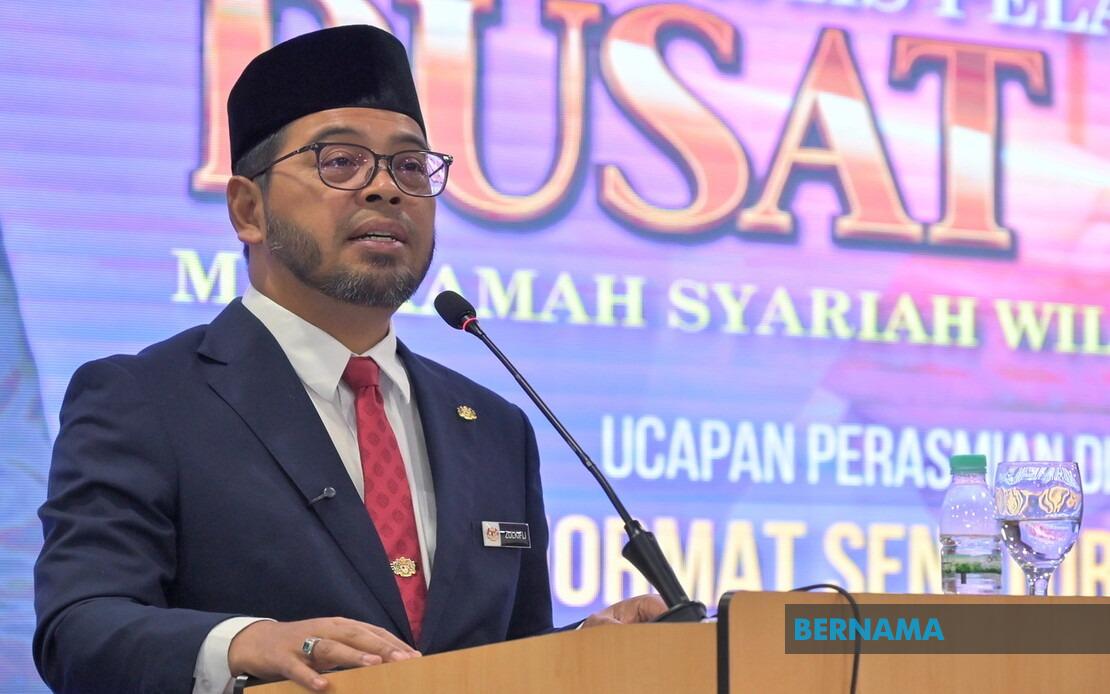
The Federal Territories Syariah Court has inaugurated its Sulh Centre in Kuala Lumpur, introducing an accelerated dispute resolution pathway designed to compress case timelines dramatically. Under this new fast-track mechanism, certain civil matters handled by the court can now be resolved in as little as one hour, whilst more complex cases are finalised within a single day. The initiative represents a significant operational shift in how Malaysia's Islamic judicial system manages its caseload, particularly in the federal territories jurisdiction.
Religious Affairs Minister in the Prime Minister's Department Dr Zulkifli Hasan framed the launch as part of a broader modernisation agenda within the Syariah Court system. He emphasised that expedited case resolution directly addresses longstanding concerns about judicial delays, which have historically affected litigants seeking swift remedies through the Islamic courts. The fast-track service targets cases deemed suitable for alternative dispute resolution mechanisms, focusing on matters where mutual settlement becomes achievable through facilitated negotiation rather than prolonged litigation.
The Sulh Centre itself represents a rebranding and functional expansion of the Sulh Section, which was first established in 2001. Rather than merely renaming an existing office, the court has substantially broadened the centre's mandate to encompass five distinct operational pillars. These include sulh council functions, formal arbitration under the hakam framework, islah-based reconciliation services, advisory and mediation support, plus analytics and strategic planning capabilities. This comprehensive restructuring enables the centre to address a wider spectrum of civil disputes, fundamentally changing how non-criminal cases flow through the Federal Territories Syariah Court system.
Performance data presented at the launch reveals compelling success metrics that justify the system's continued expansion. During 2022 and 2023, approximately 88 percent of cases referred to the sulh process achieved resolution through mutual agreement between disputing parties. This figure climbed to 90 percent in 2024, indicating that the mechanism has become progressively more effective at achieving amicable settlements. Such outcomes matter considerably for Malaysian litigants, as settlements negotiated through sulh processes typically prove more durable and cost-efficient than judgments handed down after contested trials.
The court's leadership team oversaw the launch with Syariah Judiciary Department director-general Datuk Mohd Amran Mat Zin and Federal Territories Chief Syariah Judge Mohd Asri Tahir in attendance, signalling institutional commitment to the initiative's success. Their presence underscored that this represents not a peripheral administrative change but a core reorientation of the court's service delivery model. The backing of senior judicial figures suggests that resource allocation and institutional support will flow toward sustaining and expanding the fast-track and sulh mechanisms going forward.
Integral to the centre's public-facing mission is a newly established podcast studio located within the premises. This addition reflects contemporary approaches to judicial outreach, using audio-based content to educate Malaysian citizens about Syariah Court services and dispute resolution options. By leveraging podcasting—a medium increasingly consumed during commutes and daily routines—the court aims to reach broader demographics and demystify Islamic legal processes for the general public. This communication strategy acknowledges that many potential court users lack awareness of available services or remain uncertain about procedure and costs.
Recognising that operational success requires sustained investment in human capital, the Religious Affairs Ministry is pursuing complementary reforms across several dimensions. These include strengthening the legal and regulatory framework underpinning fast-track procedures, upgrading competency standards among dispute resolution officers through targeted training programmes, and expanding the cadre of qualified sulh facilitators. Such investments ensure that administrative and personnel capacity matches the system's ambitions, preventing bottlenecks that could undermine delivery gains.
The government's emphasis on these supporting measures reflects hard-learned lessons from previous judicial reform initiatives. Simply introducing new procedures without corresponding upgrades to training, staffing, and infrastructure frequently leads to implementation failure or quality deterioration. By addressing legal framework, human resource development, and training systematically, policymakers are attempting to build sustainability into the sulh fast-track model rather than launching it as a standalone pilot vulnerable to collapse.
The appointment of 43 additional arbitrators—comprising both court officers and external qualified individuals—demonstrates concrete commitment to staffing the expanded system. Arbitrators serve as neutral third parties facilitating settlement discussions and making binding determinations when parties seek formal arbitration rather than informal mediation. Their recruitment and formalisation enhances the Sulh Centre's capacity to handle multiple cases simultaneously whilst maintaining quality standards. This mixed approach of utilising both court insiders and external practitioners provides flexibility whilst distributing workload across a broader pool of dispute resolution specialists.
For Malaysian litigants navigating the Federal Territories Syariah Court system, these developments offer tangible benefits worth noting. Disputes that previously might have consumed months of court time can now be finalised in compressed timeframes, reducing stress and financial costs associated with protracted litigation. This particularly benefits lower and middle-income parties for whom extended court involvement imposes genuine hardship. Additionally, the 90 percent settlement success rate suggests that litigants have genuine confidence in the sulh process, viewing it as a legitimate alternative to adversarial proceedings.
The expansion also carries implications beyond the Federal Territories. As the Sulh Centre establishes track records and operational practices, other state-level Syariah Courts and federal territories look to these results when considering similar innovations. Should the fast-track and sulh mechanisms continue demonstrating effectiveness, other jurisdictions may adapt the model to their own contexts. This potential for policy diffusion across Malaysia's Syariah Court system underscores why the Kuala Lumpur launch warrants regional attention.

