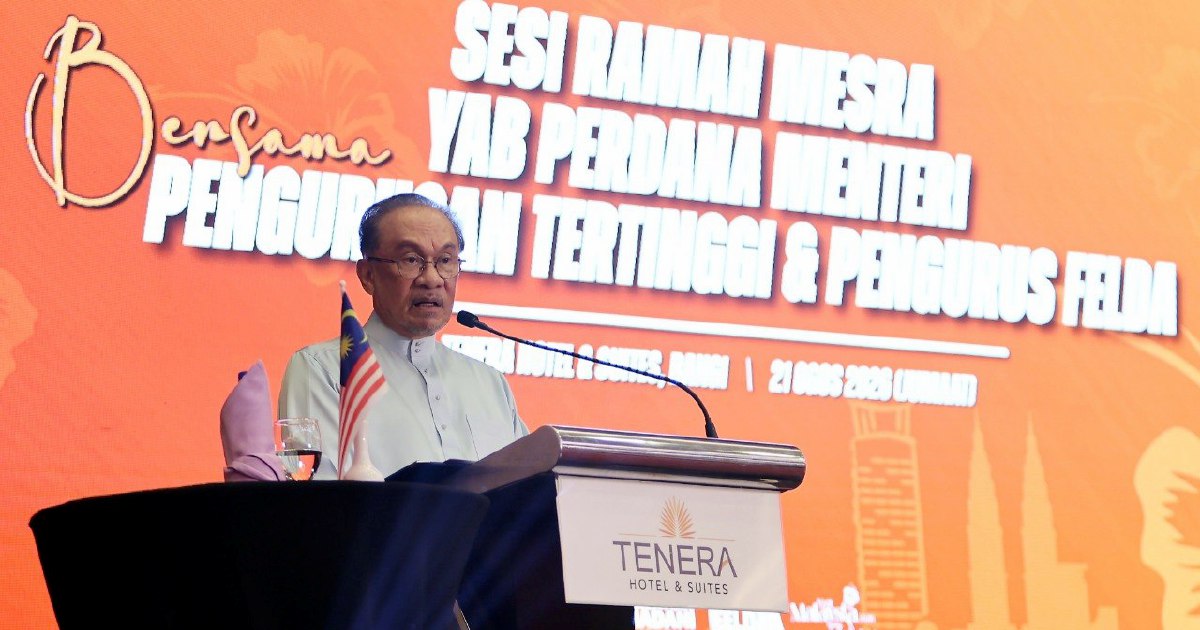
A dedicated task force tasked with examining alleged irregularities at the Federal Land Development Authority has officially commenced its operations, Prime Minister Datuk Seri Anwar Ibrahim announced during remarks in Bangi today. The formation of this investigative body represents the government's commitment to addressing longstanding concerns about governance and management within the statutory body, which has been at the centre of public debate regarding accountability and transparency in recent years.
The establishment of the task force signals heightened scrutiny of Felda's administrative and financial operations. As one of Malaysia's oldest development institutions, Felda manages vast tracts of land and administers programmes affecting thousands of settler families across the country. The creation of this investigation unit underscores the seriousness with which the current administration views the need to examine Felda's institutional practices and decision-making processes, particularly given the organisation's significant role in rural development and smallholder welfare.
Anwar indicated that the task force would operate with a defined mandate to thoroughly investigate matters that have raised questions about Felda's management and governance. While he did not elaborate on the specific issues under examination, the initiative reflects broader concerns that have accumulated over several years regarding how the authority deploys resources and makes strategic decisions affecting its vast settler community.
The Prime Minister made clear that the public and stakeholders should expect a comprehensive disclosure of the task force's conclusions once the investigation reaches its conclusion. This commitment to transparency acknowledges the legitimate interest of settlers, agricultural communities, and the wider Malaysian public in understanding any findings regarding institutional conduct at Felda. The promise of eventual disclosure also represents an attempt to rebuild confidence in the authority following periods when its operations have drawn scrutiny.
For Malaysian agriculture and rural development sectors, the task force's work carries significant implications. Felda's health and effectiveness directly influence the livelihoods of settler communities and contribute to the nation's agricultural productivity. Any findings regarding mismanagement or inefficiency could prompt structural reforms or policy adjustments that reshape how the authority operates and allocates resources to support smallholder farming enterprises.
The investigation also arrives amid broader discussions within Malaysia's development community about how government agencies adapt to contemporary economic challenges. Agricultural commodity markets have become increasingly volatile, and Felda's settler families face pressures from global price fluctuations and changing farming economics. How the authority has managed these pressures, and whether its strategies have adequately protected settler interests, likely forms part of the investigation's scope.
At the institutional level, the task force's work reflects the government's wider emphasis on governance improvement across the federal administration. In recent years, Malaysian policymakers have highlighted the need for robust accountability mechanisms within large statutory bodies. This investigation into Felda can be understood as part of that broader governance agenda, though the specific objectives and scope of the task force's work remain partially opaque to public view.
The timing of the announcement carries political significance as well. Settlement of questions surrounding institutional integrity at major development bodies demonstrates responsiveness to public concern and parliamentary oversight. By confirming that investigation machinery is active and operational, the government addresses longstanding calls for accountability while maintaining focus on developmental outcomes for affected communities.
Regional observers may note that Malaysia's approach to investigating governance issues at large statutory agencies reflects patterns seen elsewhere in Southeast Asia, where developmental institutions have similarly faced questions about management effectiveness and resource stewardship. The task force methodology—establishing a dedicated investigation body tasked with producing findings for public disclosure—represents a structured approach to institutional accountability that may inform regional best practices.
For Felda settlers and their representatives, the task force's commencement marks a procedural step toward potential remediation of concerns. However, the actual impact will depend on the comprehensiveness of the investigation and the government's willingness to implement recommendations that emerge from the findings. Settler organisations and agricultural stakeholders will likely monitor the task force's progress and await the promised disclosure of results.
The investigation's completion timeline remains unspecified, meaning stakeholders face uncertainty about when definitive findings will become public. This ambiguity has prompted observers to consider whether the task force operates under specific deadlines or whether it will continue investigating until a thorough examination concludes, potentially extending the period before findings reach public view.
Ultimately, the task force represents both an acknowledgement that questions about Felda governance require serious examination and a commitment to eventually transparent resolution of those questions. How thoroughly the investigation proceeds and whether its recommendations trigger meaningful institutional reform will determine whether this initiative substantially advances accountability and effectiveness at the Federal Land Development Authority.

