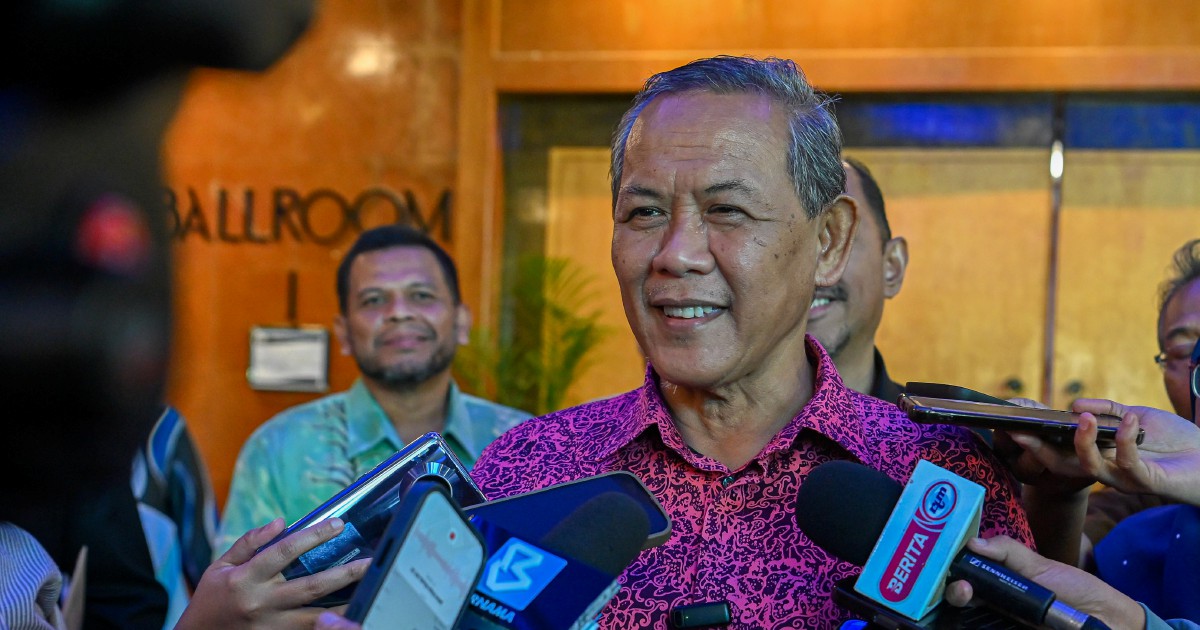
Negri Sembilan Menteri Besar Datuk Seri Aminuddin Harun has made a direct appeal to constituents to evaluate the government's substantive response to Linggi's persistent flooding problem, imploring them to resist framing the crisis around partisan interests as the state prepares for its 16th general election. Speaking in Seremban, the state leader underscored that concrete mitigation measures are already in motion and that voters would be better served by assessing tangible progress rather than allowing opposition forces to weaponise the issue for electoral purposes.
The Linggi flood problem represents one of Negri Sembilan's most intractable infrastructure challenges, affecting thousands of residents across multiple seasons and posing recurring threats to homes, livelihoods, and agricultural land. For years, the inundation has been blamed on inadequate drainage systems, rapid urbanisation, and the river's limited capacity to manage seasonal runoff. The issue has acquired political salience because affected communities remain vulnerable despite repeated promises from successive administrations, creating fertile ground for opposition parties to highlight perceived administrative failures.
Aminuddin's intervention signals the state government's determination to reframe the narrative away from blame and toward performance metrics. By emphasising mitigation works already underway, the Menteri Besar is attempting to demonstrate that his administration is moving beyond rhetoric into execution. This positioning carries significance for Southeast Asian voters who increasingly demand measurable outcomes from elected officials, particularly on infrastructure and public safety issues that directly impact household security and property values.
The timing of his statement is strategically important given the approaching state election. In Malaysia's competitive political environment, infrastructure failures can become symbols of governmental incompetence, and opposition parties typically use such examples to argue for change. Aminuddin's appeal essentially asks voters to differentiate between legacy problems and current remedial action, a nuanced distinction that often gets lost in electoral campaigns focused on fault-finding rather than solution assessment.
Lingi's flooding dynamics are complex, rooted in geographical, hydrological, and urban planning factors that no single election cycle can fully resolve. The river basin management requires coordination across multiple agencies, sustained funding over extended periods, and sometimes difficult land acquisition or resettlement decisions. Communities in the affected areas need reassurance that investment will continue regardless of electoral outcomes, yet such assurance is precisely what political competition can obscure.
The state government's willingness to shift the conversation toward mitigation works suggests confidence in the projects' visibility and scope. Whether these interventions involve dredging, embankment reinforcement, improved drainage infrastructure, or retention pond construction typically depends on professional engineering assessments that precede public announcements. Residents will judge credibility partly by observing whether equipment and workers actually appear on site and whether timelines are met.
For Malaysian voters across similar flood-prone zones in Selangor, Johor, Kelantan, and Terengganu, Aminuddin's appeal carries broader relevance. Flooding has become an increasingly significant election issue nationwide as climate variability produces more intense rainfall events. The question of whether governments should be judged on inherited problems versus new initiatives has become a persistent tension in Malaysian political discourse, particularly in states with entrenched drainage and water management challenges.
The Menteri Besar's framing also reflects a broader maturation in how Southeast Asian leaders approach infrastructure crises. Rather than ignoring vulnerabilities or making grandiose promises, acknowledging the problem's complexity while demonstrating concrete work represents a middle-ground strategy. This approach assumes voters will reward pragmatism over blame-shifting, though electoral outcomes frequently surprise such calculations.
Mitigation projects in flood-prone areas typically face practical obstacles that politicians often underestimate publicly. Community resistance to relocation, difficulties acquiring private land, coordination challenges between state and federal agencies, and budget constraints can all delay implementation. When Aminuddin references works underway, the specificity and measurability of these efforts will ultimately determine whether his appeal to voters succeeds in shifting focus from political blame to administrative competence.
The Linggi situation exemplifies how persistent infrastructure problems can become embedded in political identity, with certain parties associated with failure and others positioned as potential solutions. Breaking this cycle requires not merely completing projects but ensuring communities understand and appreciate the work being done. Aminuddin's statement recognises that narrative control matters as much as engineering outcomes.
For Negri Sembilan voters, the challenge will be distinguishing between genuine progress and cosmetic improvements. The 16th state election will inevitably include Linggi flooding in its discourse, and no Menteri Besar can completely depoliticise such issues in a competitive electoral environment. However, residents can reasonably demand that discussions focus on comparative solutions, timelines, and resource allocation rather than abstract blame-assignment.
Moving forward, the credibility of the government's flood mitigation approach will be measured against visible outcomes. In the months before the election, communities in Linggi will be watching whether promised measures materialise and whether water management improvements actually reduce seasonal inundation. This tangible performance benchmark may ultimately prove more persuasive than any appeal to voters to avoid politicising the issue, as Malaysian electoral behaviour consistently demonstrates that infrastructure delivery remains a decisive factor in voting patterns.

