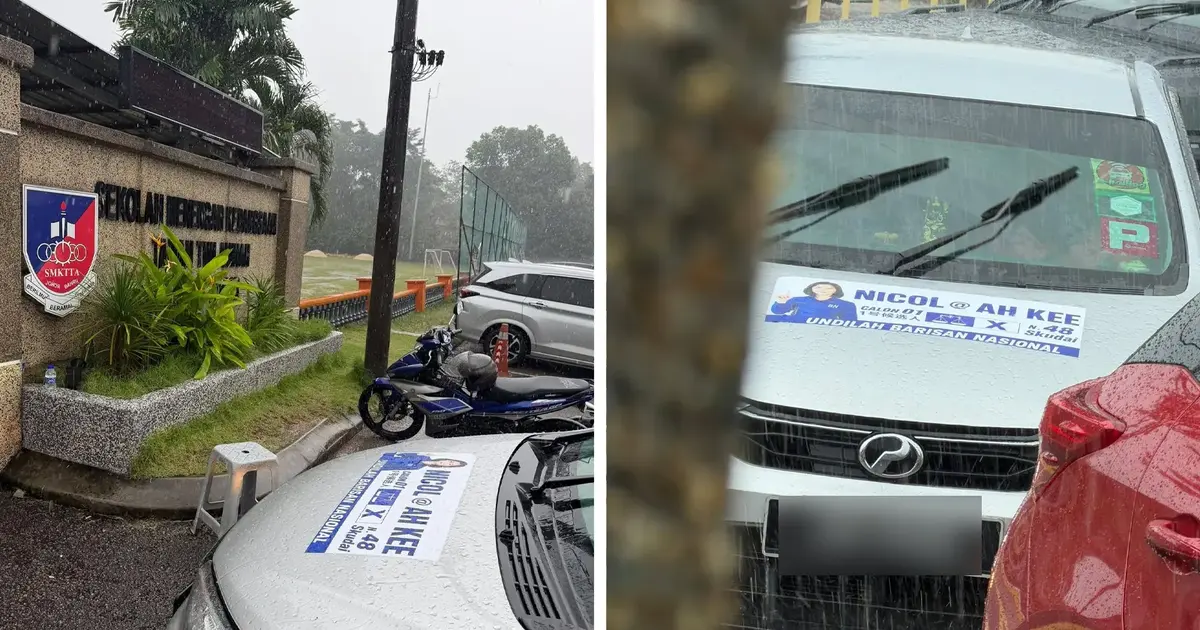
Former Democratic Action Party (DAP) MP Kasthuri Patto has escalated concerns over potential election law violations at the Skudai constituency, calling for immediate action after a vehicle displaying election campaign stickers was reportedly parked outside a polling station during polling day. Patto alleges that the automobile, bearing promotional materials for Nicole Tan, the Barisan Nasional candidate contesting the seat, breached strict Malaysian electoral regulations that prohibit campaign activities in proximity to voting locations. The incident has reignited scrutiny over campaign conduct compliance in the tightly contested Johor parliamentary district.
Election law in Malaysia enforces a perimeter around polling stations where campaign paraphernalia and promotional activity are strictly forbidden. This prohibition exists to preserve the sanctity of the voting process and ensure that voters are not subject to last-minute persuasion or intimidation as they approach the ballot box. The presence of campaign-branded vehicles near these sensitive locations represents a potential infringement of these established protocols, raising questions about whether sufficient oversight mechanisms were in place during the polling process in Skudai.
Kasthuri Patto's decision to publicly flag this alleged transgression underscores the ongoing tensions between the DAP and Barisan Nasional in Skudai, a constituency that has become a significant battleground in Peninsular Malaysian politics. The former MP, who previously represented the area, maintains a vested interest in electoral integrity within his former constituency and has positioned himself as a watchdog over campaign conduct standards. His intervention suggests that campaign discipline remains uneven across competing political coalitions, with enforcement possibly dependent on the vigilance of party representatives and election observers rather than systematic monitoring.
The allegation centres on Nicole Tan, who was fielded as BN's candidate for Skudai in the recent electoral contest. As a representative of the long-dominant coalition, Tan's campaign would have been subject to the same regulatory framework as all other contestants. However, the alleged parking of a campaign vehicle outside a polling station suggests either inadequate briefing of campaign personnel on election rules or a deliberate decision to ignore protocols in pursuit of voter visibility. Either scenario undermines the principle that election days should be free from campaign coercion or manipulation at the final moment of decision-making.
Patto's call for action reflects the broader challenge facing Malaysian electoral authorities in enforcing campaign regulations uniformly across all parties and candidates. The Election Commission bears responsibility for monitoring compliance, though the sheer volume of polling stations and the complexity of tracking campaign activity across multiple vehicles and locations can strain enforcement capacity. When violations occur, they often emerge through complaints from rival campaigns or observers rather than proactive detection by authorities, placing the burden of accountability on political parties to police themselves and their opponents.
The Skudai constituency represents a microcosm of wider political dynamics in Johor, a state that has witnessed significant shifts in voter sentiment in recent election cycles. The district has seen competition intensify between established coalitions and emerging political forces, with every infraction or procedural breach potentially swaying perceptions of fairness among an increasingly scrutinous electorate. Voters are becoming more attuned to campaign conduct issues, and perceived advantages gained through regulatory breaches can delegitimise election outcomes in the eyes of losing candidates and their supporters.
For the DAP and other opposition coalitions, highlighting potential violations by BN candidates serves multiple strategic purposes. It reinforces narratives about BN's willingness to bend rules in pursuit of electoral success, contrasts the incumbent coalition with claims of superior ethical standards, and demonstrates active monitoring of electoral processes to party supporters and undecided voters. Such complaints, when substantiated, also create procedural complications and negative publicity that can distract campaigns and erode confidence in a candidate's fitness for office.
The regulatory framework governing campaign conduct during Malaysian elections is designed to create a level playing field and protect voters from undue influence. When these rules are breached, the integrity of the entire electoral process comes into question, regardless of whether the violation materially altered the outcome. Election authorities must therefore take such allegations seriously and conduct thorough investigations to maintain public confidence in democratic institutions.
Moving forward, this incident highlights the need for enhanced training and communication with all campaign teams regarding election day protocols. Candidates and their representatives should receive explicit guidance on permitted activities and restricted zones well before polling day, with consequences clearly articulated for breaches. The Election Commission might also benefit from deploying additional monitors specifically tasked with tracking campaign vehicle movements on election day, reducing reliance on complaint-based enforcement.
For Malaysian voters and observers monitoring electoral standards, such allegations serve as reminders that vigilance remains essential to safeguarding democratic processes. The political system's health depends not only on the integrity of election officials but also on the commitment of all participants to respecting established rules, even when competitive pressures create incentives to circumvent them. Kasthuri Patto's intervention, therefore, exemplifies the role that political figures can play in holding the system accountable to its own standards.

