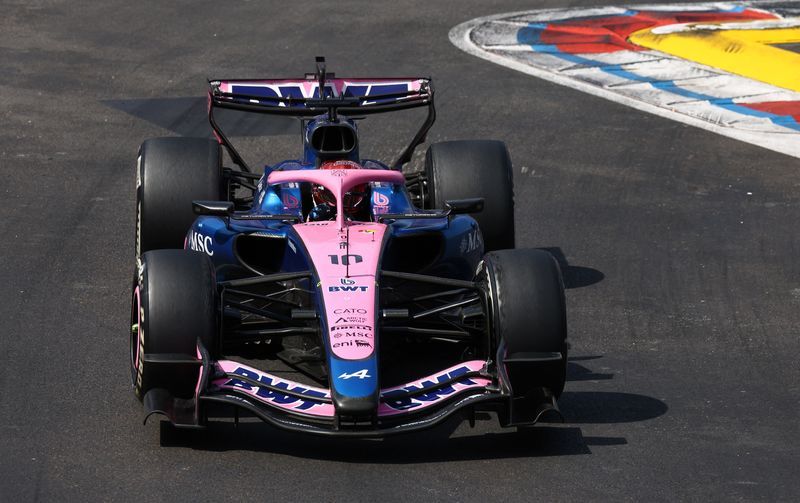
The controversy surrounding June's Monaco Grand Prix remains unresolved after the FIA's international court of appeal heard arguments on Tuesday in Paris, with judges indicating they will require two to three weeks to determine the final classification. The hearing, conducted in closed session, addressed whether Alpine driver Pierre Gasly should retain the third-place finish he reclaimed following a penalty reversal, or if the podium position rightfully belongs to Red Bull's Isack Hadjar, a determination that carries significant implications for the championship standings and multiple teams.
Gasly crossed the line in third place on June 7 but was initially demoted to seventh when stewards applied two five-second penalties for exceeding pit-lane speed limits. This decision elevated Hadjar to the podium, allowing the Red Bull driver to celebrate with champagne on the ceremonial rostrum. However, the situation reversed dramatically five days later when Alpine produced evidence of a timekeeping error, leading stewards to overturn the penalties and restore Gasly to third position. Hadjar subsequently returned the trophy to his French competitor, but the reprieve proved short-lived when Red Bull and McLaren lodged appeals challenging the reversal.
The pendulum swings have created a cascading effect through the finishing order that extends far beyond the contested third position. Should Hadjar's original third-place finish be reinstated, Oscar Piastri of McLaren would drop from fourth to fifth, Liam Lawson would fall to sixth, and Arvid Lindblad of Racing Bulls would slip to seventh. The potential reshuffling affects not only valuable championship points but also team strategy and driver morale during a season where constructors' standings remain tight. Mercedes' Lewis Hamilton secured second place, while championship leader Kimi Antonelli took the victory, but the relative positions of other competitors hinge on the appeal outcome.
What distinguishes this case is the fundamental disparity in how similar infractions were handled during the race. Both Gasly and McLaren's Oscar Piastri incurred identical pit-lane speeding penalties, yet they were treated differently in terms of when the penalties were served. Piastri accepted and served his five-second penalties during the race, a decision that proved irrevocable and cost him positions and crucial points. Gasly's penalties, conversely, were applied only after the race concluded, creating an opportunity for subsequent review and reversal. This inconsistency troubled stewards themselves when they reversed Gasly's penalties, with officials acknowledging that the situation created unfairness to other competitors who either served their penalties during the race or faced different penalty mechanisms entirely.
Mercedes driver George Russell, who finished outside the points after receiving a drive-through penalty for the same pit-lane speeding violation, highlighted the arbitrary nature of how these infractions were addressed. Russell had specifically requested that his penalty be converted to a post-race addition, which would have afforded him the same opportunity for review as Gasly eventually received. That request was denied, leaving the British driver with no recourse and significantly impacting his championship position. His predicament underscores how the inconsistent application of penalties has created multiple aggrieved parties with legitimate grievances.
McLaren team principal Andrea Stella articulated the team's dual motivation for pursuing the appeal at the Dutch Grand Prix the following weekend. Beyond the immediate interest in championship fairness and sporting integrity, Stella emphasized McLaren's material stakes in the outcome. The team is engaged in a fierce constructors' championship battle, and Piastri's position directly influences that competition. Stella's comments revealed that McLaren views the case not merely as a technical dispute over timekeeping but as a fundamental question about whether the sport's governing body can unilaterally overturn penalties based on post-hoc evidence after initial stewards' decisions have been communicated and celebrated.
The stewards' original reasoning for the reversal acknowledged both the timekeeping error and the resulting unfairness, yet they also noted a troubling regulatory gap. Officials stated that no regulation empowers stewards to undo a penalty that has already been served during a race, making it theoretically impossible to apply consistent remedies across different penalty scenarios. This observation suggests the broader issue extends beyond the specific Monaco circumstances to systemic weaknesses in how Formula One's regulations address timekeeping errors and their remediation. If the appeal judges agree with this regulatory interpretation, it could necessitate regulatory reforms to prevent similar situations in future seasons.
The closed-door nature of Tuesday's hearing prevented any leakage of proceedings or hints regarding the judges' thinking, maintaining complete confidentiality until the formal decision is released. This opacity, while protecting the integrity of judicial deliberation, has left all parties and the broader Formula One community in a state of suspension regarding how the sport's highest appeals authority views the key issues: whether timekeeping errors justify reversing penalties, whether different penalty-application times create unfair outcomes, and how stewards should balance regulatory language with sporting justice.
The timing of this decision carries its own significance for the championship's trajectory. Formula One's calendar continues unabated, with the Italian Grand Prix scheduled for Monza on September 6, followed by the inaugural Madrid circuit race on September 13. By the time judges issue their ruling within the next few weeks, the sport will have progressed through additional races, potentially shifting championship dynamics and adding pressure to ensure the Monaco resolution does not reverberate through the remainder of the season. Teams and drivers are eager for clarity before further points are accumulated and additional strategic decisions are made based on the current championship standings.
The appeal's outcome will likely establish precedent for how Formula One addresses timekeeping errors and penalty reversals moving forward. If the judges rule that Gasly's original penalties should stand, it validates the concern that competitive fairness requires consistency in penalty application regardless of timing. Conversely, if they uphold the reversal, they will have affirmed that timekeeping accuracy ultimately supersedes other procedural considerations. Either decision will send clear signals about what governing body leaders prioritize when regulatory language and sporting equity conflict, a tension that emerges repeatedly in motorsport governance and requires authoritative resolution to maintain credibility within the paddock.

