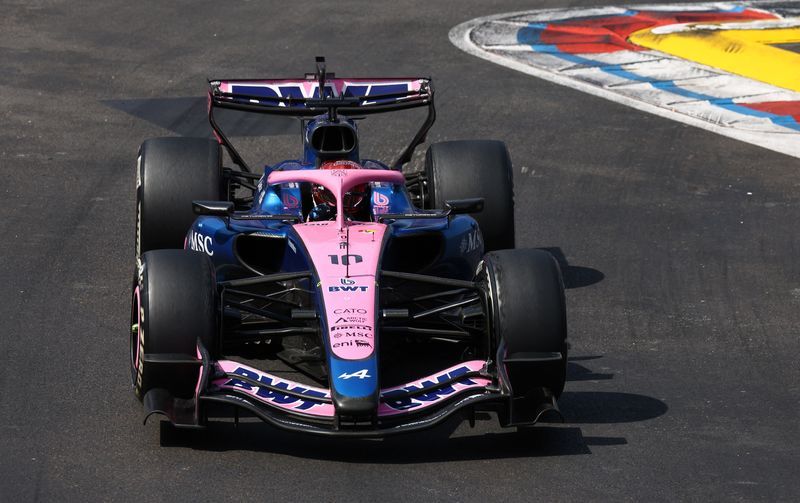
Formula One's international court of appeal will gather in Paris on Tuesday to deliver its final verdict on who legitimately finished third at the Monaco Grand Prix, settling a controversy that has lingered for more than two months since the race took place on June 7. The dispute centres on Alpine driver Pierre Gasly and whether he should retain the podium position he initially occupied or be displaced by Red Bull's Isack Hadjar, with significant ramifications for how sporting fairness and penalty procedures are interpreted across the sport.
The timeline of events that led to this hearing reveals the complexity of the situation. Gasly crossed the line in third place in Monaco, but stewards subsequently applied two five-second penalties for breaching pit-lane speed regulations during his stop. These sanctions demoted him to seventh position, allowing Hadjar to move up to the podium and celebrate with champagne on the top step. However, Alpine's technical team discovered that a timekeeping error had occurred, presenting evidence to stewards that vindicated Gasly's case.
When the stewards reviewed Alpine's evidence on June 12, they reversed their original decision entirely. The penalties were withdrawn, Gasly was reinstated to third place, and Hadjar was required to return the trophy. This reversal appeared to resolve matters definitively, but the decision triggered immediate concern within the Formula One paddock about the precedent it established and the implications for consistency in penalty enforcement across the season.
McLaren and Red Bull filed appeals to the international court just four days later, on June 16, signalling that both teams believed the initial overturning of the penalties required higher scrutiny. The appeal reflected a broader frustration with how the situation had been handled and its ripple effects on multiple competitors' championship standings. McLaren's case carried particular weight because Oscar Piastri, who finished fourth, had dropped to fifth position when Gasly was reinstated, but there was an additional layer of injustice in Piastri's complaint.
During the actual race, Piastri received identical pit-lane speeding penalties to those initially imposed on Gasly, and he served them during the event as required. However, Piastri believed he had not actually been speeding and served the penalties only because he assumed the infraction was unavoidable under the circumstances. When Gasly's penalties were later expunged due to the timekeeping error, no similar remedy became available for Piastri, whose time loss remained permanent and unappealable. This asymmetry troubled McLaren's leadership and raised fundamental questions about equitable treatment.
The Australian driver's situation created a domino effect that extended beyond mere position changes. The time he lost serving the penalties in the pit lane influenced how he raced subsequent laps and his ability to contest positions, potentially affecting his ultimate finishing position and the points distribution that matters greatly in the championship fight. Andrea Stella, McLaren's team principal, articulated this frustration at the following weekend's Dutch Grand Prix, where Lando Norris won for his team.
Stella outlined two complementary reasons for McLaren's appeal, both touching on principles beyond McLaren's immediate interests. The team argued that the post-race penalty reversal process itself warranted examination because it raised fairness concerns for all competitors in the paddock. The fact that one driver received relief from a penalty while another driver serving an identical offence received no recourse created an untenable situation from a sporting integrity perspective.
Simultaneously, McLaren acknowledged its own material interests at stake. The team had been penalised in terms of both points and competitive position because Piastri served a penalty that could not be appealed or reversed, despite the underlying penalty now being deemed erroneous based on the timekeeping discovery. This dual argument—combining broader sporting principles with legitimate championship impact—gave the appeal considerable weight within Formula One governance structures.
Red Bull's participation in the appeal reflected similar concerns about consistency, though the team's primary interest lay in ensuring that Hadjar's removal from the podium was properly justified under scrutiny. Both teams essentially argued that the stewards' about-face required validation through the higher court to establish precedent and clarify the parameters within which post-race decisions could be overturned.
The FIA confirmed that the hearing would proceed without public or media attendance, citing confidentiality requirements that are standard for international court deliberations in Formula One governance. The proceeding will occur at FIA headquarters, with a published decision expected to follow as promptly as possible after the court concludes its examination of all submissions and evidence.
The court's ultimate ruling carries implications well beyond the six points separating third and seventh positions at one race. The decision will establish how Formula One handles the intersection of technical errors in officiating, post-race penalty modifications, and competitor fairness when similar infractions are treated differently. For Malaysian and Southeast Asian fans following the championship, the outcome will influence how they understand the sport's commitment to equitable competition and the mechanisms available when errors occur.

