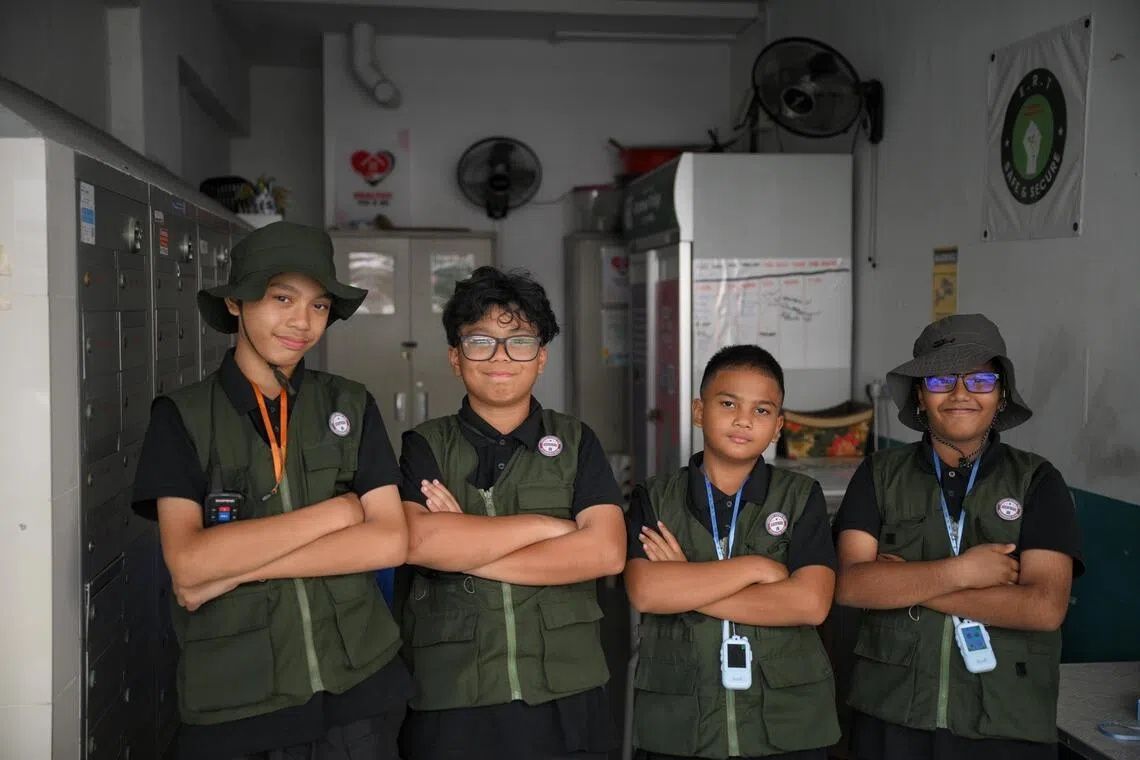
Four primary school pupils in Singapore have turned grassroots civic responsibility into practical action, launching daily neighbourhood patrols that have transformed how their community addresses everyday hazards and social welfare. What began as one boy's frustration over repeated theft from a community food initiative has blossomed into an organised effort involving residents, volunteers, and now national recognition through participation in Singapore's National Day Parade.
Rafieq Sahin Rafizal, 12, sparked the movement when he witnessed outsiders systematically depleting a refrigerator stocked with complimentary milk and beverages intended for children from disadvantaged households in the Lengkok Bahru estate. Rather than accept the situation passively, his mother Marlina Yased, a 48-year-old homemaker, steered her son toward a solution with broader community benefit. Instead of positioning Rafieq as a solitary guardian of the fridge, she encouraged him to mobilise his peers into a structured neighbourhood watch initiative that could address multiple environmental and social welfare concerns simultaneously.
The Emergency Response Team LB, comprising Rafieq, Aaron Sarandev (11), Al-Mirza Danish (12), and Didie Andiqa Muhaimin (14), now conducts daily perimeter walks across their neighbourhood. Operating in pairs and wearing distinctive vests emblazoned with their names and group insignia, they traverse up to six residential blocks following their school day concludes. Their patrol remit encompasses identifying hazardous dumping of bulky refuse, documenting vandalism incidents, and flagging personal mobility devices improperly charged in communal zones—a fire risk that housing authorities prioritise highly. The boys photograph violations and report findings via walkie-talkie to Marlina and fellow volunteer Fahmidah Farihullah, 21, who then escalate matters to estate management for resolution.
Since commencing operations in August 2025, the squad has performed welfare functions extending well beyond conventional neighbourhood monitoring. They have physically assisted an elderly resident with mobility constraints transport shopping bags to her residence and intervened to defuse conflicts among younger children. More dramatically, in early 2026, their attentiveness to olfactory irregularities emanating from a flat led to the discovery of a deceased elderly occupant whose decomposed remains had gone unnoticed by neighbours. This incident underscores how youth engagement in structured community observation can complement formal social support systems, particularly within high-density public housing where social atomisation sometimes occurs.
The origin story of their patrol initiative is rooted in earlier community infrastructure that Marlina established. In 2023, she inaugurated the neighbourhood community fridge at the ground floor of her two-room rental unit at Block 59 Lengkok Bahru, leveraging sponsorships to stock provisions for cash-constrained neighbours. Produce and groceries remain secured, but a separate unlocked refrigerator contains milk and beverages expressly positioned for schoolchildren to retrieve before morning classes. Marlina's observation that some residents were consuming excessive quantities of the complimentary drinks—rather than merely preventing theft, which Rafieq initially sought to address—prompted her strategic reorientation of his protective impulse toward broader neighbourhood stewardship and mutual aid functions.
Marlina articulated the community value proposition underlying the patrol programme with clarity: the initiative signals to residents that a dedicated group of young people stands ready to assist with practical tasks, from shopping errands to elderly support, whilst simultaneously monitoring environmental hazards and maintenance issues. This positioning reframes youth presence in housing estates from potential liability to asset, particularly when structured around clearly defined prosocial objectives. She deliberately recruited boys to internalise the message that meaningful contribution to collective welfare represents a viable alternative leisure activity to idleness or unsupervised congregation.
The team's nomenclature reflects institutional aspirations. Rafieq named the group after Singapore's police Emergency Response Team, which handles high-risk operations, signalling that he conceptualises his cohort's activities within frameworks of duty and structured intervention. When questioned about motivation, Rafieq expressed the calculation that community service over one concentrated hour daily represents an acceptable trade-off against unrestricted recreational time. This articulation suggests that young people, when presented with purposeful responsibility scaffolded by trusted adult supervision, demonstrate capacity for deferred gratification and civic orientation beyond conventional expectations.
Parental response has been notably positive, with mothers of participating boys reporting improved school attendance and enhanced classroom concentration since joining the patrol. Nasha Asrin, a 27-year-old resident and mother of five, contrasted her approval of the boys' organised community engagement against the alternative of estate loitering, a distinction that reflects ongoing housing policy tensions regarding youth supervision in public residential environments. The programme thus generates measurable developmental benefits for participants whilst simultaneously addressing specific community vulnerabilities that formal estate management structures might not efficiently identify or resolve at pace.
Initially comprising seven members, the team has consolidated to four core participants, suggesting a natural filtering process whereby initial enthusiasm crystallised into committed sustained involvement. The retention of Didie, who joined partly because he sought meaningful occupation, exemplifies how purposefully designed youth activities can redirect energy toward prosocial channels. Aaron, a Primary 5 pupil, identified responsibility and perseverance as key lessons acquired through daily patrols, particularly on occasions when motivation flagged but duty compelled continued rounds.
Community reception has evolved from initial scepticism to widespread endorsement. This trajectory mirrors how grassroots civic initiatives frequently encounter institutional and social resistance before demonstrating credibility through consistent, tangible outcomes. The progression from protecting a refrigerator to identifying decomposed remains reflects escalating competence and trust within the neighbourhood structure, validating Marlina's strategic decision to channel protective impulses toward systematic environmental surveillance rather than concentrated asset guarding.
The quartet's invitation to participate in the August 2026 National Day Parade segment celebrating Singaporean community contributors represents institutional recognition of their initiative. For boys whose prior experience was confined to their immediate estate, this represents significant social validation of their contribution. The participation symbolises how states increasingly valorise bottom-up civic engagement as complementary to formal governance structures, particularly when such initiatives demonstrate capacity to address welfare coordination gaps within densely populated residential environments.
The Lengkok Bahru patrol model offers significant lessons for Southeast Asian urban policy contexts characterised by densifying housing stock, constrained municipal resources, and evolving intergenerational social cohesion. The programme demonstrates that structured youth civic participation, grounded in immediate neighbourhood contexts and supervised by committed adult advocates, can generate multiple benefits: environmental monitoring, elderly welfare coordination, youth developmental gains, and enhanced community social capital simultaneously. As Singapore continues positioning itself as a model for sustainable urban governance, this initiative illustrates how distributed responsibility and intergenerational engagement can address welfare challenges at neighbourhood scale more efficiently than centralised formal systems alone.

