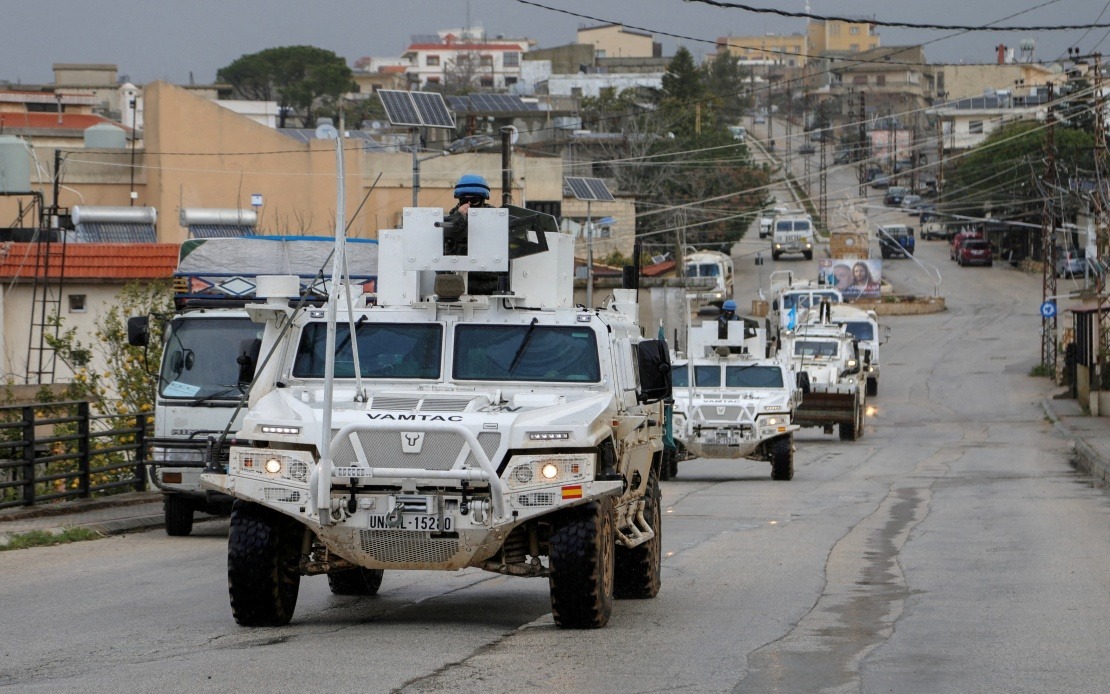
France and Italy have committed to forming an international coalition aimed at supporting Lebanon's stability after the United Nations Interim Force in Lebanon concludes its 40-year deployment at the end of this year. French President Emmanuel Macron announced the initiative during discussions with visiting Italian Prime Minister Giorgia Meloni in Antibes on Thursday, marking a significant diplomatic effort to address the security challenges that will emerge once UNIFIL formally withdraws from the country.
The proposed arrangement represents a coordinated European response to a potential power vacuum in one of the Eastern Mediterranean's most strategically sensitive locations. Macron stressed that the coalition would operate in close coordination with both the European Union and the United Nations, emphasizing that the primary objective is strengthening Lebanon's own sovereignty and military capabilities rather than establishing a permanent external military presence. This distinction proves crucial for regional perception, particularly given historical sensitivities around foreign intervention in Lebanese affairs.
The initiative addresses legitimate concerns about what happens when UNIFIL departs. The Lebanese state remains fragile, with institutions still recovering from years of political dysfunction, economic collapse, and the lingering effects of the 2020 Beirut port explosion. Without an international stabilizing presence, there exists genuine risk that non-state actors and regional powers could exploit the security vacuum to advance competing interests, potentially reigniting tensions that UNIFIL has helped contain since 1978.
Meloni reinforced the French position by characterizing an international security presence as essential for preventing an "extremely dangerous" vacuum from developing. The Italian perspective aligns with broader European concerns that Lebanon's instability could reverberate throughout the Mediterranean region, affecting migration patterns, economic stability, and security across southern Europe. Italy, with its geographical proximity to the Eastern Mediterranean and substantial presence in regional affairs, carries particular weight in these discussions.
Under UN Security Council Resolution 2790, UNIFIL's mandate expires on December 31, triggering a one-year drawdown period during which the force will withdraw all personnel from Lebanese territory. This timeline creates an urgent imperative for establishing alternative security arrangements. The resolution itself reflects international consensus that Lebanon requires continued external support, though the form that support takes remains contentious among different stakeholder nations and Lebanese political factions.
The French-Italian coalition proposal attempts to bridge several competing interests. It acknowledges Lebanon's need for institutional strengthening without appearing to impose external control, respects Lebanese sovereignty while addressing security realities, and provides European reassurance to smaller nations in the region concerned about power vacuums. The coalition model allows flexibility in membership, potentially including other European nations, Arab states, and international organizations, creating a more inclusive framework than a bilateral arrangement.
For Malaysia and Southeast Asian nations observing Middle Eastern developments, this coalition represents a template for how developed countries manage security transitions in strategically important regions. The emphasis on strengthening local institutions rather than simply maintaining foreign military presence reflects lessons learned from various international interventions. It also demonstrates how European nations are actively shaping post-conflict stabilization efforts despite their geographic distance from the region.
The coordination with the European Union and United Nations underscores the multilateral character of this initiative. Rather than unilateral action, the coalition approach seeks legitimacy through international consensus and UN frameworks. This institutional embedding could prove crucial for gaining acceptance among Lebanese stakeholders and regional players who might otherwise view European military involvement with suspicion.
The timing of this announcement, coming ahead of UNIFIL's departure, suggests France and Italy recognize the urgency of establishing credible security alternatives before the peacekeeping force formally withdraws. Delay in establishing such arrangements risks creating a dangerous interregnum period during which Lebanese security forces lack adequate support and external actors face uncertainty about international engagement levels.
The coalition's success will ultimately depend on its ability to strengthen Lebanese military and security institutions to the point where they can sustain order independently. This requires not merely military training and equipment but also institutional reform, professionalization of security forces, and restoration of state authority throughout Lebanese territory. The French-Italian initiative thus represents not an end in itself but rather a transitional mechanism toward genuine Lebanese self-sufficiency in security matters.
For the broader Middle East, this development signals that Europe remains committed to regional stability despite competing global challenges. It also reflects concerns that deteriorating conditions in Lebanon could generate spillover effects affecting wider geopolitical interests. The coalition's ultimate effectiveness will shape how international actors approach similar security transitions elsewhere in the region, making Lebanon's post-UNIFIL experience potentially significant for future peace-stabilization efforts across the Middle East and beyond.

