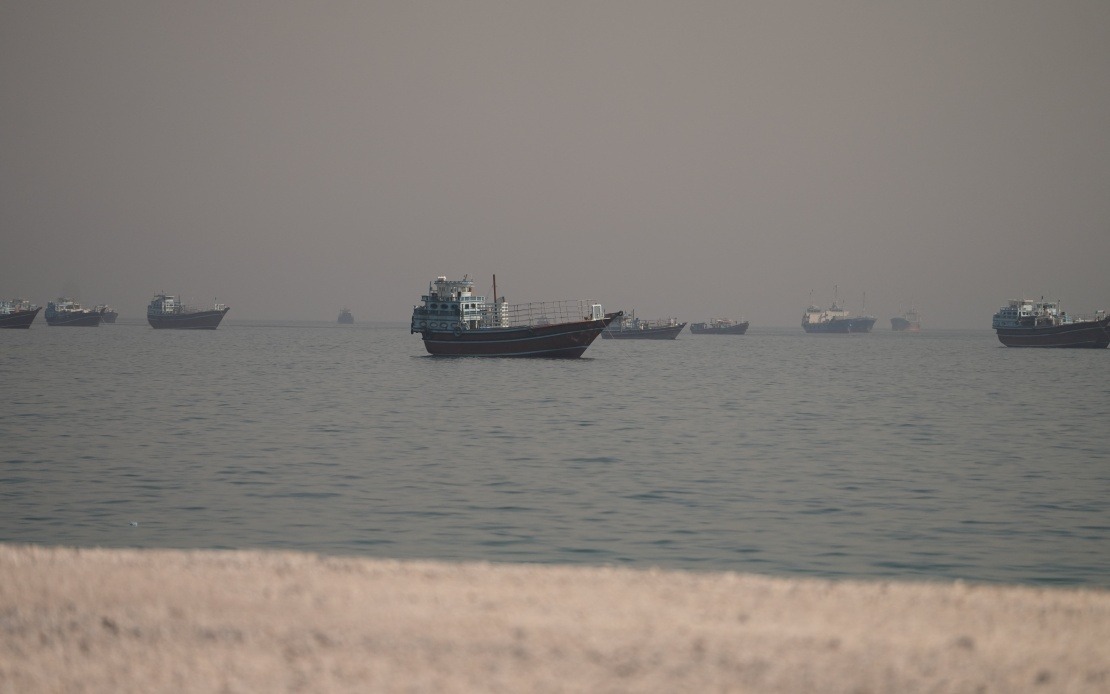
France has identified Syria as a strategically important alternative energy corridor to mitigate risks from ongoing disruptions in the Strait of Hormuz, according to Foreign Minister Jean-Noel Barrot, who outlined the proposal during a television interview on Thursday. The announcement reflects growing concerns among Western powers about the vulnerability of global oil supplies to geopolitical tensions between the United States and Iran, particularly given the critical importance of the Hormuz waterway through which roughly one-fifth of the world's traded crude oil passes annually.
Barrot's remarks came during a high-profile diplomatic visit to Damascus on Tuesday, where he accompanied President Emmanuel Macron. The trip underscored France's commitment to strengthening ties with Syria following the country's political transformation and the subsequent consolidation of state institutions. The French government has positioned itself as a key Western partner willing to engage constructively with Damascus as it navigates its post-conflict transition and seeks to rebuild regional standing.
The concept of establishing alternative energy corridors represents a pragmatic response to the structural vulnerabilities in current global energy infrastructure. By diversifying transportation routes and reducing reliance on any single chokepoint, major energy-consuming nations aim to create resilience against both intentional blockades and accidental disruptions. The Strait of Hormuz, which connects the Persian Gulf to the Arabian Sea, has long been identified as a strategic vulnerability; any sustained closure would immediately impact energy markets worldwide and destabilise economic growth across Asia and Europe.
Syria's potential role in this emerging energy architecture stems from its geographic position and infrastructure capabilities. Situated at the crossroads of Europe, Asia, and Africa, the country possesses existing pipeline networks and port facilities that could theoretically accommodate oil flows from regional producers toward Mediterranean markets and beyond. The rehabilitation and expansion of these assets would require substantial investment and international cooperation, but such efforts could provide Middle Eastern producers with options beyond the traditional Hormuz route.
The timing of France's initiative reflects broader anxieties about regional stability. Recent escalations involving American and Iranian forces have raised concerns about the possibility of direct military confrontation that could disrupt shipping lanes. Additionally, the ongoing instability in parts of the Middle East and the activities of non-state actors create persistent risks to maritime commerce. For energy-dependent nations, particularly those in Asia including Malaysia and other Southeast Asian countries, such disruptions carry direct economic consequences through higher fuel costs and supply volatility.
Barrot's emphasis on Syria's "reunification and strengthening" suggests that Paris views the country's current phase of reconstruction as an opportunity for constructive engagement. The departure of Bashar al-Assad eighteen months prior fundamentally altered Syria's international position, opening space for renewed diplomatic relationships with Western governments. France's outreach signals a belief that Damascus could evolve into a stabilising force regionally, capable of hosting critical infrastructure and serving as a neutral transit corridor for energy resources.
The proposed economic cooperation framework extends beyond energy considerations. Barrot indicated that France intends to expand bilateral relations across multiple sectors, strengthening commercial and trading partnerships with Syria. Such comprehensive engagement would support the country's economic recovery while simultaneously building the institutional capacity necessary to manage major infrastructure projects. For France, deeper involvement in Syria's reconstruction offers opportunities to enhance its geopolitical influence in the eastern Mediterranean and Middle East.
Regional implications of this strategy are significant for Southeast Asia and the broader Indo-Pacific. Malaysia, as a major energy consumer and maritime trading nation, maintains direct interest in stable global energy supplies and unobstructed sea lanes. Any successful diversification of oil transport away from the Hormuz bottleneck could moderate price volatility and reduce exposure to geopolitical shocks. However, developing Syria-based alternatives would require considerable time, capital, and political will, making it a medium-to-long-term proposition rather than an immediate solution.
The practical implementation of such an alternative route presents substantial challenges. Beyond physical infrastructure development, establishing reliable transit arrangements would require agreements involving Syria, neighbouring countries, major oil producers, and international stakeholders. Political stability in Syria itself remains fragile, and security concerns could deter investors or restrict operations. International sanctions regimes and varying diplomatic relationships further complicate efforts to build a truly functional alternative corridor.
France's diplomatic initiative also reflects competition among Western powers for influence in Syria's post-conflict trajectory. The United States, Russia, Turkey, and other regional actors maintain significant stakes in Syria's political and economic future. By positioning itself as a forward-thinking partner willing to support economic reconstruction, France seeks to secure meaningful influence over the country's development path and ensure its own interests are protected as new regional arrangements take shape.
For Malaysia and Southeast Asian nations, the strategic dimension of these developments warrants close attention. Energy security remains a paramount concern for the region, which relies heavily on imports and faces its own geographic vulnerabilities through critical chokepoints such as the Strait of Malacca. The principle of diversifying supply sources and transportation routes applies equally to Southeast Asian interests. Success in establishing alternative Middle Eastern energy pathways could inform and support efforts to create regional resilience mechanisms.
Barrot's vision of Syria as an emerging regional hub reflects optimism about the country's trajectory, though cautious pragmatism is warranted given historical precedent. The development of meaningful alternative energy infrastructure typically requires years of sustained investment and cooperation. Nevertheless, the early diplomatic groundwork being laid by major Western powers suggests that conversations about Syria's role in regional stability and economic integration will intensify considerably in coming months.

