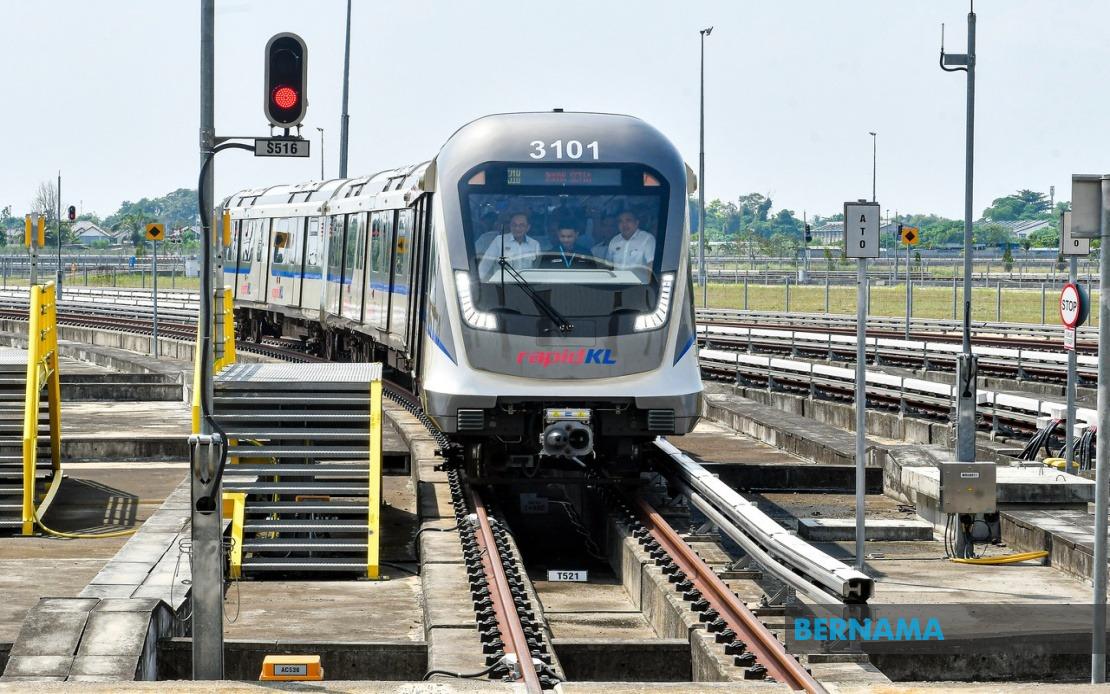
Prime Minister Datuk Seri Anwar Ibrahim has announced that the newly opened LRT3 Shah Alam Line will provide complimentary passage to all passengers from June 29 through July 31, a strategic move designed to familiarise commuters with the service while easing financial burdens during the critical early months of operation. The promotion extends beyond the rail line itself, encompassing feeder bus services operated by Prasarana Malaysia Berhad that connect passengers to and from stations along the corridor.
The initiative has generated considerable enthusiasm among the target demographic, particularly university students whose daily transport budgets have long been strained by competing demands on limited resources. For these younger commuters, the scheme represents a tangible shift in affordability that could reshape their mobility patterns across the Klang Valley. The timing proves strategic, as students typically plan their commuting strategies at the beginning of academic periods, and a month-long trial allows them to integrate the new line into established routines before fare structures take effect.
Arissa Ahmad Khairul, a 22-year-old Bachelor of Journalism student at Universiti Teknologi MARA, highlighted how the free passage tackles a genuine pain point for the student population. Previously, many undergraduates relied on expensive e-hailing services or parental financial support to navigate between residential areas and campus facilities. The LRT3 Shah Alam Line presents an alternative that combines affordability with operational comfort, featuring modern train facilities that differentiate it from older rail infrastructure across the metropolitan area.
For Khairul specifically, the route streamlines her commute from Kepong through Bandar Utama to the UiTM Shah Alam campus, eliminating both transfer complications and time inefficiencies that characterised her previous journey options. This practical application illustrates how infrastructure investments can generate cascading benefits beyond simple connectivity, potentially unlocking hours of productive time that students might redirect toward academic work or part-time employment.
Media professional Yamin Ahmad characterised the month-long promotional period as evidence of proactive transportation planning that acknowledges the psychological barriers many people face when adopting unfamiliar commuting methods. By removing the financial risk from trial adoption, the scheme enables potential users to evaluate the service's actual performance against their specific needs. This experiential approach proves more persuasive than promotional materials alone, as commuters can personally assess journey times, comfort levels, reliability, and convenience relative to alternative transport modes.
The comparative advantage of public transit over private vehicle use extends beyond immediate fare calculations. Commuters who experiment with the LRT3 Shah Alam Line during the free period will accumulate data about cumulative costs, including fuel expenditure, parking fees, vehicle maintenance, and the often-overlooked expense of congestion-related time loss. For many Klang Valley residents accustomed to lengthy highway journeys, the psychological impact of reclaiming commute time for personal pursuits or work-related tasks often becomes the decisive factor in transport modal choice, regardless of pure cost metrics.
The student population represents a particularly receptive audience for transit transformation, as this demographic exhibits greater flexibility in establishing new travel habits compared to older commuters entrenched in established patterns. Mohamad Adib Hazim Mohamad Razali, president of the UiTM Students' Representative Council, emphasised that approximately 28,500 of the institution's roughly 42,000 enrolled students maintain off-campus residences, creating substantial demand for efficient connectivity between outlying accommodation areas and the main Shah Alam campus.
The geographical distribution of UiTM's student body—with significant concentrations in Kuala Lumpur and Subang Jaya—means the new rail line directly addresses a critical mobility gap that previously forced students toward costly private transport solutions. The convenience multiplier effect becomes particularly pronounced for students juggling academic commitments with part-time employment or internship opportunities across different locations throughout the metropolitan region. A reliable, affordable transit option fundamentally alters the feasible geographic scope of their daily activities.
Beyond the immediate student constituency, the Shah Alam Line serves broader regional development objectives for Selangor and the greater Klang Valley. As Malaysia continues urbanising and suburban areas intensify their commercial and residential development, efficient rail connectivity becomes essential infrastructure for economic productivity and quality-of-life considerations. The free fare month functions simultaneously as consumer education and as implicit public endorsement of the new service, generating early-stage ridership momentum that could establish sustainable travel patterns extending well beyond the promotional period.
The integration of feeder bus services into the free fare initiative demonstrates sophisticated transit network thinking, acknowledging that rail alone cannot serve dispersed origin and destination points across sprawling metropolitan areas. This multi-modal approach recognises that the final mile connectivity—getting passengers from residential locations to rail stations and from disembarkation points to ultimate destinations—remains critical to overall system utility. Students and commuters who experience seamless integration between bus and rail services during the promotional month may develop enhanced appreciation for coordinated public transit systems.
The LRT3 Shah Alam Line opens during a period of broader infrastructure investment across Malaysia's transportation networks, positioning this promotional campaign within larger narratives about improving public service accessibility and reducing private vehicle dependence. The month-long free fare period generates valuable operational and utilisation data that will inform future service modifications, fare structures, and capacity planning decisions. Prasarana Malaysia and relevant government stakeholders will observe ridership patterns, peak-hour congestion characteristics, and demographic usage breakdowns that could justify subsequent service enhancements or frequency adjustments.
As the promotional period concludes at the end of July, the question of sustained ridership adoption becomes paramount. The experiences accumulated during this month will determine whether the LRT3 Shah Alam Line achieves its potential as a transformative transport option for Klang Valley residents or faces underutilisation comparable to some regional transit investments. The student population's early adoption during the free period may prove decisive, as young commuters who establish the habit of rail usage often maintain those patterns into later professional life, providing a foundation of consistent ridership that other market segments might never reach.

