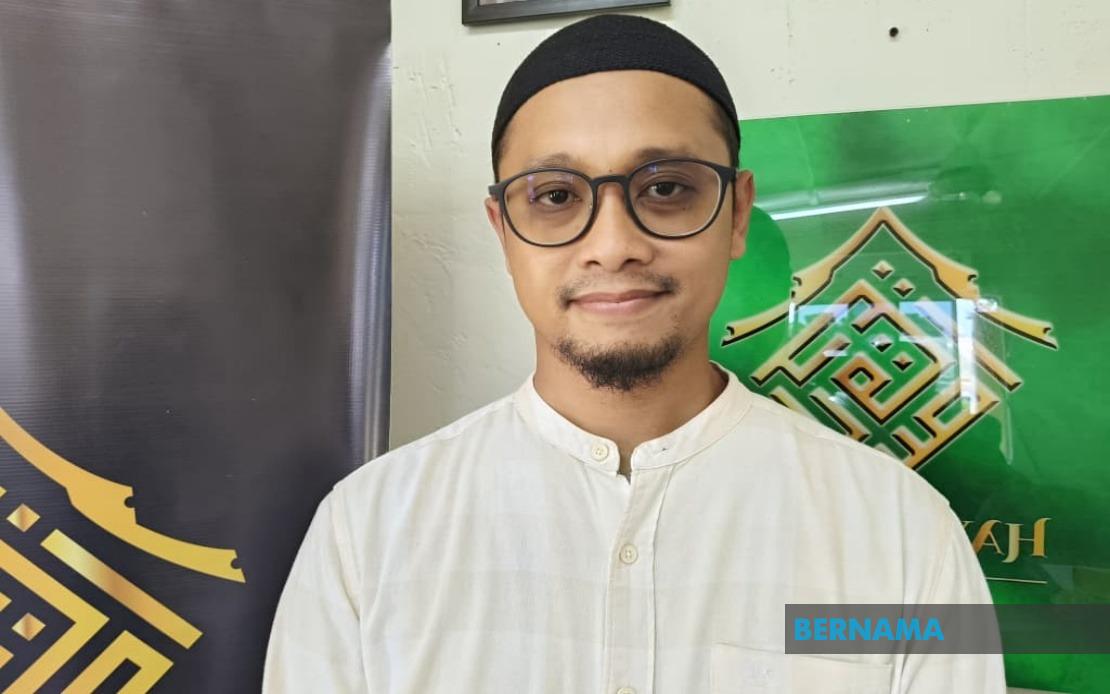
Mohd Rasli Hassan's journey from struggling with substance abuse to becoming a certified rehabilitation coach represents a compelling counternarrative to the cycle of addiction that often traps individuals in Malaysia's underclass. Now 52, he has earned a Professional Diploma in Drug Addiction Recovery Coaching after completing the Academy in Industry (ADI) programme at Rumah Rakan Islah, a private rehabilitation facility located in Setiu, Terengganu. His transformation underscores the potential for meaningful second chances within Malaysia's drug rehabilitation ecosystem, particularly when structured programmes combine practical skills training with psychological support.
Mohd Rasli's history with narcotics began at an unusually young age—just 11 years old while residing in Pasir Mas, Kelantan—a detail that reflects broader patterns of drug vulnerability affecting Malaysian youth in economically disadvantaged communities. His family remained unaware of his deteriorating condition for eight years until police intervention made the situation impossible to ignore. This extended period of hidden addiction before detection is not uncommon; many families struggle to recognise or address substance abuse in their households until external authorities become involved, a dynamic that complicates early intervention efforts across the country.
Following his arrest, Mohd Rasli spent seven months at the Kuala Terengganu National Anti-Drug Agency (AADK) facility, marking the formal beginning of his recovery pathway. The institutional intervention, while necessary, represented only the initial step in what would become a decades-long process of rebuilding. More significantly, his subsequent seven-year tenure from 2017 to 2024 as a peer support counsellor at Rumah Rakan Islah demonstrated his commitment to embedding himself within the recovery community. This progression from client to counsellor to certified coach illustrates how rehabilitation facilities increasingly recognise the value of lived experience in shaping more empathetic, credible intervention approaches.
The ADI programme that culminated in his diploma represents a deliberate institutional evolution within Malaysia's private rehabilitation sector. Rather than focusing exclusively on psychological treatment or abstinence counselling, the one-year curriculum integrates agricultural training, industrial skills development, and formal qualification pathways. This hybrid approach addresses a critical gap in traditional rehabilitation models: the transition from treatment completion to sustainable economic reintegration. Many recovering addicts struggle not because they lack motivation, but because they possess few marketable skills or employment prospects, creating vulnerability to relapse when financial desperation resurfaces. The ADI programme attempts to bridge this vulnerability by equipping graduates with tangible competencies.
Muhammad Anas Mohd Nasar, the academic director and manager at Rumah Rakan Islah, provides important insight into how the programme operationalises recovery principles. Applicants must demonstrate more than five years of continuous sobriety and demonstrate genuine willingness to undertake training, criteria that effectively filter for individuals demonstrating sustained commitment rather than momentary motivation. Ten participants have successfully graduated through the diploma track, each receiving formal credentials that carry legitimacy within Malaysia's professional rehabilitation landscape. The codification of previously informal practices into a structured, documented curriculum of six modules represents institutional maturation—the difference between ad-hoc experience-based training and systematised, reproducible methodology.
The programme's emphasis on reconstruction of confidence resonates particularly strongly within the Malaysian context, where social stigma surrounding addiction remains pronounced. Many recovering addicts internalise shame and self-doubt that persists long after chemical dependence ceases. Mohd Rasli explicitly credits the ADI programme with restoring his confidence and fundamentally altering his psychological outlook, a transformation that extends beyond merely acquiring technical knowledge. This psychological component distinguishes effective rehabilitation from mere abstinence supervision; it acknowledges that sustained recovery requires individuals to reconceptualise their identity and relationship to society.
Rumah Rakan Islah's collaborative framework further illuminates the evolving ecosystem surrounding addiction treatment in Malaysia. The facility's partnerships with the Malaysia Productivity Corporation (MPC), the Malaysian Substance Abuse Council (MASAC), and two major universities—Universiti Sains Islam Malaysia (USIM) and Universiti Putra Malaysia (UPM)—reflect growing institutional convergence around evidence-based rehabilitation methodologies. Private centres no longer operate in isolation; they increasingly integrate with governmental agencies, research institutions, and productivity bodies to enhance credibility and access cutting-edge recovery science. This networked approach strengthens the entire rehabilitation sector's capacity to address Malaysia's persistent drug problem.
Mohd Rasli's advancement to his current position as a rehabilitation coach represents both personal triumph and pragmatic workforce strategy. Facilities benefit by employing recovered individuals whose lived experience authenticates their interventions, while former users gain stable employment that reinforces their recovery commitment. This mutual advantage creates what economists term positive-sum outcomes—both parties benefit rather than one party gaining at the other's expense. Within Malaysia's context of limited public funding for addiction services, this employment of formerly addicted individuals constitutes an effective mechanism for expanding treatment capacity while simultaneously creating dignified livelihoods.
The implications of this model extend beyond Rumah Rakan Islah's immediate operations toward broader policy considerations. Malaysia's long struggle with methamphetamine and fentanyl abuse demands diverse intervention approaches; no single methodology proves universally effective. Private facilities pioneering programmes like ADI generate valuable empirical data regarding what works, for whom, and under what conditions. Policymakers should evaluate whether scaling these models through government partnerships could improve national treatment outcomes. Simultaneously, Mohd Rasli's story challenges public perceptions that individuals with addiction histories necessarily remain permanently compromised. His journey demonstrates that human capacity for change remains potent when appropriate structural supports align with individual determination.

