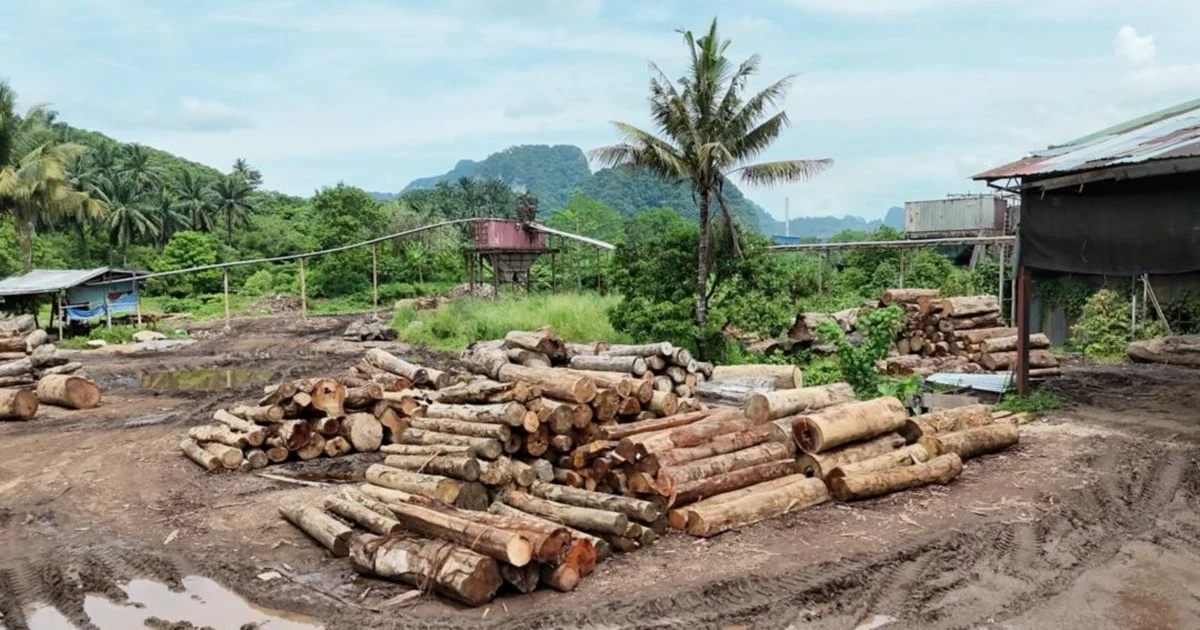
A coordinated enforcement operation spanning Kelantan and Terengganu has culminated in the arrest of eleven individuals and the recovery of seized timber and machinery collectively worth more than RM2.43 million. The operation, carried out in Kota Baru, reflects intensifying efforts by wildlife and forestry authorities to tackle illegal logging networks that have long plagued Malaysia's forested states. Among those detained are four Indonesian nationals, underscoring the cross-border dimensions of timber smuggling rings that exploit the porous boundaries between Malaysian states and neighbouring countries.
The scale of assets recovered demonstrates the considerable financial stakes involved in clandestine timber extraction. Machinery seized alongside harvested timber typically includes portable sawing equipment, heavy transport vehicles, and processing tools that enable operators to convert raw logs into marketable products far from official oversight. The valuation of seized materials provides insight into the volume of illicit trade operating beneath regulatory radar and the estimated street value of contraband timber entering black markets across the region. For context, such operations often feed timber into regional supply chains where documentation is obscured and origins deliberately concealed to frustrate law enforcement tracing efforts.
The presence of Indonesian nationals within the detention roster highlights an uncomfortable reality: timber smuggling networks frequently involve transnational criminal syndicates with operational bases across multiple jurisdictions. Cross-border coordination between Indonesian timber traffickers and Malaysian facilitators has become increasingly sophisticated, with criminal groups exploiting jurisdictional gaps and operational inconsistencies between enforcement agencies. These networks often employ a division-of-labour model in which extraction occurs in Malaysian forests, processing happens in Indonesia or within Malaysia at remote locations, and distribution occurs through seemingly legitimate channels that obscure the contraband's origins.
Kelantan and Terengganu, both states with significant forest coverage and extensive borders with one another, represent persistent flashpoints for illegal logging activity. The region's geography creates natural vulnerabilities: dense forest terrain complicates surveillance, multiple access routes enable traffickers to evade patrols, and remote communities sometimes depend economically on timber-related income generated through illicit channels. Authorities face considerable operational challenges in patrolling vast forested areas, particularly during monsoon seasons when weather conditions limit mobility and visibility. Additionally, the commercial timber industry's legitimate operations can inadvertently provide cover for smuggling networks, as illegal logs may be mixed with legally harvested materials in transport or processing facilities.
The Game and Wildlife Enforcement Operations (GOF), the agency responsible for executing these raids, operates within Malaysia's broader forest protection framework alongside forestry departments and customs authorities. Successful operations depend upon intelligence gathering, informant networks, and coordinated inter-agency action—elements that require sustained investment and political commitment. The timing and scale of today's multi-location sweeps suggests that authorities had accumulated sufficient intelligence to justify simultaneous operations designed to prevent suspects from coordinating escape or evidence destruction across state lines. Such strategic coordination, while increasingly common, remains resource-intensive and requires careful planning to maximize enforcement effectiveness.
Illegal logging generates significant economic losses extending well beyond the immediate value of seized timber. Environmental degradation follows habitat destruction, with ripple effects throughout ecosystems that depend upon forest integrity for water retention, biodiversity preservation, and carbon sequestration. Communities relying on forest resources for sustainable livelihoods—whether through ecotourism, agroforestry, or traditional forest products—suffer collateral damage when illegal extraction undermines resource availability and forest health. Malaysian forest cover has declined substantially over recent decades, and unauthorized logging accelerates this trajectory while enriching criminal networks at the nation's environmental expense.
The four Indonesian detainees raise questions about bilateral cooperation mechanisms between Malaysian and Indonesian law enforcement. While both nations share interests in combating transnational crime, intelligence sharing and extradition procedures remain complex legal territories. Successful prosecution may depend upon navigating international legal frameworks, securing testimony from cross-border witnesses, and coordinating investigations with Indonesian counterparts. These operational and diplomatic complexities sometimes result in lenient outcomes for foreign nationals involved in smuggling networks, a reality that criminal syndicates exploit when recruiting participants.
The machinery aspect of the seizure warrants particular attention. Processing equipment represents fixed capital investment that trafficking networks must replace, thereby imposing genuine costs on criminal operations. However, such equipment remains relatively inexpensive to acquire through secondhand markets or informal channels, meaning that even substantial seizures impose only temporary disruption rather than permanent network dismantling. Authorities recognize that targeting financial flows and key personnel offers more durable disruption strategies than equipment confiscation alone, yet intelligence limitations often constrain ability to pursue higher-level network managers rather than foot-level operators.
Moving forward, sustained enforcement requires addressing root causes driving participation in illegal timber trade. Rural communities perceiving limited legitimate economic opportunities may turn to smuggling networks offering immediate income. Investment in sustainable forest management, community-based forestry enterprises, and alternative livelihood development could reduce labour supply available to trafficking networks while building local economic resilience. Simultaneously, stronger penalties for convicted smugglers, particularly those orchestrating cross-border operations, may deter high-level participation.
These coordinated raids represent an encouraging enforcement effort, yet represent merely one intervention within an ongoing struggle against entrenched trafficking networks. The recovery of RM2.43 million in contraband demonstrates both the scale of illicit activity and the authorities' operational capacity to disrupt supply chains. However, sustainable reduction in illegal logging demands sustained political will, adequate resource allocation, and integrated approaches addressing both law enforcement and underlying economic drivers of smuggling participation across Southeast Asia's contested forest frontiers.