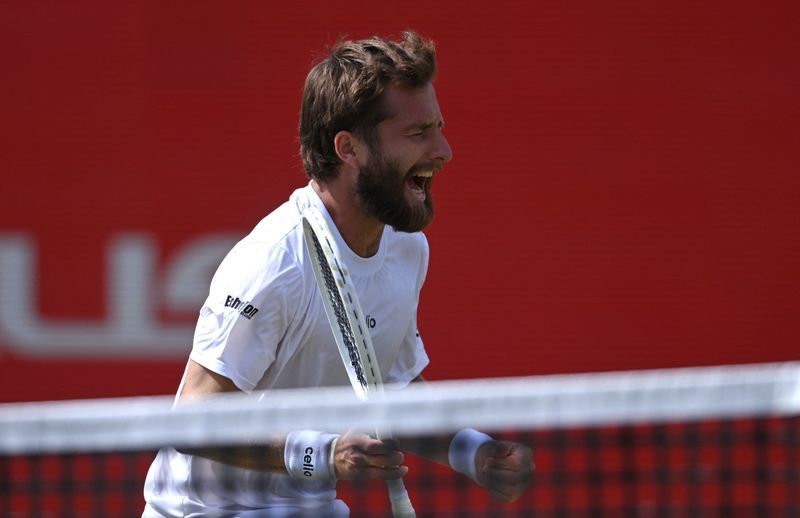
French tennis player Corentin Moutet has been stripped of nearly his entire Queen's Club earnings following a profanity-filled television interview that sparked widespread concern about player conduct at one of tennis's most prestigious grass-court tournaments. The 27-year-old, currently ranked 36th in the world, was hit with a $40,000 fine by the ATP for unsportsmanlike conduct stemming from the on-court BBC interview that followed his first-round victory over fellow Frenchman Giovanni Mpetshi Perricard. Since Moutet earned exactly $43,000 for advancing to the second round before losing to Spain's Alejandro Davidovich Fokina, the disciplinary sanction has effectively wiped out his entire profit from the event.
The incident unfolded when BBC interviewer pressed Moutet immediately after his opening-match success, seeking his reflections on the contest. In describing how he lost crucial points, Moutet unleashed a torrent of expletives, uttering a particular four-letter word at least seven times during the live television segment. When the interviewer politely requested that he refrain from repeating the profanity, Moutet disregarded the appeal and continued using the same language three additional times, prompting producers to abruptly terminate the broadcast segment and issue public apologies to both the Queen's Club crowd and television audiences watching at home.
The nature of Moutet's outburst provides insight into the mounting frustration that modern elite players experience during high-pressure matches. According to the player's own account shared on Instagram in the immediate aftermath, he claimed his language was simply jovial banter rather than malicious conduct, attempting to reframe the exchange as humorous rather than offensive. However, the ATP's disciplinary response suggests the governing body viewed the incident through a different lens entirely, interpreting his repeated swearing despite being warned as a deliberate breach of professional conduct standards that televised professional sport demands.
Moutet's appeal of the fine indicates he contests the ATP's interpretation and severity of the penalty. The appeals process may yet provide an opportunity for the Frenchman to have the sanction reduced or overturned, though precedent in professional tennis disciplinary matters suggests such reversals are uncommon when broadcasting standards have been undermined. The Queen's Club tournament, held annually at the exclusive venue in West Kensington, occupies a special place in tennis tradition and attracts broadcasters and sponsors who maintain strict standards regarding on-air decorum.
This represents the latest chapter in what has become an increasingly troubled disciplinary record for Moutet. In 2022, the French player was defaulted entirely from the Adelaide International after directing aggressive language at the umpire during his match against Serbia's Laslo Djere. That incident demonstrated a pattern of difficulty managing emotions during competition, raising questions about whether the player receives adequate support in developing mental resilience and emotional regulation skills. The consequences of such outbursts extend beyond individual fines, potentially affecting how tournaments evaluate player invitations and sponsorship opportunities.
The French Tennis Federation itself has taken action previously, suspending Moutet's access to federation resources in 2022 due to the accumulation of behavioral concerns. This institutional response from his own national federation underscores that his conduct issues represent a matter of serious concern within French tennis circles, not merely a single unfortunate incident. When both international governing bodies and national federations intervene, it suggests patterns rather than isolated lapses in judgment.
For Malaysian and Southeast Asian players watching this situation, the Moutet case offers instructive lessons about the professional expectations governing modern tennis at the elite level. The financial penalty itself—$40,000—represents a substantial sum that illustrates how costly momentary lapses in on-court behavior can become. More significantly, the reputational damage and disciplinary record implications extend far beyond the immediate fine, potentially affecting future tournament invitations, media relationships, and sponsorship considerations that form the financial foundation of professional tennis careers.
The incident also highlights the particular pressures of grass-court tournaments like Queen's Club, where the surface produces unpredictable bounces and rally patterns that frustrate even experienced professionals. When a player loses crucial points on such surfaces—particularly on match point to a 142-mph second serve as in Moutet's case—the accumulated tension and disappointment can explode in unguarded moments. Television interviews conducted courtside, while designed to capture authentic player emotion, sometimes capture behavior that players themselves later regret.
ATP officials have signaled through this enforcement action that broadcasting standards will be maintained regardless of player status or circumstances. The consistency of disciplinary action protects the commercial relationships between professional tennis and the media organizations that distribute matches globally. Sponsors and broadcasters invest substantially in tennis properties and expect certain baseline standards regarding player conduct and on-air professionalism. When those standards are breached, consequences must follow to preserve the integrity of those commercial relationships.
Moutet's situation also reflects broader conversations within professional sports about the psychological demands placed on athletes operating at the highest competitive levels. While discipline and accountability remain essential, many observers have noted that players competing in individual sports like tennis experience different mental pressures compared to team-sport athletes who benefit from support systems and peer management. Whether Moutet receives additional support in anger management or psychological resilience training may determine whether this disciplinary incident marks a turning point in his professional trajectory or merely another entry in an ongoing pattern.