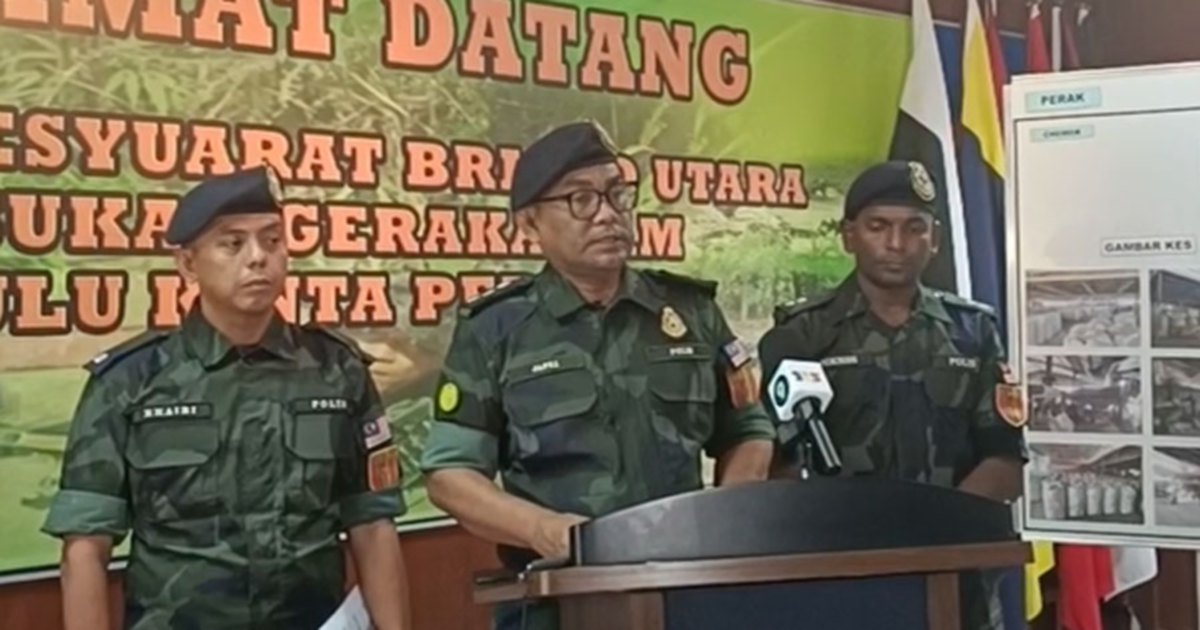
Malaysia's General Operations Force has intensified its fight against the persistent problem of illegal mining across the northern corridor, with the GOF Northern Brigade executing a major enforcement operation that has resulted in the detention of 30 suspects and the seizure of mining equipment and minerals estimated at RM31.7 million. The crackdown, which targeted illegal extraction and mineral processing operations spanning across both Perak and Kedah, represents a concentrated effort to stamp out the lucrative but environmentally damaging black-market mining industry that continues to plague these resource-rich states.
The scale of the operation underscores the magnitude of the illegal mining problem that persists in Malaysia's northern regions, where enforcement agencies have long struggled against well-organised networks operating across state boundaries. The substantial value of confiscated assets—more than RM31 million—demonstrates that these are not small-scale operations run by desperate individuals, but rather organised enterprises with significant capital investments and operational capacity. This pattern of large-scale illegal mining has become increasingly sophisticated, with operators deploying heavy machinery, employing multiple workers, and establishing processing facilities that rival legitimate operations in scope and complexity.
Illegal mining activities remain deeply entrenched in Perak and Kedah, states traditionally known for tin and other mineral extraction. The transition from formal tin mining to smaller-scale illegal operations has created an informal economy that attracts both local and migrant workers seeking employment outside the regulated sector. The absence of proper licensing and environmental safeguards makes these operations particularly attractive from a profit perspective, while simultaneously creating severe consequences for local ecosystems, water quality, and public health in surrounding communities.
The GOF Northern Brigade's coordinated approach suggests a more comprehensive intelligence-gathering and surveillance framework that goes beyond reactive enforcement. Successful operations of this magnitude typically require months of investigation, monitoring of suspicious equipment movements, tracking financial flows, and coordination with state authorities. The simultaneous execution of raids across multiple locations indicates that enforcement agencies have developed better interagency coordination and information-sharing mechanisms to prevent suspects from fleeing or moving equipment between jurisdictions.
From an environmental perspective, the suppression of these illegal operations carries particular significance for the northern region. Unregulated mining creates toxic runoff, contaminates water sources used by downstream communities, destroys habitats, and leaves behind unstable terrain prone to landslides and flooding. The accumulated environmental damage from years of illegal extraction represents a substantial ecological debt that will require significant remediation efforts and investment to restore affected areas.
The detention of 30 individuals raises important questions about the broader ecosystem supporting these illegal operations. Beyond the direct operators, there are typically middlemen facilitating sales of illegally extracted minerals, transport coordinators moving equipment and products across state lines, financiers providing capital, and corrupt officials allegedly enabling these activities to continue. The extent of this broader network and whether the operation has disrupted supply chains or merely arrested individual operators will determine the longer-term effectiveness of this enforcement action.
For legitimate mining companies operating in Perak and Kedah, illegal mining represents a competitive distortion that allows unlicensed operators to avoid compliance costs, environmental remediation fees, and tax obligations. Properly licensed mining operations face stringent regulatory requirements and significant operational expenses that illegal miners simply disregard, creating an uneven playing field. Enhanced enforcement that removes illegal competitors ultimately protects the viability and reputation of the formal mining sector.
The operation also reflects broader concerns about Malaysia's vulnerability to organised crime utilising natural resources. Illegal mining frequently intersects with money laundering, trafficking of workers, and corruption within enforcement agencies themselves. The scale of this single operation—RM31.7 million in assets—highlights the financial stakes involved and the substantial resources available to criminal networks engaged in resource extraction. This creates both opportunities and risks for enforcement agencies, as the high profitability ensures that criminals will continuously adapt their methods and seek new locations as old operations are shut down.
Looking forward, the sustainability of enforcement gains depends on addressing the underlying demand for illegally extracted minerals and the economic desperation driving participation in these operations. While catching individual offenders remains important, comprehensive solutions require regulating mineral markets to prevent laundering of illegal minerals into legitimate supply chains, providing alternative employment in affected communities, and strengthening governance within enforcement agencies to prevent corruption enabling these activities. The GOF's initiative demonstrates operational capacity, but long-term success will require these complementary strategies working in concert with continued enforcement pressure.

