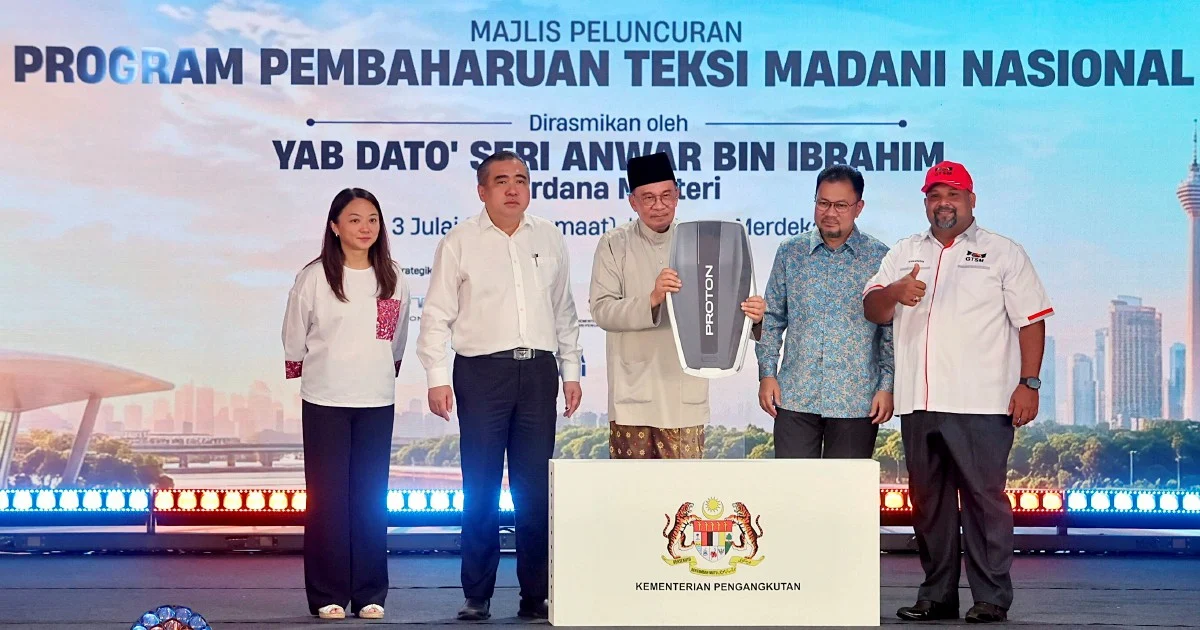
Prime Minister Datuk Seri Anwar Ibrahim has announced the government's approval of an additional RM10 million dedicated to the matching grant programme designed to assist taxi operators in replacing their older vehicles. This funding injection represents a significant step toward modernizing the nation's taxi fleet and supporting the livelihoods of thousands of operators who depend on road transport services.
The matching grant scheme operates on a cost-sharing basis, where both government and participating operators contribute to the purchase of new vehicles. This approach ensures that burden of vehicle replacement is distributed between the public sector and private stakeholders, making the transition financially manageable for individual taxi drivers and small operators who often operate on modest profit margins. The initiative recognizes that many taxi operators lack sufficient capital to independently upgrade to newer, safer, and more environmentally friendly vehicles without government support.
The Malaysian taxi industry has faced persistent challenges related to the age and condition of its fleet. Many vehicles currently in operation are several decades old, raising safety and reliability concerns for both drivers and passengers. Ageing taxis consume more fuel, emit higher levels of pollutants, and require increasingly frequent maintenance, creating a cycle of escalating operational costs that squeeze operator profitability. The modernization effort addresses these interconnected problems while simultaneously supporting economic mobility for transport workers.
This funding commitment forms part of a broader government strategy to revitalize the ground transport sector, which has undergone significant disruption following the rise of ride-hailing services. Traditional taxi operators have faced mounting competitive pressure from app-based platforms offering greater convenience and pricing flexibility to consumers. By facilitating access to modern vehicles through the matching grant programme, the government aims to enhance the competitiveness and appeal of conventional taxi services while preserving employment in this established transport sector.
The announcement carries particular relevance for Malaysia's economy and transport infrastructure at a time when regional governments are increasingly prioritizing environmental sustainability and urban mobility. Newer vehicles meeting current emissions standards contribute to national environmental targets and help improve air quality in congested urban areas. Additionally, modernized taxis with advanced safety features and communication systems can enhance service quality and passenger confidence, potentially attracting users away from informal transport options.
For taxi operators across the country, the RM10 million allocation presents a tangible opportunity to upgrade their vehicles without bearing the full financial burden independently. Many operators, particularly those in smaller urban centres and semi-rural areas, have postponed vehicle replacement due to cash flow constraints. The matching grant programme removes a critical barrier to fleet modernization, allowing individual drivers to invest in new vehicles with government co-funding support. This accessibility is crucial in regions where traditional taxi services remain essential for community mobility, particularly for elderly residents, schoolchildren, and others without private transport options.
The initiative also has potential workforce implications across the transportation ecosystem. Mechanics and automotive service providers benefit from increased demand for maintenance on newer vehicle models, while spare parts suppliers and dealerships experience expanded business opportunities. Furthermore, the replacement of older vehicles creates a secondary market for used cars, as outdated taxi vehicles can be refurbished and sold to other users, creating additional economic activity in the automotive sector.
Understanding the scale and mechanics of implementation will be crucial to the scheme's success. Questions remain regarding application procedures, the specific ratio of government-to-operator contributions, eligibility criteria for participating operators, and the timeline for disbursement. Clear communication regarding these operational details will determine whether the RM10 million allocation efficiently reaches intended beneficiaries and achieves its objectives of meaningful fleet modernization. Transparency in allocation and selection processes will also build confidence among the broader taxi operator community.
The government's continued investment in this matching grant programme demonstrates acknowledgment of the taxi sector's ongoing structural challenges and the need for targeted policy support. Rather than relying solely on market competition to drive modernization, the authorities recognize that public-private partnership mechanisms can accelerate positive change while protecting employment and ensuring that essential transport services remain accessible and reliable across the nation.

