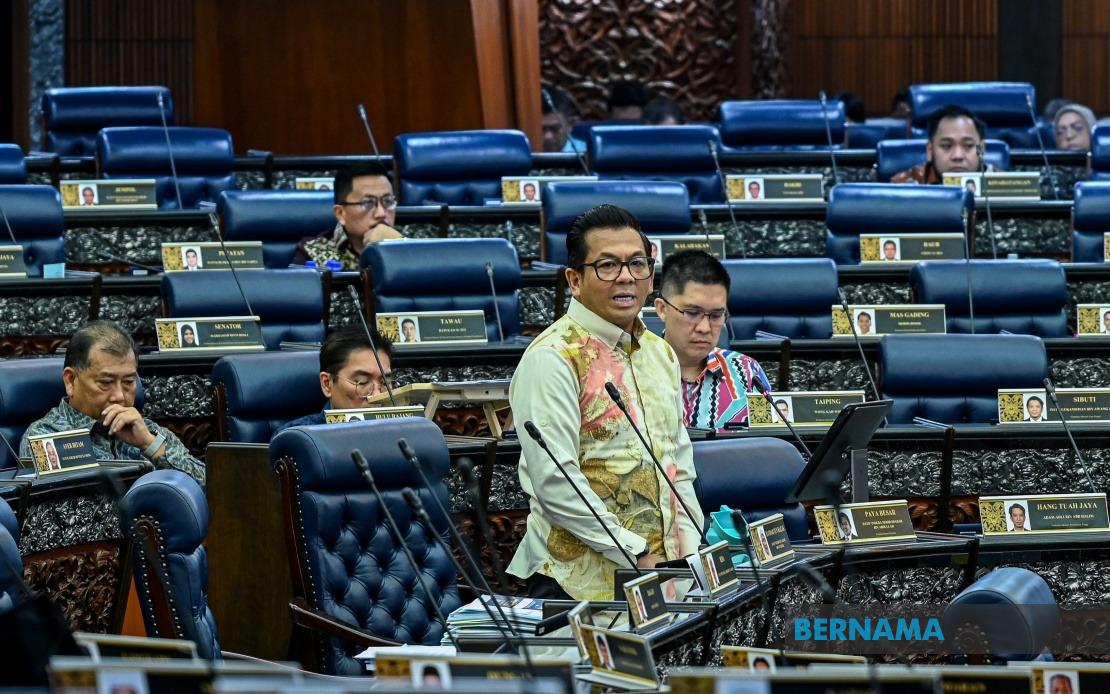
The Malaysian government is mobilising a sophisticated data-driven approach to confront one of the country's most persistent economic challenges: the widening gap between urban and rural living costs. Deputy Economy Minister Datuk Mohd Shahar Abdullah revealed in Parliament that policymakers are drawing on the Basic Living Expenditure (PAKW) framework to calibrate interventions addressing affordability pressures across different regions, acknowledging that one-size-fits-all solutions cannot effectively serve a nation with such pronounced geographic economic disparities.
The PAKW framework, developed by the Department of Statistics Malaysia, represents a deliberate shift toward evidence-based policymaking in cost-of-living management. Rather than applying blanket measures that may benefit urban centres while overlooking rural realities—or conversely, prove inadequate for cities—the government has constructed an analytical tool that captures how household spending patterns diverge fundamentally based on location, availability of goods and services, and local economic structures. This distinction matters enormously in a federation where infrastructure density, transportation networks, and commercial competition vary dramatically between Kuala Lumpur and rural Sabah or Kelantan.
Mohd Shahar underscored the concrete manifestations of these disparities through comparative PAKW values across states. The basic living expenditure baseline in Kuala Lumpur stands at RM5,639 monthly—substantially higher than the RM4,254 required in Kelantan or RM4,511 in Sabah. These figures do not merely reflect different costs for identical goods; they reveal deeper structural differences in how Malaysians meet their essential needs depending on where they live. Urban dwellers face steeper housing, transportation, and service costs, while rural populations may spend proportionally more on goods that require longer supply chains or lack competitive local suppliers. Understanding these distinctions is foundational to designing assistance that actually reaches those struggling most.
To operationalise this framework, the government has established the myPAKW.dosm.gov.my portal, a public-facing calculator enabling individual Malaysians to monitor their own spending patterns against the PAKW benchmarks. This transparency mechanism transforms abstract statistics into personalised financial awareness, potentially empowering households to identify spending inefficiencies or recognise when their situations deviate significantly from regional norms. Such accessibility also creates accountability; citizens can assess whether government claims about affordability align with their lived experiences and local economic conditions.
The PAKW initiative responds directly to a parliamentary inquiry from Wan Hassan Mohd Ramli, representing the Perikatan Nasional opposition, who sought clarification on a 2023–2025 economist field study aimed at developing inflation-fighting solutions with particular attention to urban-rural cost disparities. This exchange illustrates that cost-of-living concerns transcend partisan lines, commanding attention across government and opposition benches—a recognition that Malaysia's inflationary pressures and regional inequalities constitute structural challenges requiring sustained, sophisticated policy responses rather than temporary political fixes.
Beyond data collection and transparency, Mohd Shahar articulated the government's broader strategy for addressing underlying affordability challenges through income enhancement rather than price controls alone. Training programmes and skills development initiatives form the cornerstone of this approach, aiming simultaneously to raise both the income floor—lifting minimum earners toward living wages—and the income ceiling, enabling advancement toward middle-class prosperity. This methodology acknowledges that sustainable cost-of-living relief emerges not from suppressing prices artificially but from enhancing earning capacity, thereby improving households' purchasing power over time.
The government has embedded these efforts within its Five-Year Malaysia Plans, with policy updates occurring twice per planning cycle to ensure responsiveness to evolving economic conditions. This institutional framework suggests commitment to continuity and systematic review, reducing the risk that well-intentioned programmes become stagnant or misaligned with changing circumstances. The rhythm of biennial updates reflects recognition that economic conditions shift faster than traditional five-year planning cycles, requiring periodic calibration without necessitating wholesale strategy reversals.
Evidence of this sustained commitment appears in the trajectory of the Poverty Line Income benchmark, which has increased dramatically from RM980 in 2016 to RM2,705 in 2024. This near-threefold elevation indicates both acknowledgment of genuine cost pressures and government willingness to revise living standards definitions upward—a politically significant move reflecting the real erosion of purchasing power across the period. However, this progression also raises questions about whether income growth among vulnerable populations has kept pace with the PLI trajectory, or whether the revised thresholds now encompass groups previously considered above poverty who have experienced relative deterioration.
For Malaysian readers and observers across Southeast Asia, the PAKW initiative signals a maturation of policy discourse around cost-of-living challenges. Rather than debating whether prices are rising—a reality evident to any supermarket shopper—governments can now engage more granular conversations about differentiated impacts, regional vulnerabilities, and intervention effectiveness. This methodological sophistication becomes increasingly important as inflationary pressures persist globally and domestically, requiring governments to allocate limited resources toward populations and interventions delivering maximum impact per ringgit spent.
The framework's emphasis on location-specific disparities carries particular significance for Malaysia's development trajectory. Urban-rural divides have long complicated poverty reduction efforts and economic integration. By making these disparities quantifiable and comparable, PAKW creates potential for more equitable regional development policy, potentially informing decisions about infrastructure investment, commercial development incentives, or targeted subsidies. States like Kelantan and Sabah, characterised by lower PAKW baselines, might warrant different policy emphasis than Kuala Lumpur, recognising that absolute cost levels differ but purchasing power vulnerabilities may be equally acute.

