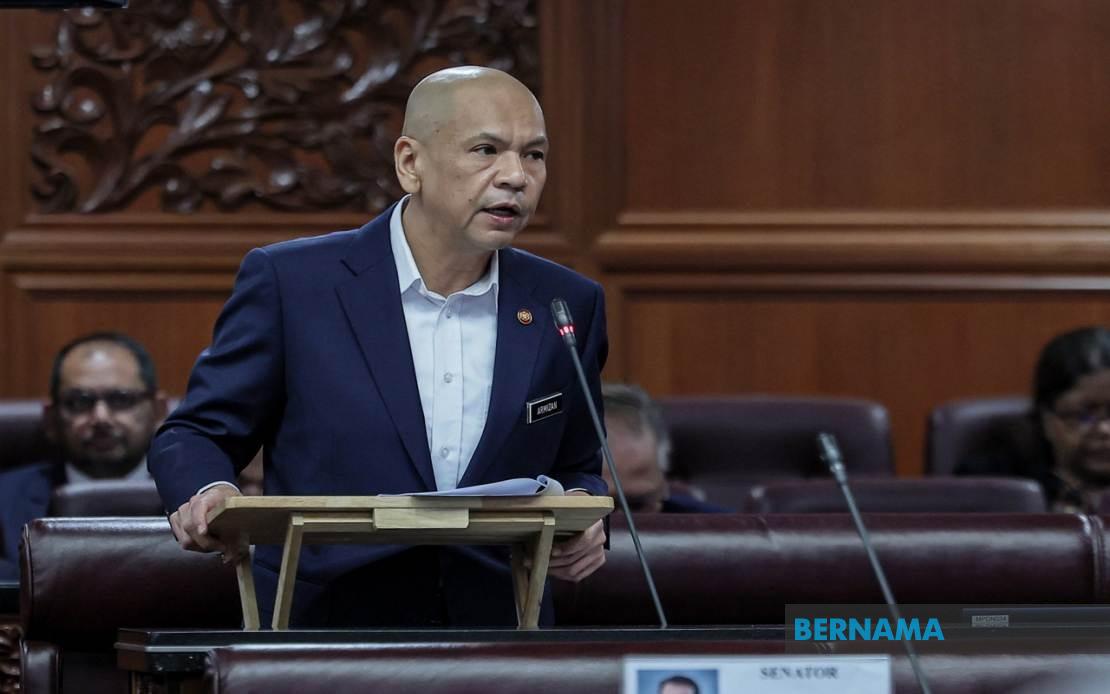
The Ministry of Domestic Trade and Cost of Living has intensified its signature Rahmah MADANI Sales Programme with a nationwide expansion that reflects the government's deepening commitment to address affordability pressures among Malaysian households. Minister Datuk Armizan Mohd Ali revealed that 15,881 sales events were conducted across the country in the first half of 2025, representing a substantial acceleration of the initiative that has become central to the administration's cost-of-living intervention strategy. The programme's comprehensive geographical reach now encompasses all 600 state constituencies alongside every Federal Territory zone in Putrajaya, Kuala Lumpur, and Labuan, demonstrating an unprecedented level of systematic coverage.
The trajectory of expansion reveals how dramatically the government has scaled up its retail promotion capacity over successive years. In 2023, only 6,870 sales sessions were held, a figure that grew to 12,419 by 2024 before climbing to 25,708 in 2025. This escalating pattern underscores a fundamental shift in how policymakers approach demand-side inflation relief, moving away from sporadic interventions toward sustained, predictable market operations. The acceleration gained particular momentum following Prime Minister Datuk Seri Anwar Ibrahim's May announcement to increase targets from an initial 23,040 sessions to 30,000 annually, a decision directly responding to global supply-chain disruptions emanating from the West Asia conflict.
Behind the headline figures lies a deliberate institutional architecture designed to embed affordability support into Malaysia's permanent governance framework. The government has adopted five strategic pillars since 2023 that fundamentally restructure how subsidised retail events operate. The first measure institutionalised the programme within the national budget starting 2024, allocating dedicated funding and activity codes rather than treating such sales as episodic exercises dependent on annual discretion. This budgetary embedding signals that cost-of-living relief has transitioned from a temporary electoral commitment to a structural pillar of fiscal policy.
The second strategic element imposes systematic discipline on implementation by establishing fixed annual targets and scheduling frequencies for every constituency and zone. This methodical approach contrasts sharply with the ad hoc bargain sales conducted under previous administrations, which lacked coordination and often concentrated benefits unevenly across regions. By committing to specific schedules, the current framework creates predictability that allows households to anticipate when subsidised goods will be available locally, enabling better household budget planning.
Private-sector mobilisation constitutes the third pillar, reflecting recognition that government cannot deliver affordable retail experiences without commercial participation. As of late June 2025, the ministry had secured partnerships with 2,695 retail entities spanning supermarket chains, independent stores, and consumer cooperatives. This extensive retailer engagement fundamentally alters the economics of the programme; participating businesses absorb margin compression willingly in exchange for guaranteed customer traffic and brand visibility during high-traffic promotional windows. The scale of private engagement suggests that retailers view the Rahmah initiative not as a burden but as a loss-leader investment in market loyalty.
Expanding delivery mechanisms constitutes the programme's fourth dimension, moving beyond traditional in-store models to embrace open-air bazaars, mobile vans, and seasonally-themed events. This diversification proves particularly significant for rural and remote communities that lack convenient access to established retail infrastructure. By rotating event types around paydays, school holidays, and festive seasons, the programme synchronises affordability interventions with genuine household spending patterns, multiplying the impact of each promotional cycle. Urban, suburban, and peripheral areas receive customised event formats matched to local retail ecosystems.
The fifth approach introduces operational transparency through a dedicated Rahmah MADANI calendar beginning in 2025, publicly disseminating dates, times, and locations for every constituency's scheduled events well in advance. This transparency mechanism reduces search costs for consumers and democratises information access, ensuring that even households without consistent media engagement can discover local sale opportunities. The calendar approach represents a qualitative shift toward consumer-centric programme design, acknowledging that affordability relief only functions when people actually access it.
From a Southeast Asian regional perspective, Malaysia's systematic approach to retail price stabilisation offers lessons relevant to other middle-income economies grappling with food inflation and wage compression. The Rahmah model demonstrates how coordinated public-private partnerships can operate at scale without requiring traditional price controls that distort supply incentives. By maintaining retail margins while subsidising consumer prices, the programme avoids the unintended consequences—shortages, quality degradation, hoarding—that plague rigid price regulation. The data revealing consistent year-on-year expansion suggests that retailers perceive participation as economically viable rather than extractive.
The parliamentary confirmation of these figures carries significance beyond mere administrative reporting. When opposition lawmakers like Datuk Iskandar Dzulkarnain Abdul Khalid raise questions about programme capacity and frequency, ministerial responses demonstrating concrete expansion indicate that cost-of-living relief has transcended partisan debate to become a cross-cutting policy expectation. The fact that the government preemptively revised upward its annual target from 23,040 to 30,000 events suggests responsiveness to emerging feedback that the original ambition was insufficient.
For Malaysian households navigating elevated food costs and persistent inflationary pressures, the Rahmah MADANI expansion translates into tangible income relief. A household accessing subsidised groceries even monthly effectively reduces its cost-of-living burden by several percentage points, a material benefit for households operating near discretionary spending thresholds. Cumulative across 25,708 events nationwide, these interventions represent billions of ringgit in consumer price relief, functioning as a form of targeted redistribution that bypasses bureaucratic welfare assessment processes.
The programme's sustainability depends critically on continued private-sector willingness to participate at current scales. If retail partners eventually perceive participation as economically burdensome rather than beneficial for customer acquisition, the model's viability becomes questionable. Conversely, if demand patterns demonstrate that subsidised retail events consistently drive incremental foot traffic beyond promotional windows, retailers' long-term commitment strengthens. The 2,695 retail partners achieved thus far suggest the tipping point leans toward commercial viability, though monitoring this metric remains essential for policymakers assessing programme longevity.
Looking forward, the government's 30,000-event target for 2025 represents an ambitious expansion requiring sustained bureaucratic coordination and retail network management. Achieving this milestone would position Malaysia's Rahmah MADANI as among the world's largest systematic consumer price relief programmes by frequency and geographic penetration. Success would validate a policy approach that combines affordability intervention with market-based delivery mechanisms, offering a potentially replicable model for other developing economies seeking cost-of-living solutions without resorting to economically distortionary controls.

